Remembering the
Jewish Journey
Eight works, one evening
A concentrated presentation of eight lithographs brought Cities of Lost Memory into the European Parliament for a single evening.
The selection followed a journey through Jewish history, loss, survival and renewal, while also opening outward to wider European and human histories. The institutional setting changed the nature of the encounter: the works were not shown as a museum survey, but as a compact sequence around which people could gather, listen and talk.
The eight titles and their order are preserved in the artist’s opening address and exhibition labels.
The works in the room
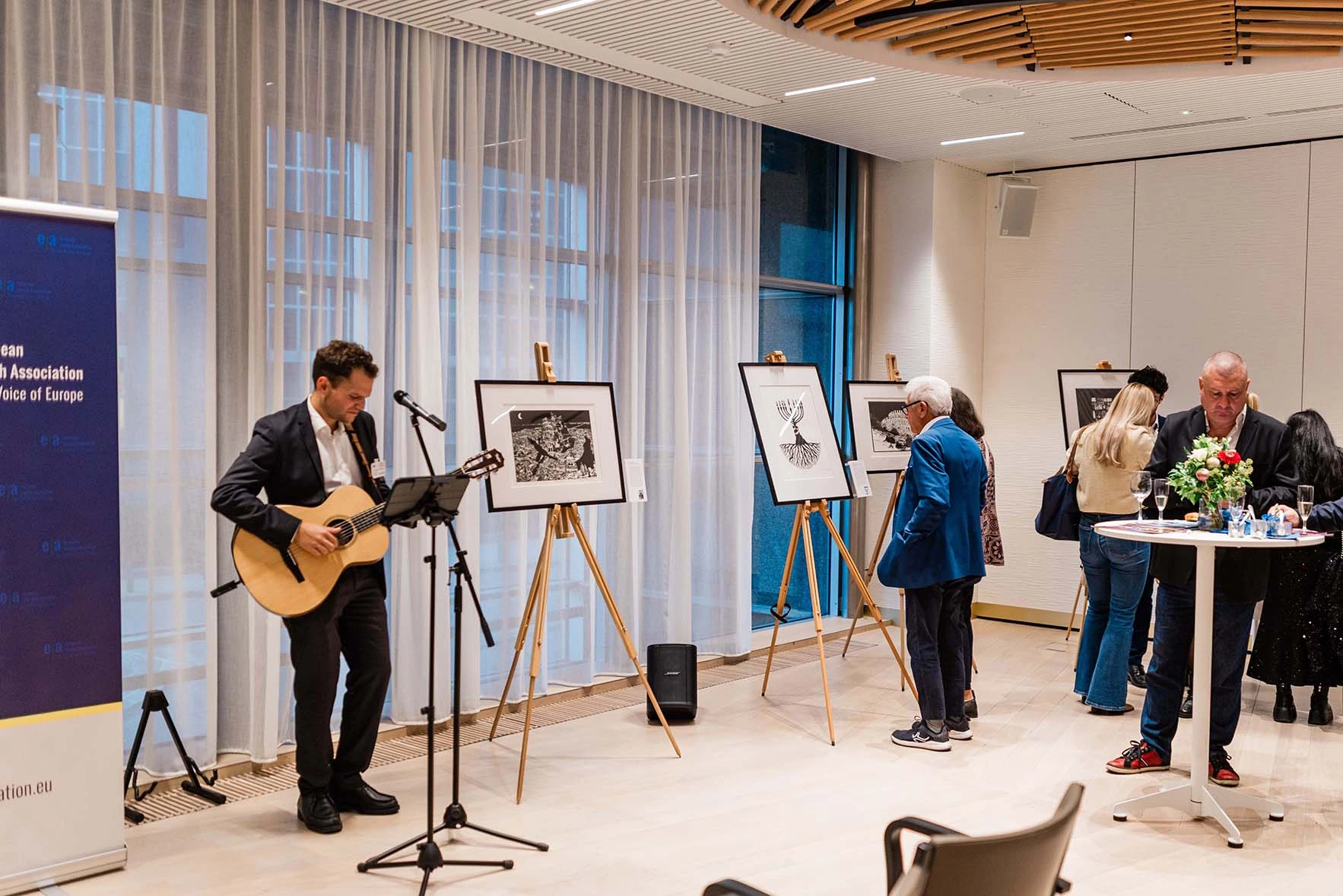
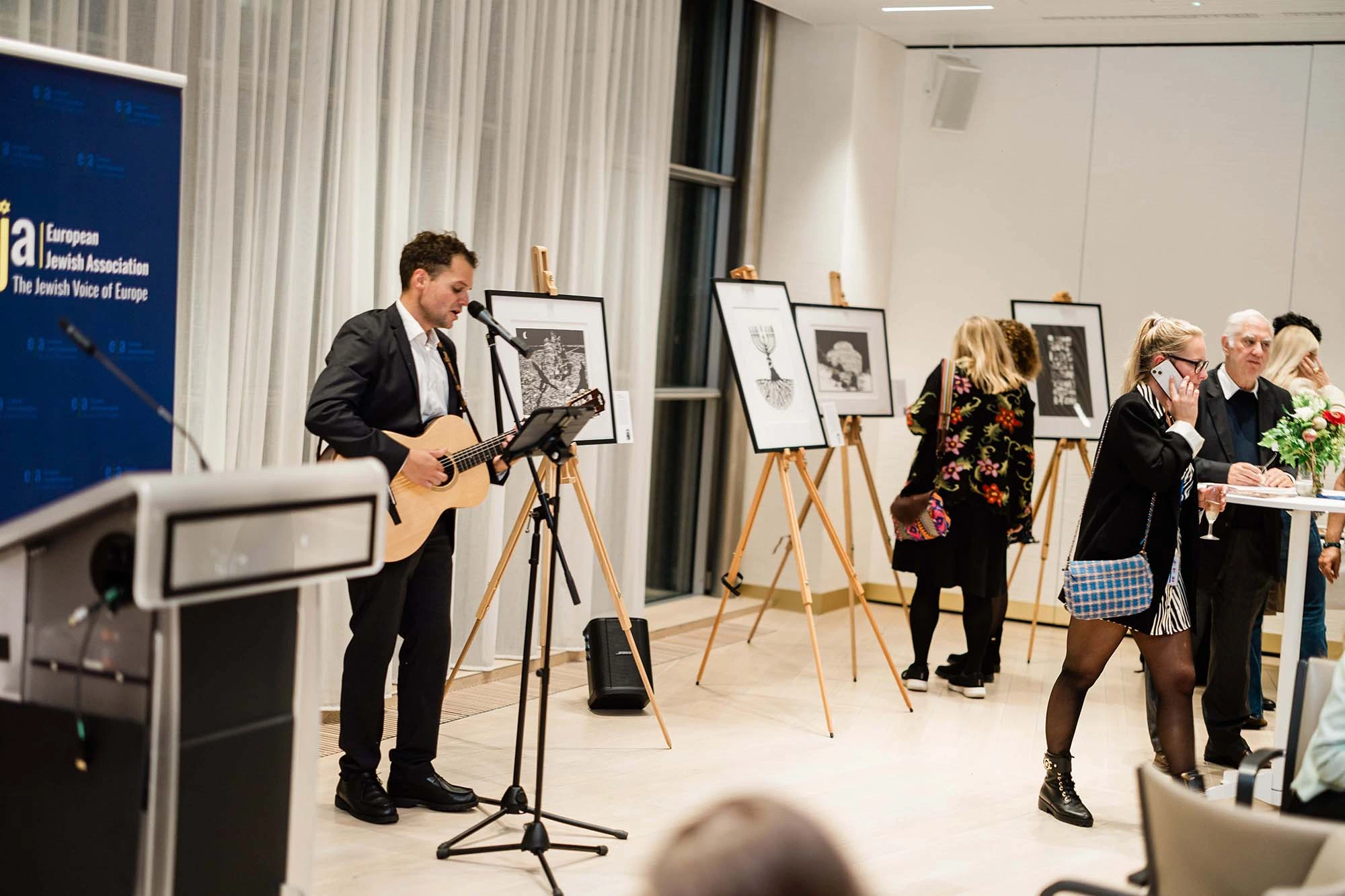
The lithographs were displayed on easels throughout the salon. Rather than isolating the works in a conventional white-cube setting, the arrangement allowed the audience to move repeatedly between the images, the speeches and informal conversation.
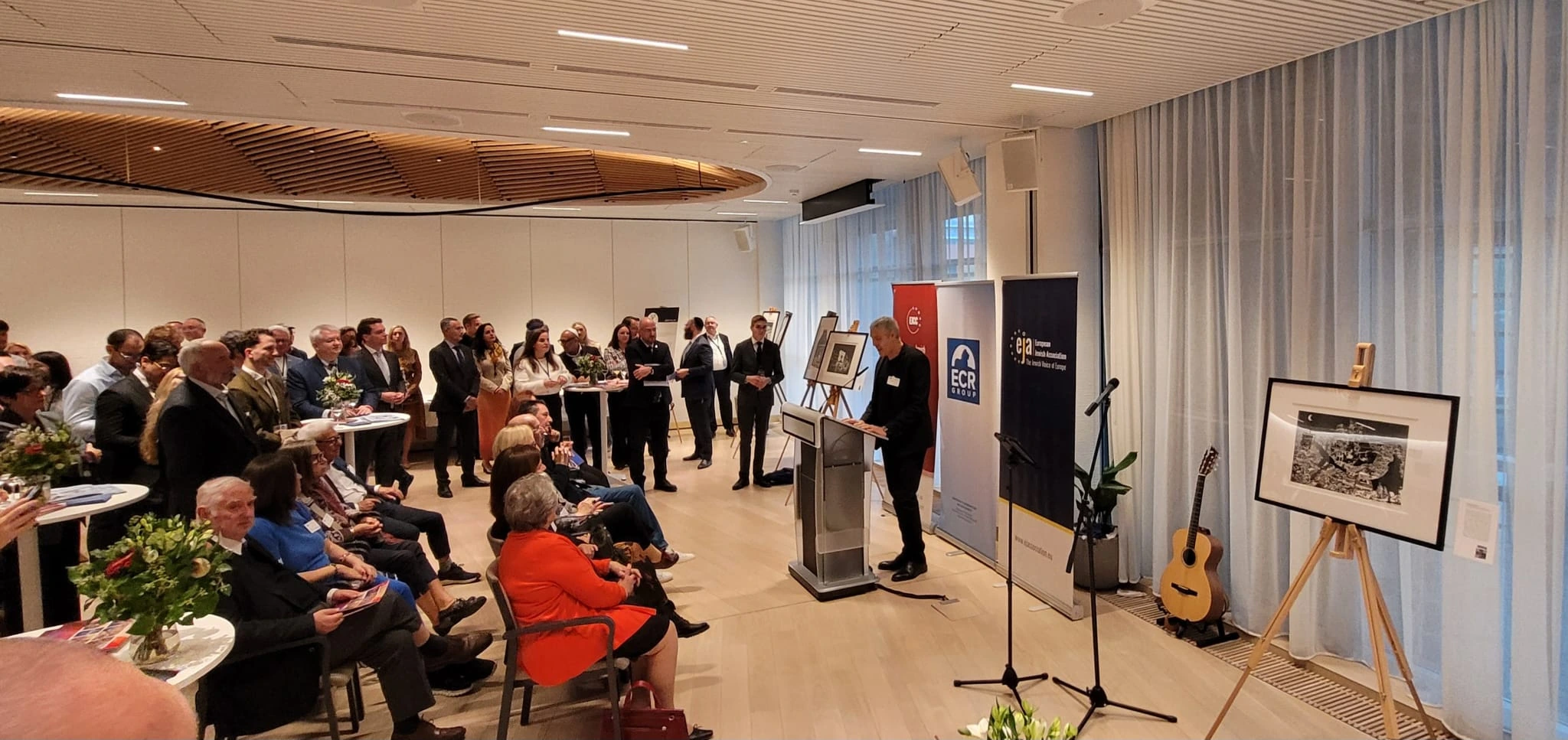
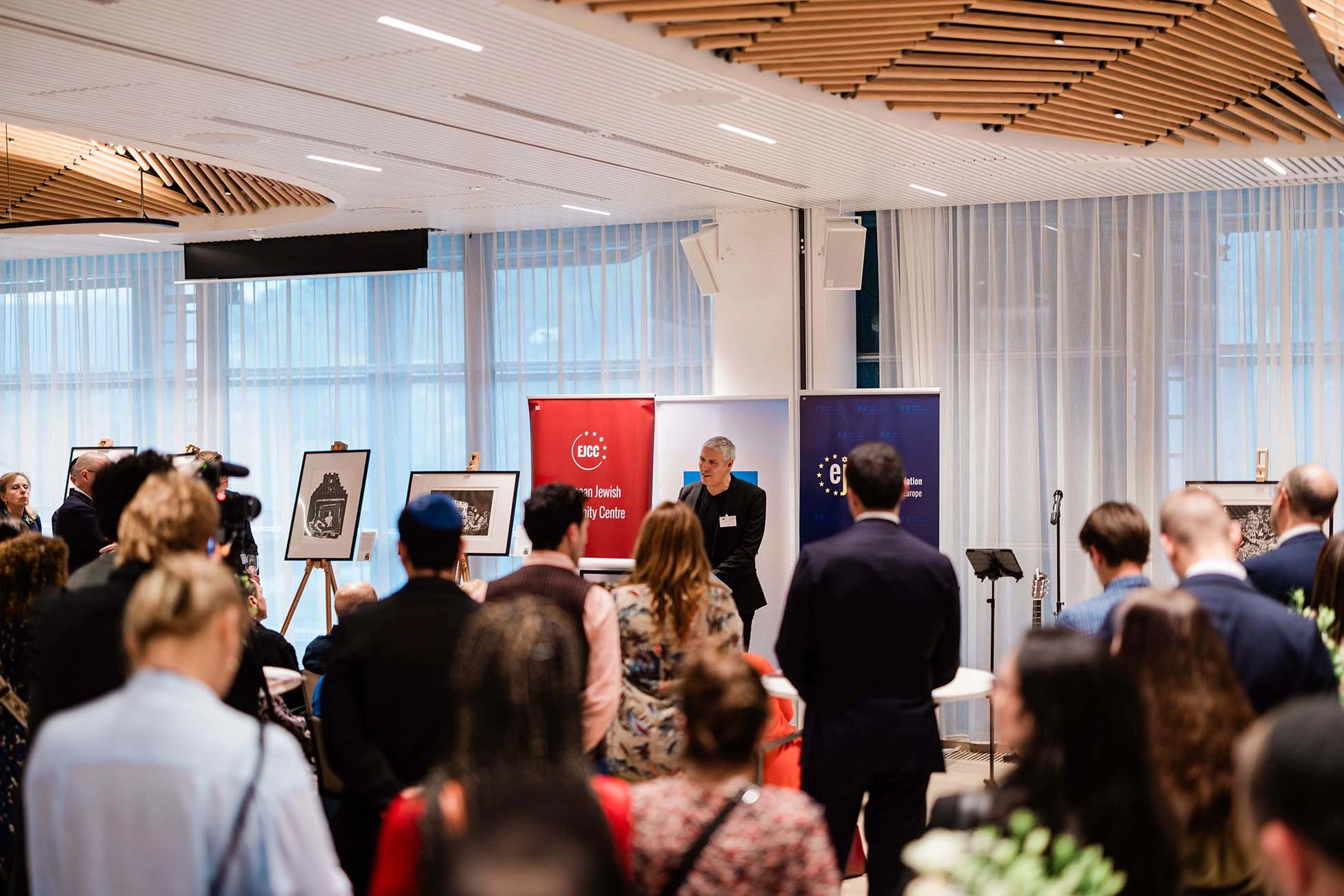
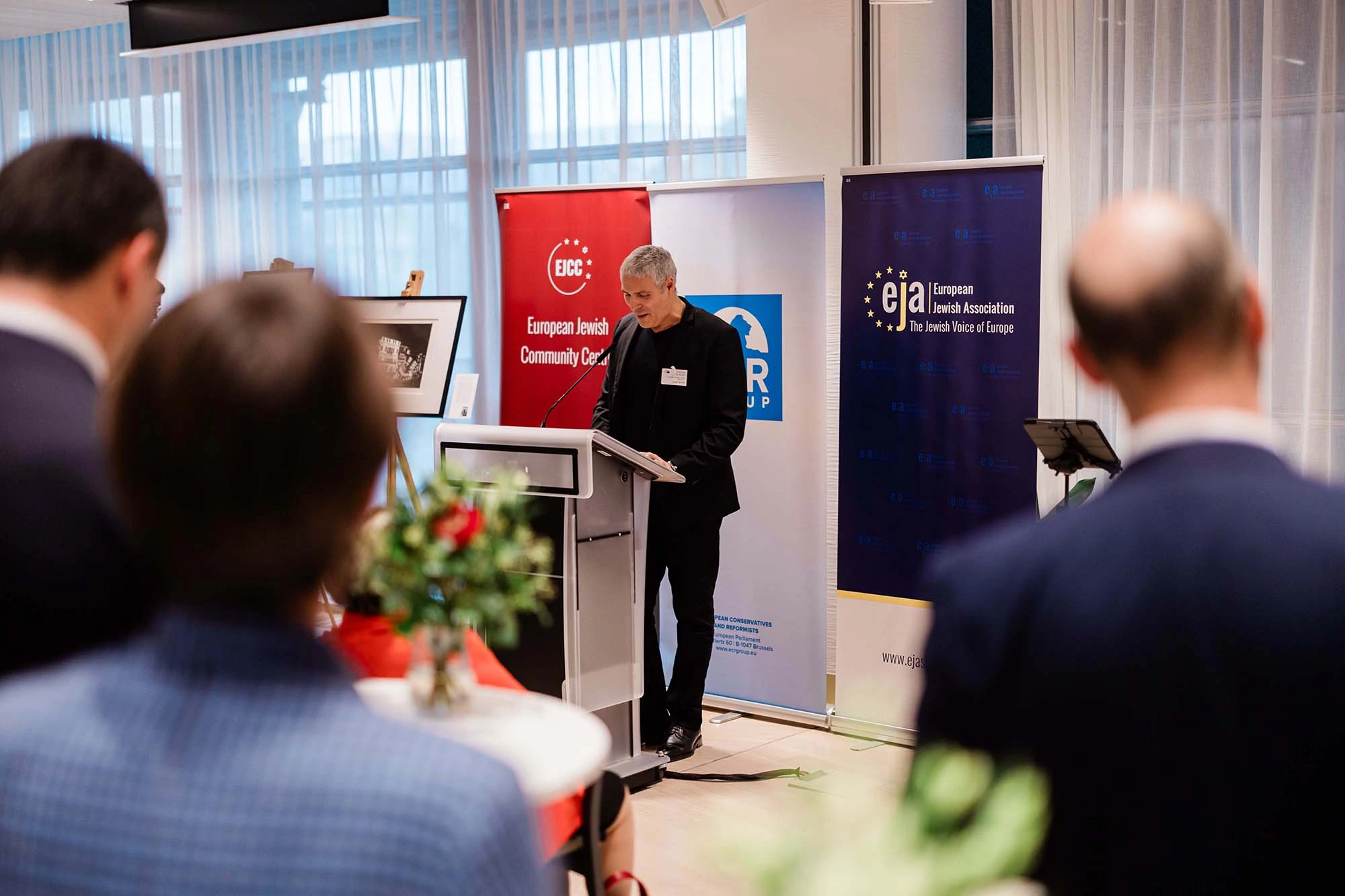
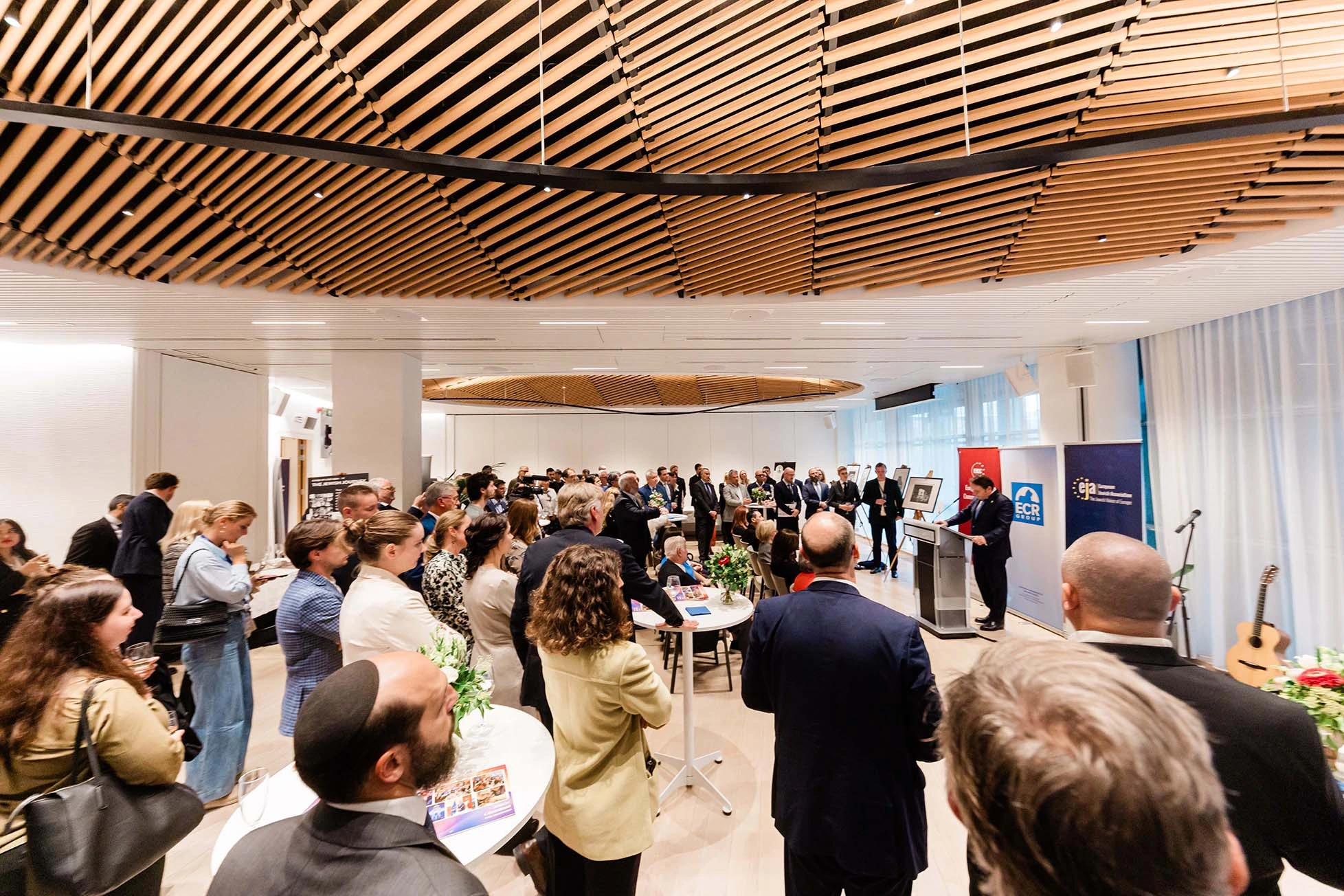
“It is a privilege to speak in this house of European democracy.”
The address introduced the eight works as fragments of a longer journey through memory, exile, destruction and endurance. Six were directly connected to Jewish history; two broadened the frame toward shared European and human experience.
Read the full speech ↗Eight lithographs
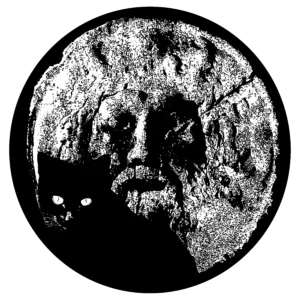
The works are listed in the order in which they were introduced in the opening address.
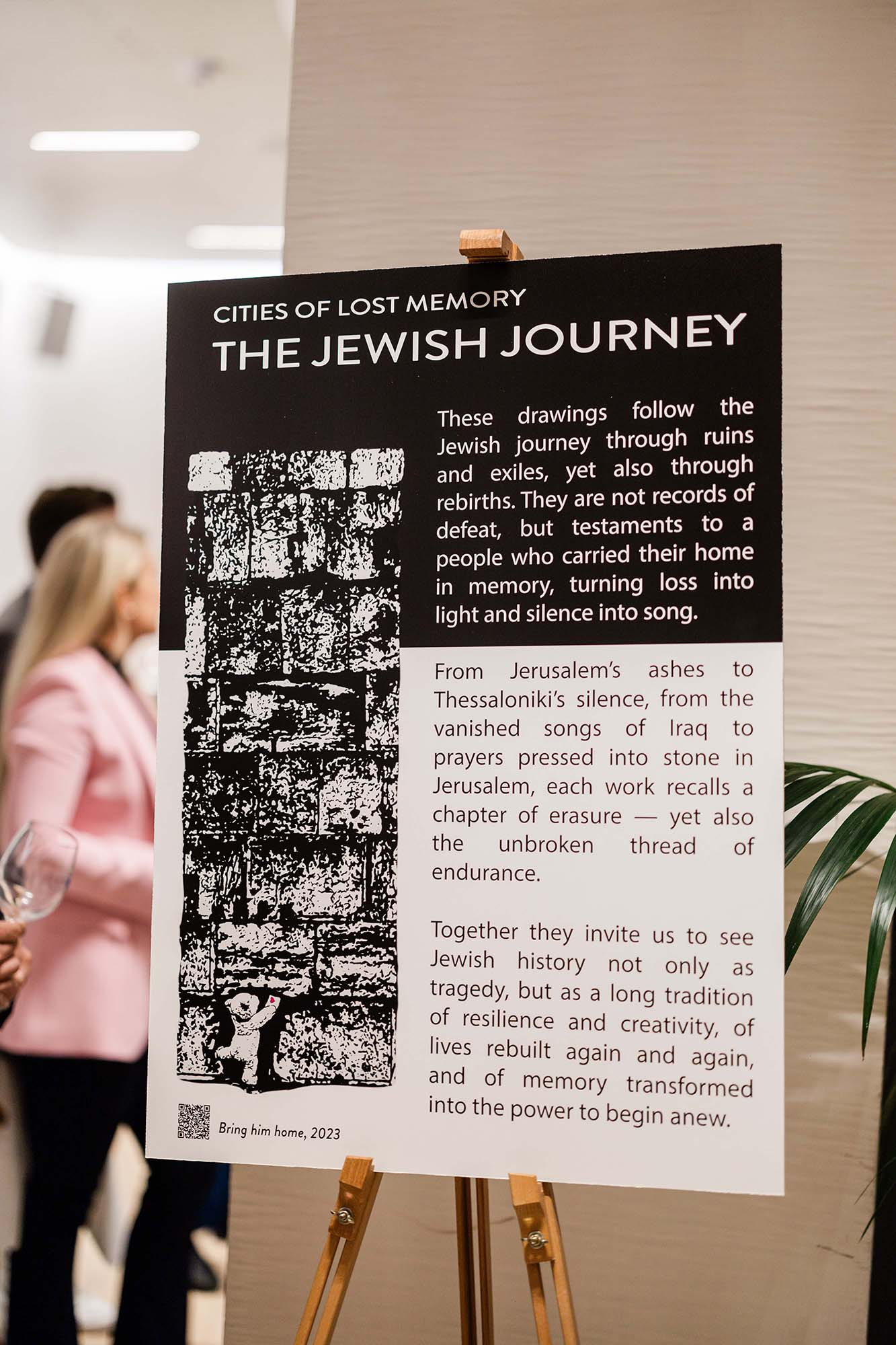
The exhibition panel framed the evening through three recurring ideas in the project: memory, loss and renewal. In the Members’ Salon, that narrative was compressed into a sequence small enough to be encountered almost as a single argument.
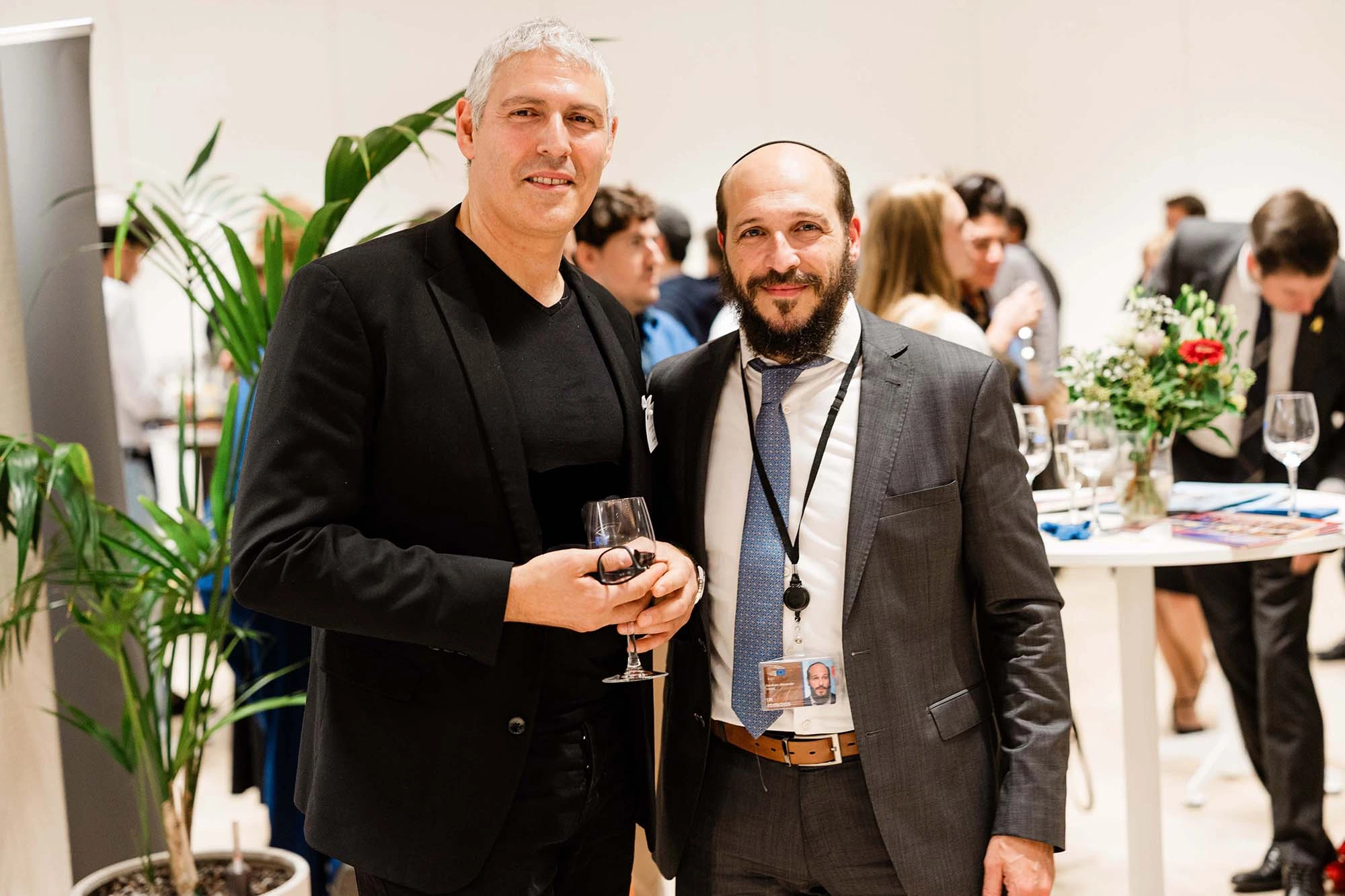
Conversation around the images
The one-evening format encouraged close discussion. People could stand directly over the lithographs, return to a work after the speech, and compare different parts of the historical journey at close range.
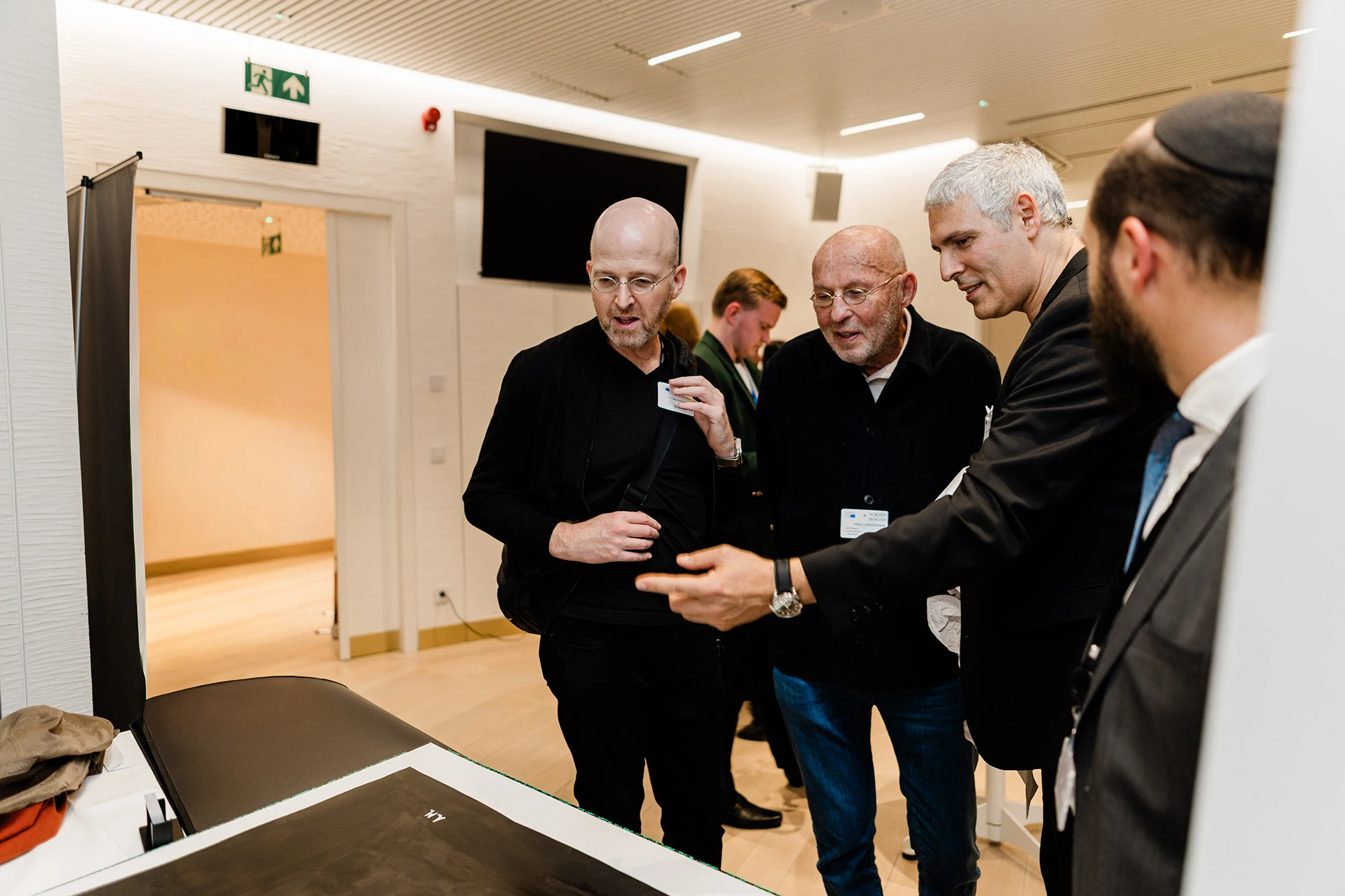
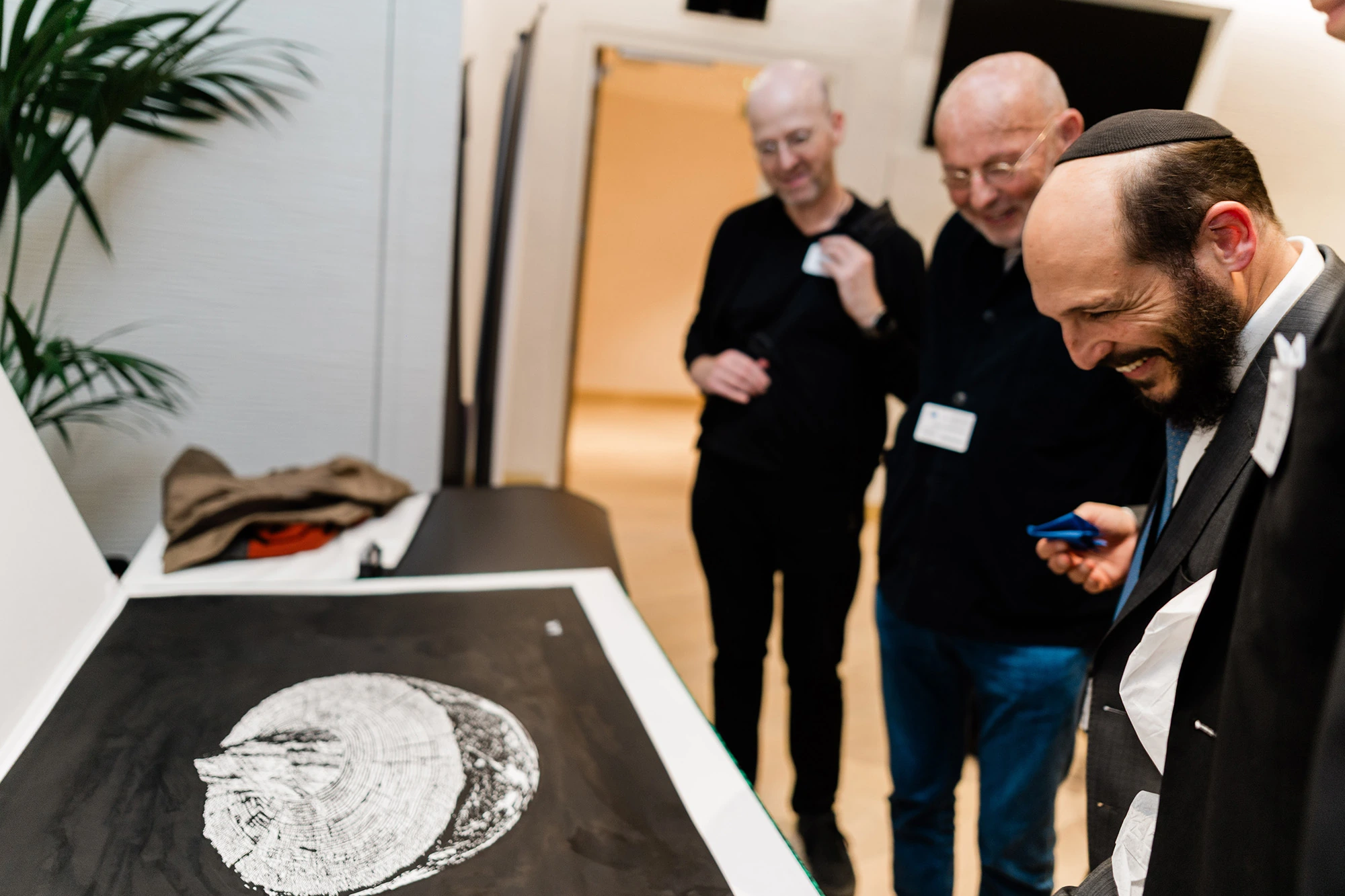
The scale of the event was deliberately different from Teloglion: not a month-long museum exhibition, but a short, intense institutional encounter in which the images served as points of entry into conversation.
Speech, viewing and music
The formal presentation gave way to a more social encounter with the works. Live music and conversation continued in the same space, with the lithographs remaining visible around the room.