A reunion that is more fragile than it first appears
Jacob and Esau are twins, but Genesis makes their relationship a story of difference almost from birth. Esau, the elder, gives Jacob his birthright for food; later Jacob receives the paternal blessing intended for Esau and leaves home fearing his brother’s anger.
Read more
A reunion that is more fragile than it first appears
Jacob and Esau are twins, but Genesis makes their relationship a story of difference almost from birth. Esau, the elder, gives Jacob his birthright for food; later Jacob receives the paternal blessing intended for Esau and leaves home fearing his brother’s anger.
When the brothers finally meet again in Genesis 33, Jacob approaches in fear. What follows is startlingly physical: Esau runs towards him, embraces and kisses him, and the brothers weep.
A disputed kiss
The Hebrew text itself helped make the reunion a subject of interpretation. In the traditional text, dots appear above the word describing Esau’s kiss. Later Jewish commentators debated their significance: some read the gesture with suspicion, while another tradition insists that Esau’s compassion was genuine at that moment.
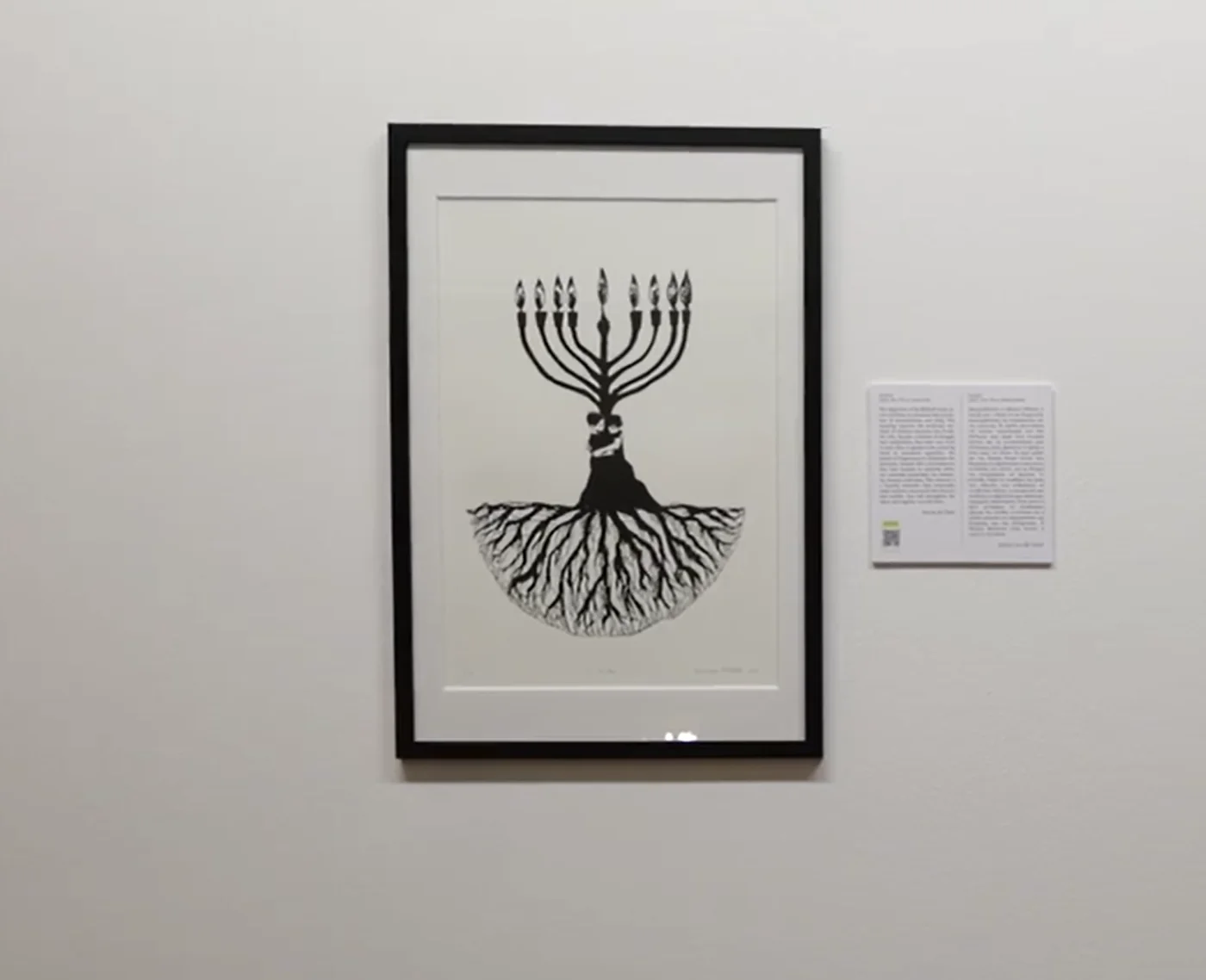
That ambiguity is central to the way Brothers works. Reconciliation is possible, but it does not erase memory. The embrace can be sincere while the history that made it necessary remains present.
The twins
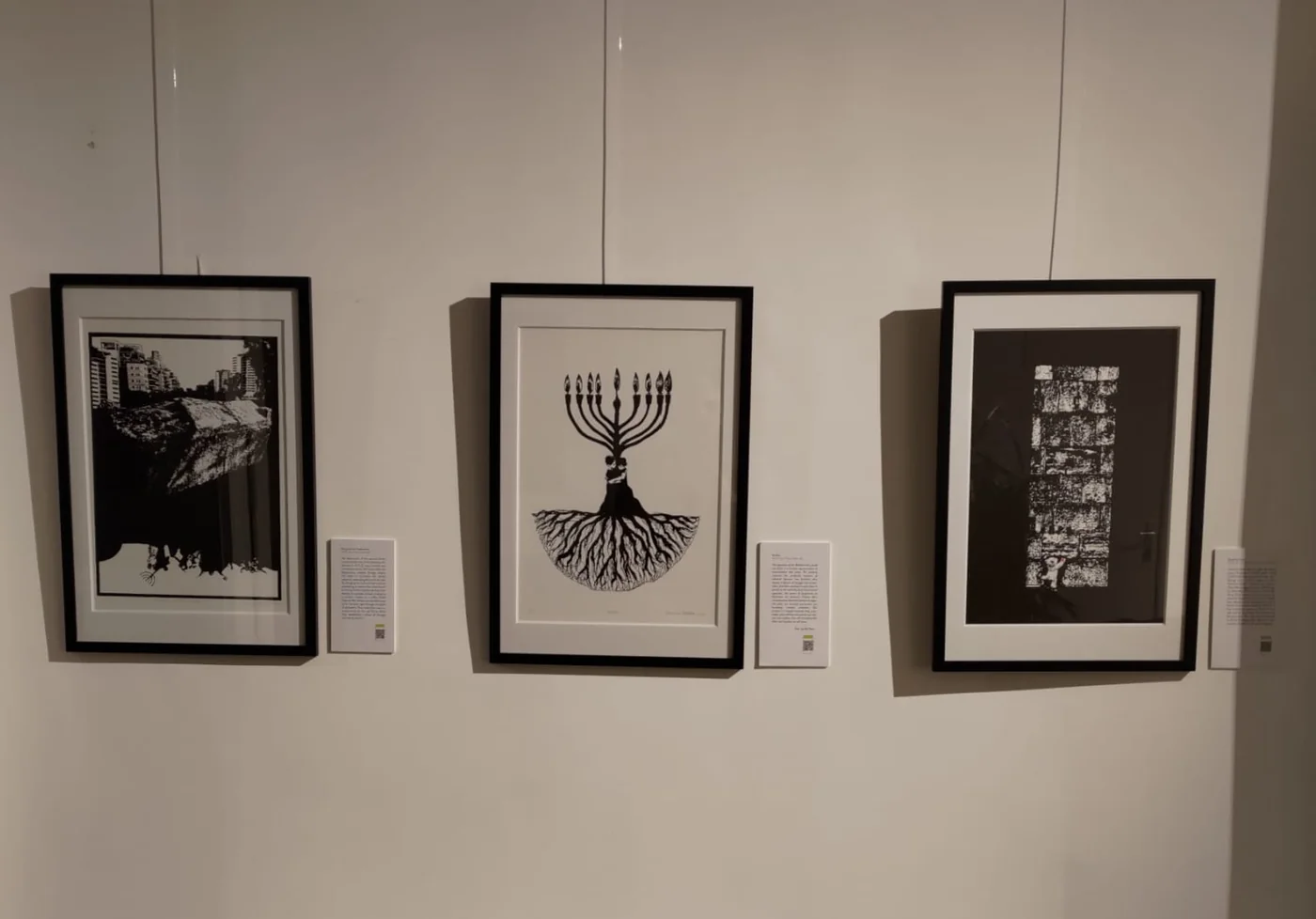
Shown as children, Jacob and Esau are returned to a moment before rivalry defined them.
The roots
Their division is set against a shared ancestry. The roots are more extensive than either individual figure.
The light
The nine flames form a Hanukkah lamp above the embrace, turning the joined figures into a living trunk between earth and light.