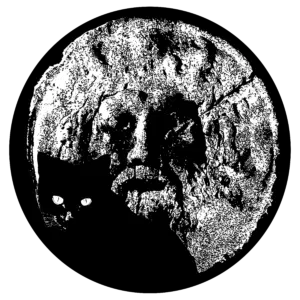
West of Eden
The first exile carried the Jews of Judah eastward to Babylon. More than two millennia later, their descendants were uprooted from Iraq and moved west again. West of Eden is built around that historical reversal: Babylon was not a temporary halt in Jewish history, but a homeland that endured for roughly twenty-five centuries.
The suitcase at the centre of the drawing is therefore not a travel object. It is an archive of rupture. Inside it sit the people, institutions and memories of a civilisation that had become inseparable from Mesopotamia — and that was almost entirely displaced in the middle of the twentieth century.
€250 · Brussels hand delivery by appointment · Elsewhere in Belgium & EU: €15 packaging/shipping · EU delivery only
Buy this lithographBrussels hand delivery · €250Babylon was not a parenthesis
Judeans were deported to Babylonia after the Babylonian campaigns against Jerusalem in the early sixth century BCE. When Persian rule later made return possible, not everyone went back. Families remained in Mesopotamia, worked land, conducted business, built communities and preserved a distinct identity.
Read more
Babylon was not a parenthesis
Judeans were deported to Babylonia after the Babylonian campaigns against Jerusalem in the early sixth century BCE. When Persian rule later made return possible, not everyone went back. Families remained in Mesopotamia, worked land, conducted business, built communities and preserved a distinct identity.
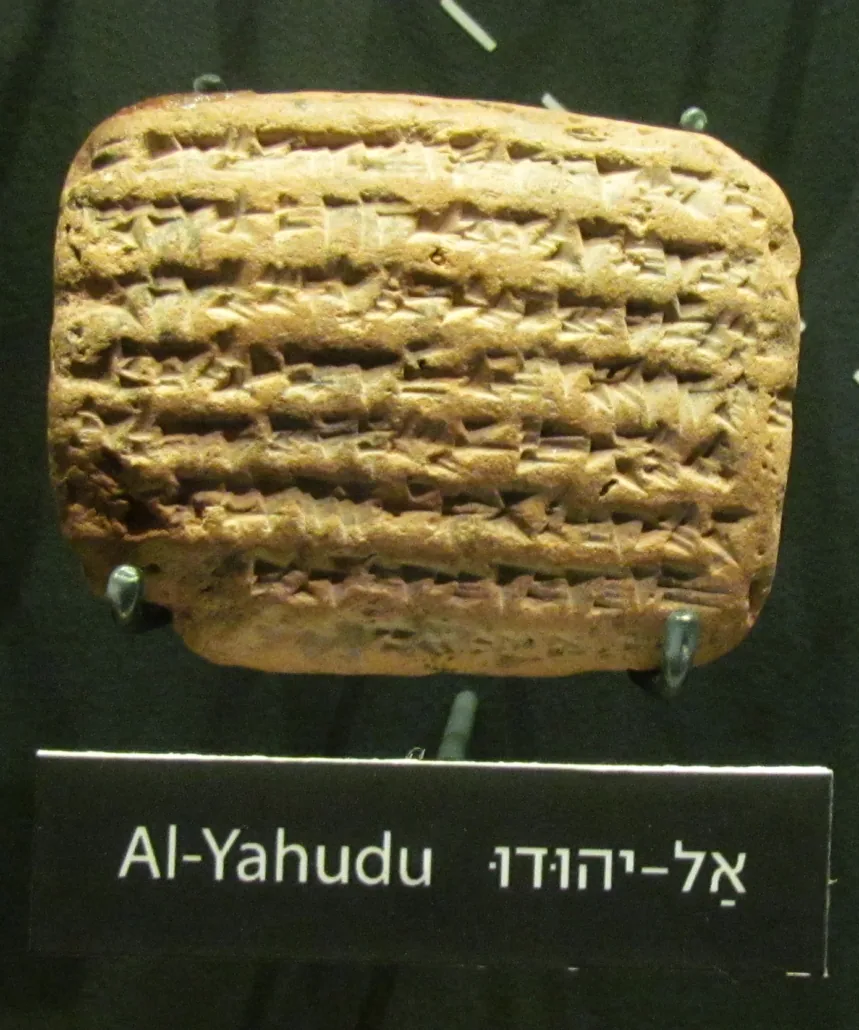
Cuneiform documents from settlements such as Al‑Yahudu — literally the “town of Judah” — give those exiles names, occupations, property and family histories. Centuries later, Babylonia became one of the great intellectual centres of Judaism. The Babylonian Talmud and the academies associated with Sura and Pumbedita made Mesopotamia central to Jewish religious and legal culture.
Not guests in Baghdad
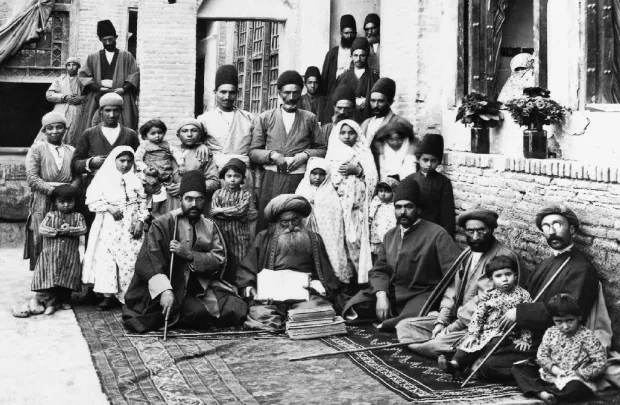
By the early twentieth century, Iraqi Jews were deeply woven into the commercial, intellectual and political life of the country. Their history did not run beside Iraq’s history; it was part of it. Jewish schools, synagogues, merchants, writers, musicians, civil servants and parliamentarians formed part of Baghdad’s modern urban culture.
Read more
Not guests in Baghdad
By the early twentieth century, Iraqi Jews were deeply woven into the commercial, intellectual and political life of the country. Their history did not run beside Iraq’s history; it was part of it. Jewish schools, synagogues, merchants, writers, musicians, civil servants and parliamentarians formed part of Baghdad’s modern urban culture.
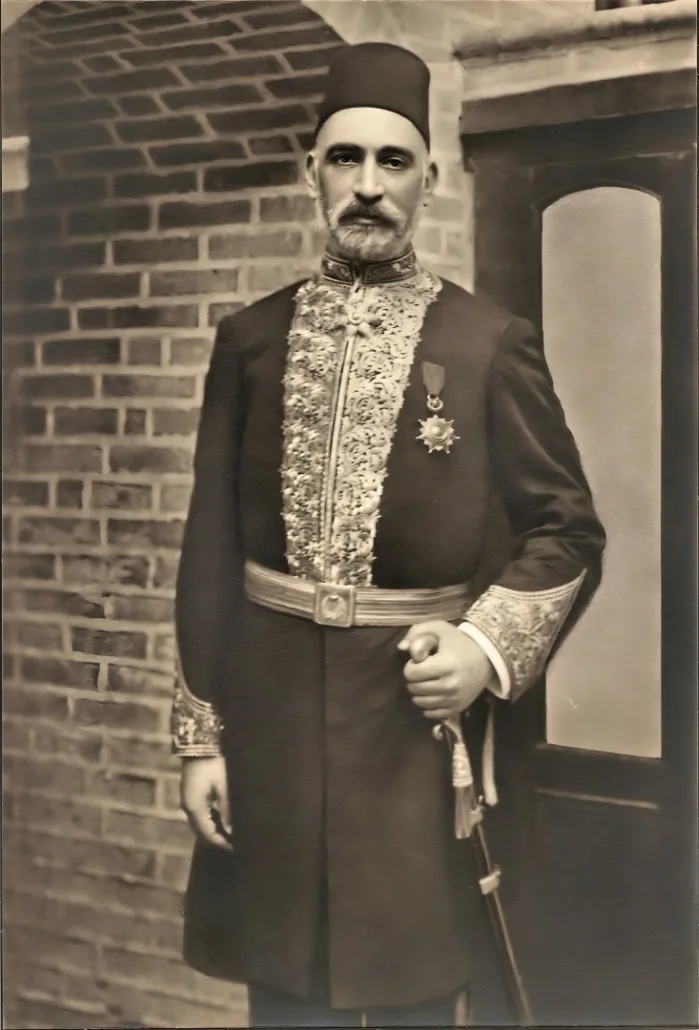
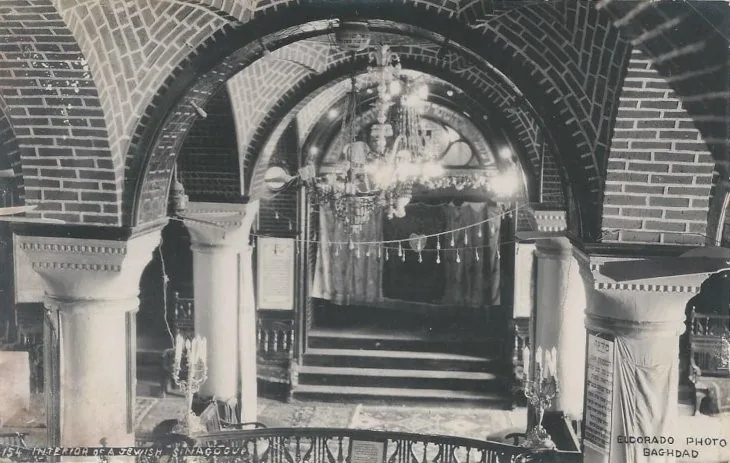
Sir Sassoon Eskell, represented inside the suitcase, embodies that entanglement. A Baghdadi Jewish statesman, he served repeatedly as finance minister in the early Iraqi governments and helped shape the finances of the new state. The image of a synagogue and the family photographs resist a later simplification in which Iraqi Jews appear only as people leaving. Before departure there was belonging.
Sir Sassoon Eskell
Iraqi Jewish statesman and finance minister in several governments between 1921 and 1925.
Baghdad
In the early 1940s roughly 90,000 of Iraq’s approximately 135,000 Jews lived in the capital.
Scholarship
Mesopotamia sustained major centres of Jewish learning for well over a millennium after the Babylonian exile.
The Farhud
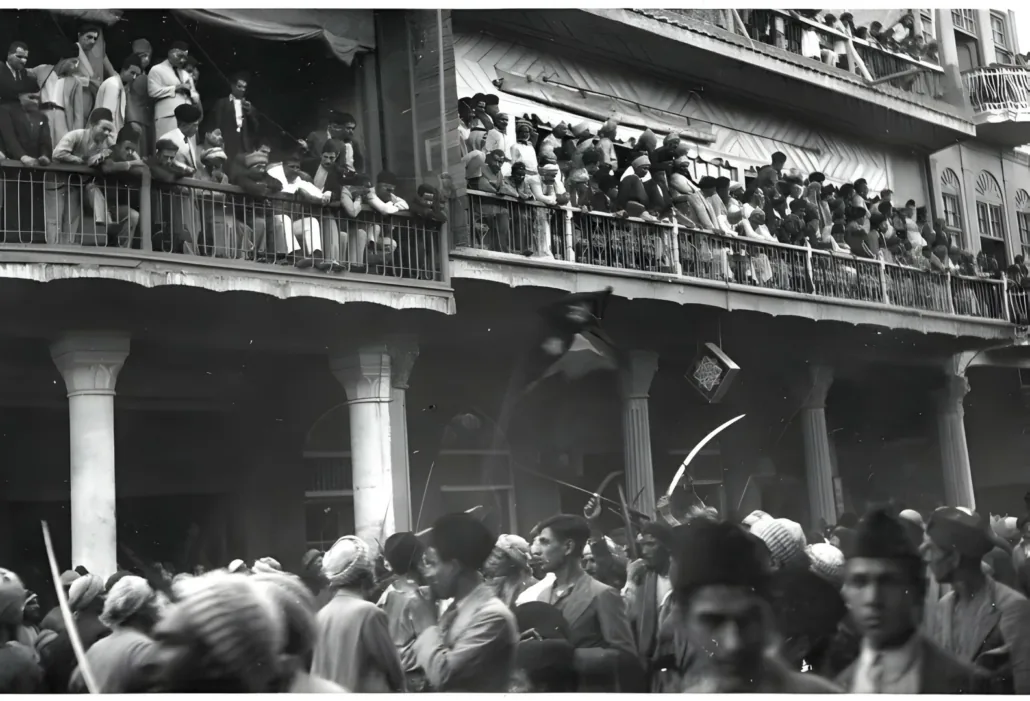
On 1–2 June 1941, after the collapse of Rashid Ali al-Gaylani’s pro-Axis government, violence erupted against Baghdad’s Jews. The Farhud became a turning point in the history of Iraqi Jewry. The United States Holocaust Memorial Museum records between 150 and 180 Jewish victims in later estimates; the official Iraqi commission counted 128 dead, with hundreds wounded and around 1,500 homes and businesses looted.
The event did not immediately empty Iraq of its Jews, but it changed the terms of belonging. A community that had understood Iraq as home now had reason to fear the state, parts of the security apparatus and neighbours who could turn violently against it.
Hajj Amin al-Husayni and Nazi Germany
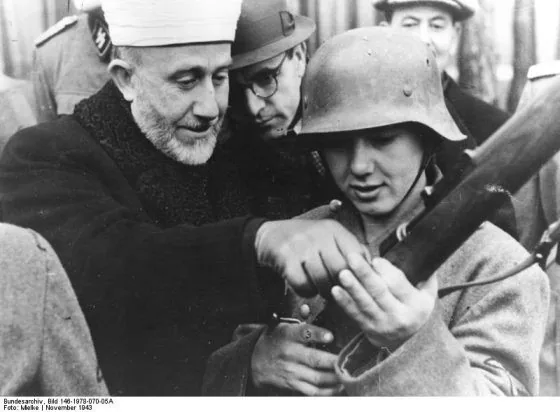
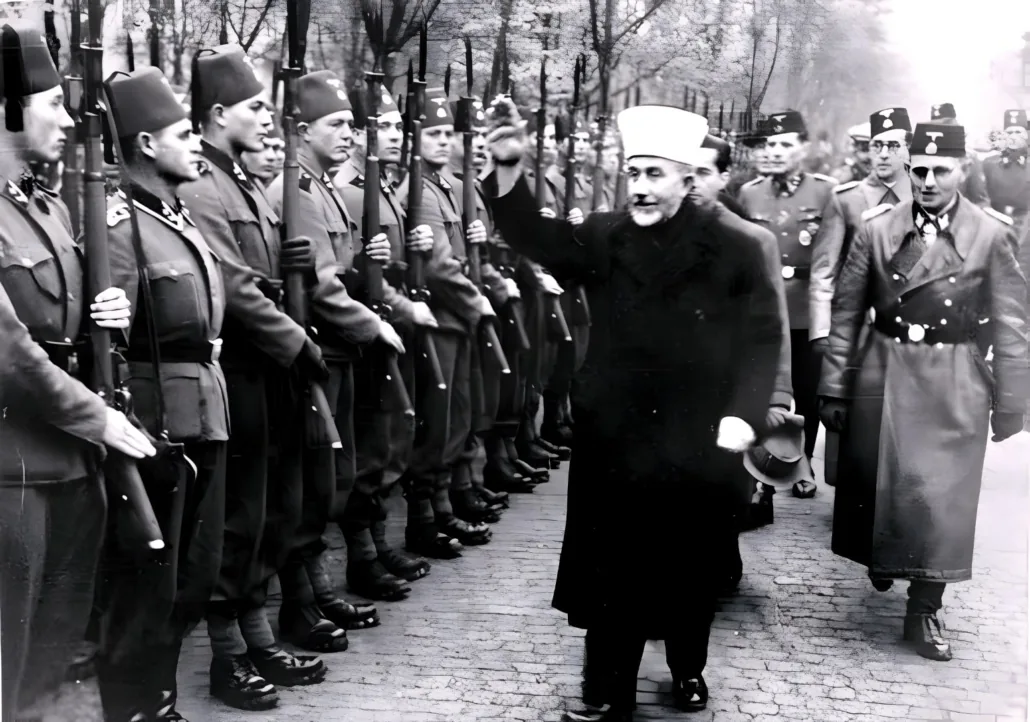
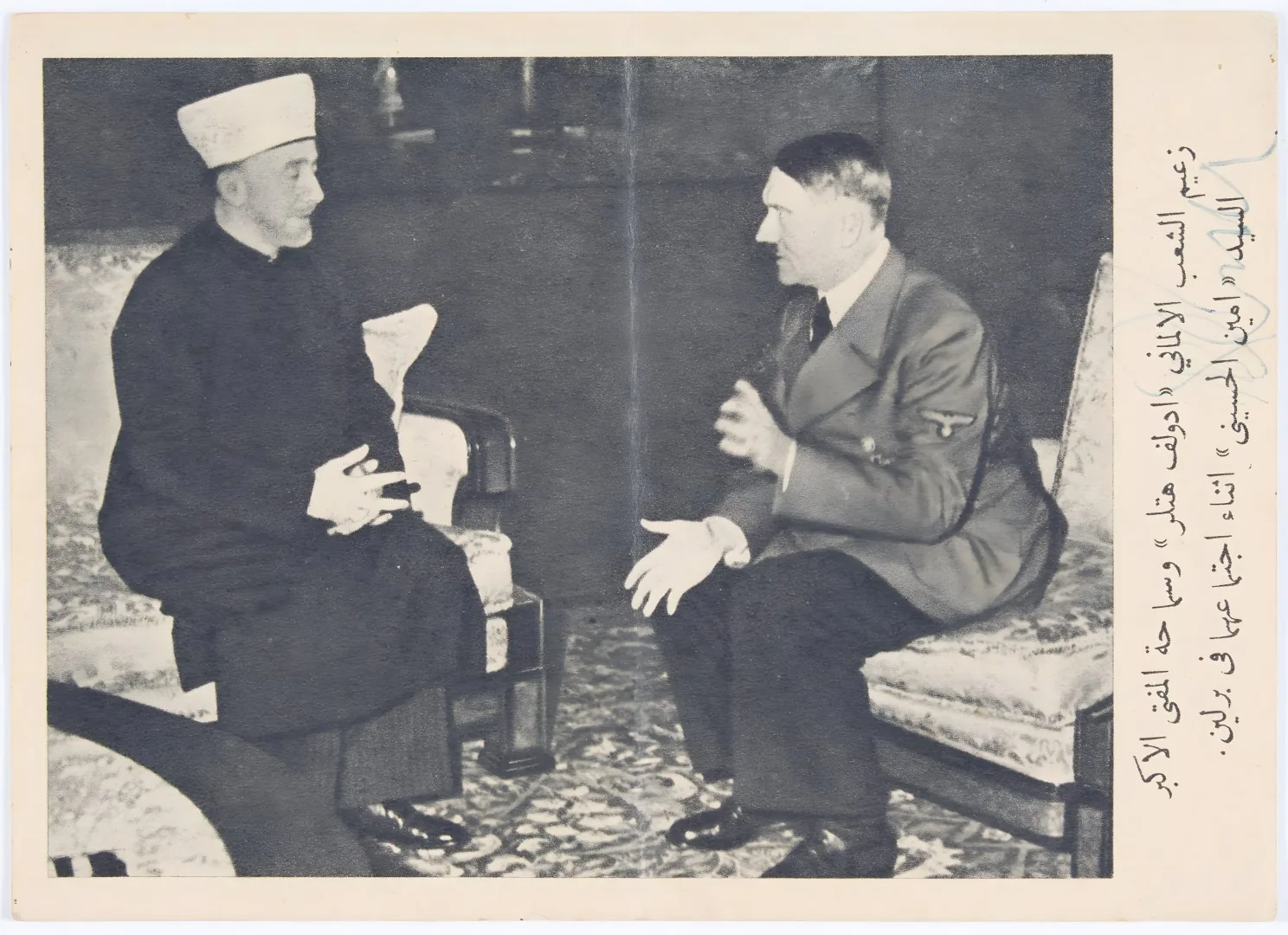
The cleric concealed at the summit of the painted Tower of Babel is Hajj Amin al‑Husayni, the former Mufti of Jerusalem. During the Second World War he collaborated with Nazi Germany and Fascist Italy, broadcast antisemitic and anti-Allied propaganda from Berlin, met Adolf Hitler in November 1941, and assisted Waffen‑SS recruitment among Bosnian Muslims.
Read more
Hajj Amin al-Husayni and Nazi Germany
The cleric concealed at the summit of the painted Tower of Babel is Hajj Amin al‑Husayni, the former Mufti of Jerusalem. During the Second World War he collaborated with Nazi Germany and Fascist Italy, broadcast antisemitic and anti-Allied propaganda from Berlin, met Adolf Hitler in November 1941, and assisted Waffen‑SS recruitment among Bosnian Muslims.
His presence in the painting links the modern catastrophe in Iraq to the wider circulation of European fascist and antisemitic ideas in the Middle East. Historical responsibility needs precision: the USHMM notes that although al‑Husayni was in Iraq during the pro-Axis crisis of 1941 and later blamed Jews for the regime’s defeat, available documentation does not establish a direct causal link between his words or actions and the Farhud itself.
The suitcase becomes literal
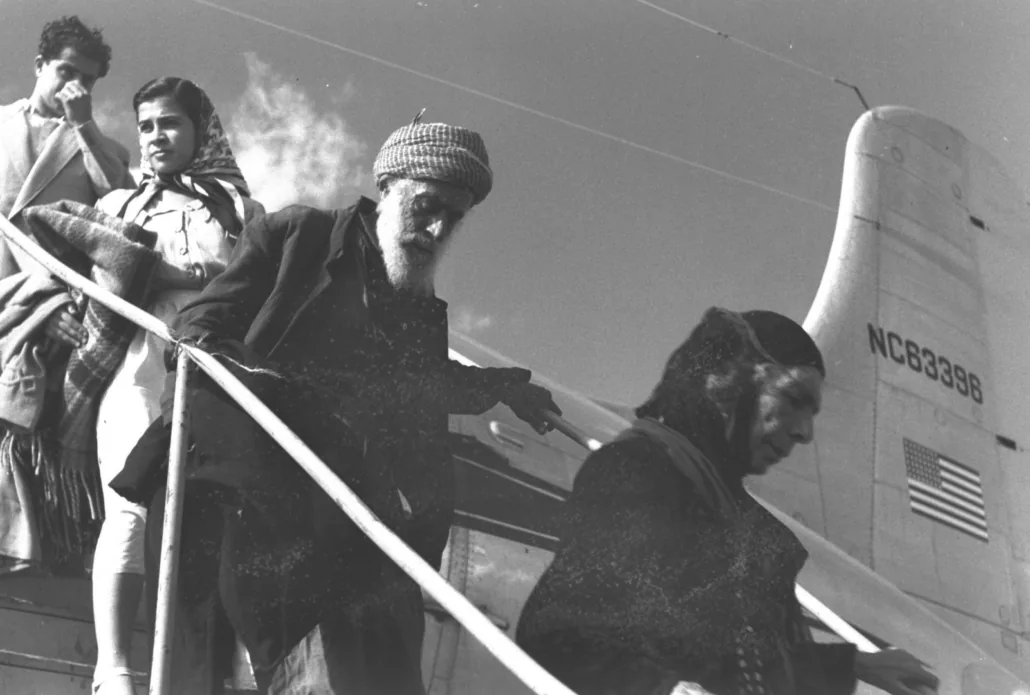
After 1948, anti-Jewish measures, arrests, political suspicion and insecurity accelerated the collapse of the community. In March 1950 Iraq permitted Jews to renounce their citizenship and leave. The following year, while tens of thousands were still waiting to depart, the government froze the assets of those registered for emigration.
Read more
The suitcase becomes literal
After 1948, anti-Jewish measures, arrests, political suspicion and insecurity accelerated the collapse of the community. In March 1950 Iraq permitted Jews to renounce their citizenship and leave. The following year, while tens of thousands were still waiting to depart, the government froze the assets of those registered for emigration.
The result was a mass exodus. More than 100,000 Iraqi Jews left in little more than a year; JDC records describe Operation Ezra and Nehemiah as bringing about 120,000 Iraqi Jews to Israel. Those departing were allowed to take only limited cash and personal possessions. The suitcase in West of Eden turns that restriction into the central form of the image.
What survives inside the suitcase
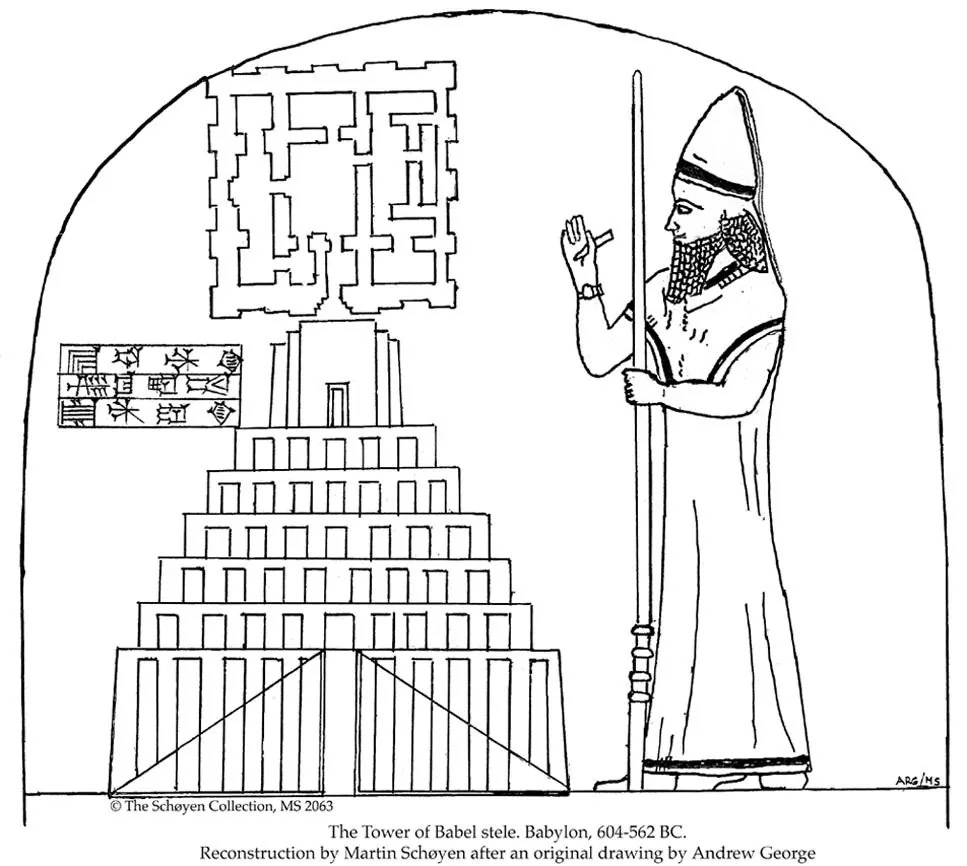
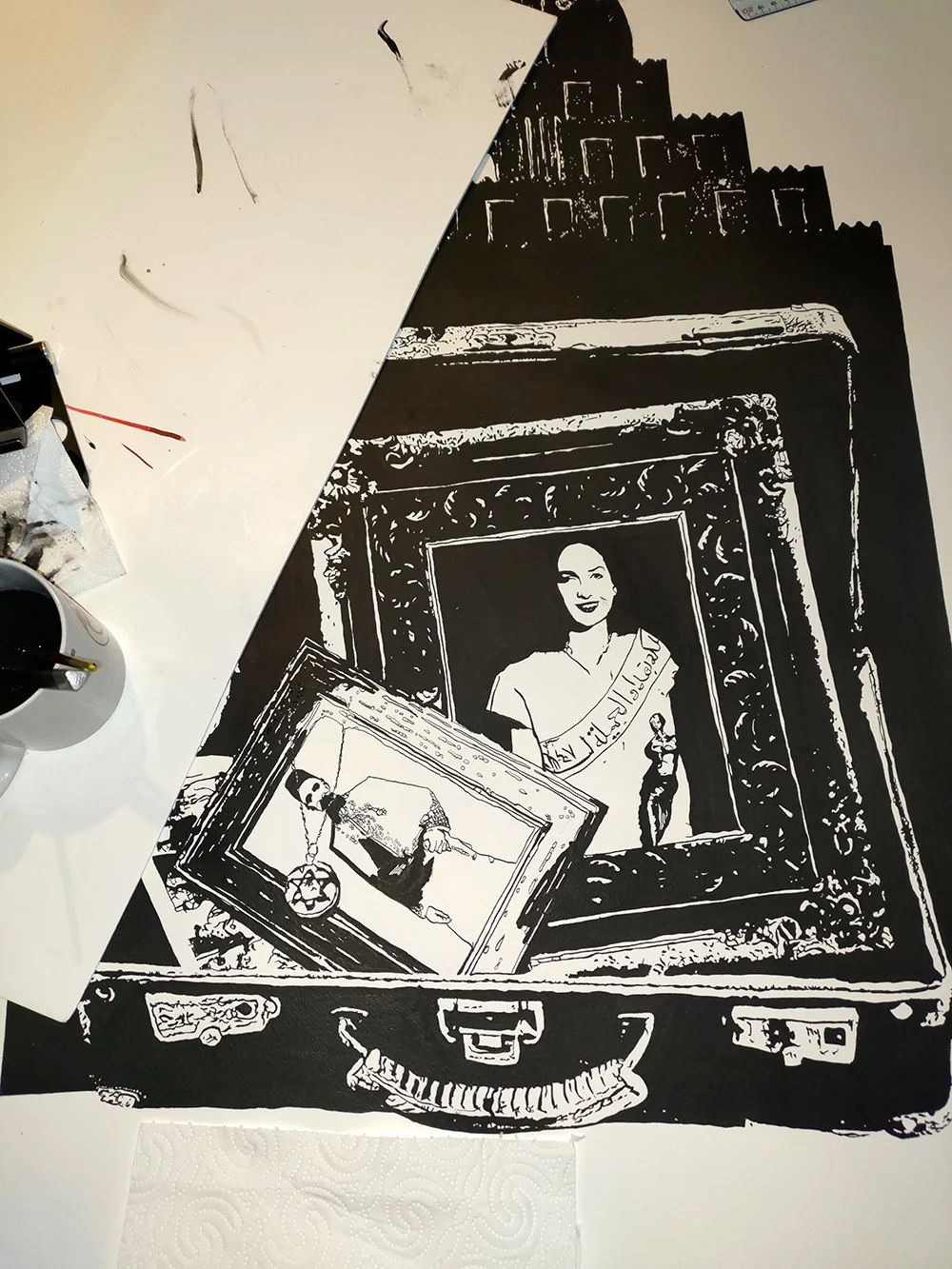
The composition is deliberately archaeological. The viewer has to excavate the image. Renée Dangoor — Miss Baghdad 1946 — represents a modern, cosmopolitan Jewish Baghdad that now seems almost unimaginable. Sir Sassoon Eskell represents participation in the building of modern Iraq. Behind them rises Babel, not as a fantasy of biblical antiquity but as the place where a displaced Judean community became rooted.
Read more
What survives inside the suitcase
The composition is deliberately archaeological. The viewer has to excavate the image. Renée Dangoor — Miss Baghdad 1946 — represents a modern, cosmopolitan Jewish Baghdad that now seems almost unimaginable. Sir Sassoon Eskell represents participation in the building of modern Iraq. Behind them rises Babel, not as a fantasy of biblical antiquity but as the place where a displaced Judean community became rooted.
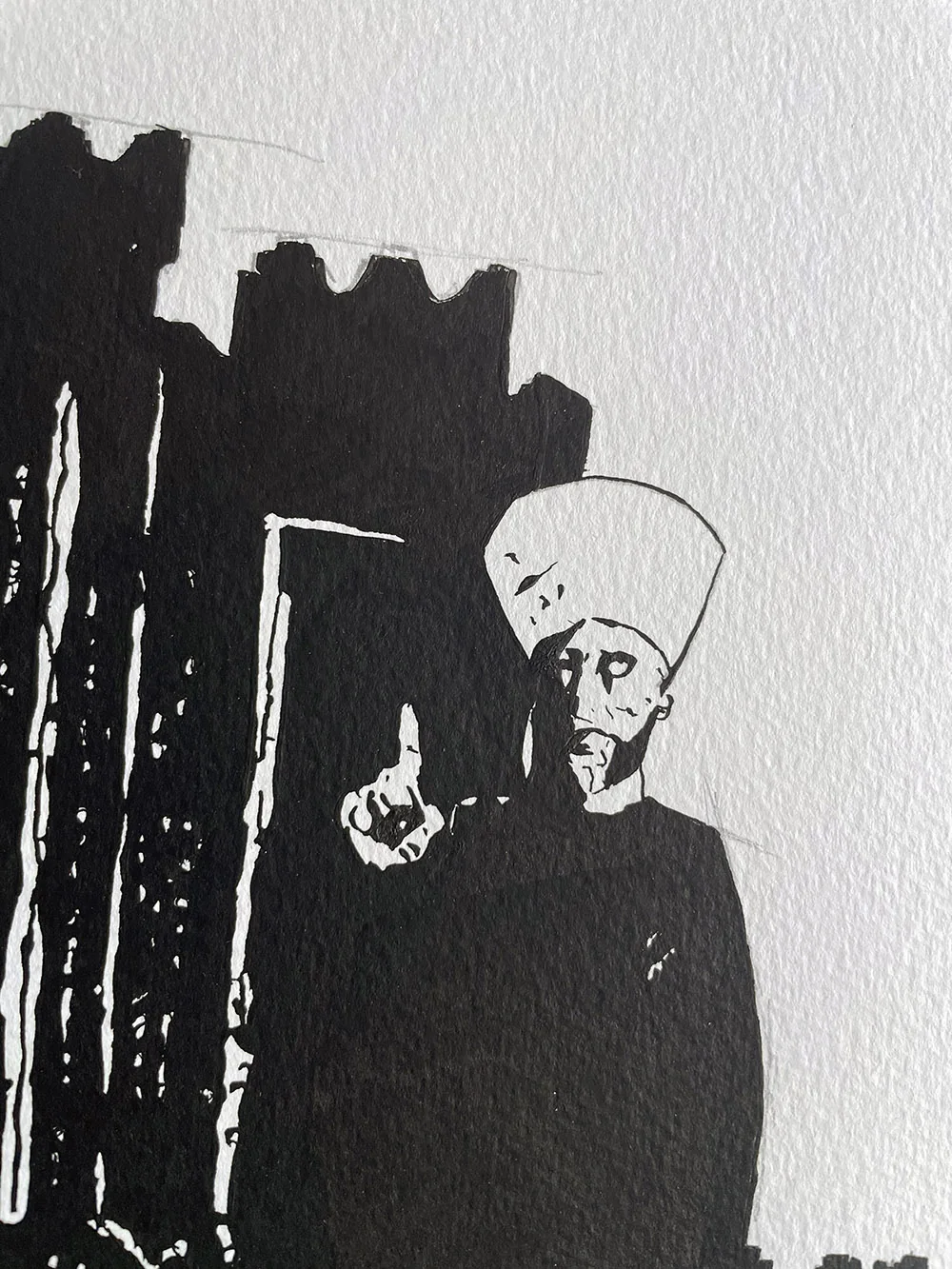
Above all of them sits the Mufti. Below, the suitcase handle and its metal fittings remain brutally ordinary. The historical scale is enormous, but the mechanism of exile is domestic: one family, one case, one departure.
The Mufti
Placed high in Babel and nearly swallowed by black ink — a political figure made into a shadow over the city.
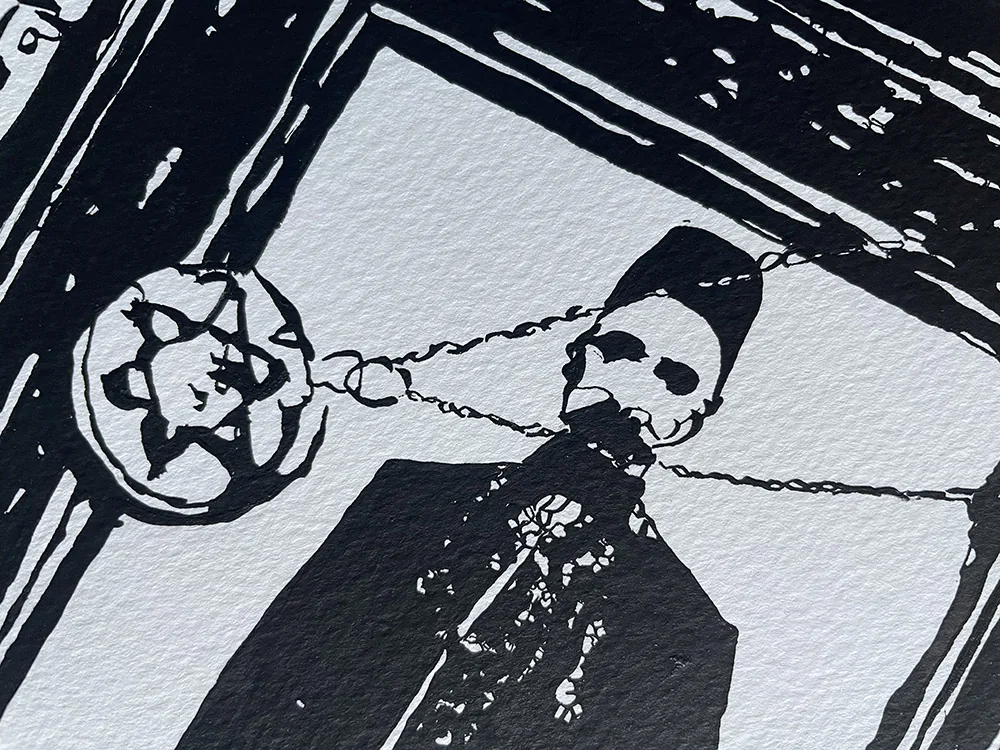
Sir Sassoon Eskell
The architect of Iraqi state finance appears not as an outsider, but as evidence of how fully Jewish history belonged to Iraqi history.
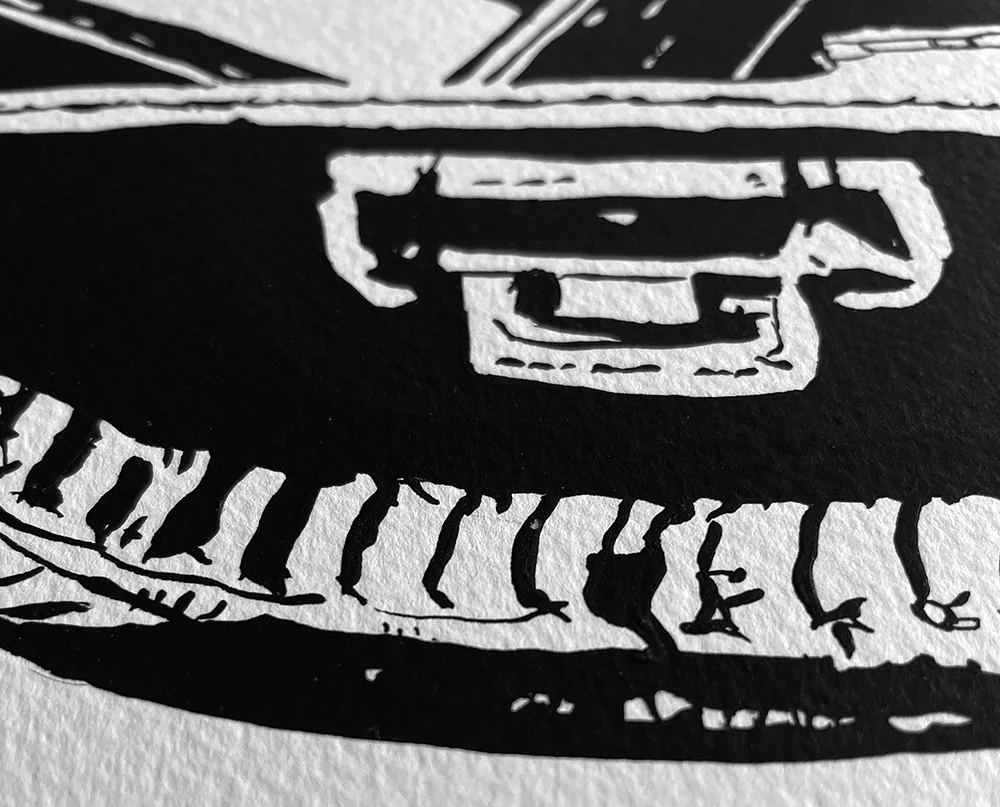
The suitcase
The most ordinary object in the drawing carries the heaviest historical weight: the enforced reduction of a homeland to luggage.
2024 → 2026
Original · 2024
50 × 70 cm · Indian ink. The first completed formulation of the suitcase, Babel and the historical figures.
Large-format version · 2026
75 × 110 cm · Indian ink. The composition is reworked at a much larger scale, allowing the historical fragments and the black architecture of Babel to become more physical.
Building the larger version
The 2026 work was not simply enlarged from the earlier sheet. The surviving studio photographs show the composition being rebuilt across the 75 × 110 cm paper: Babel darkens first, while the suitcase remains an open field in which the historical portraits are introduced one by one.
View process & sketches
Building the larger version
The 2026 work was not simply enlarged from the earlier sheet. The surviving studio photographs show the composition being rebuilt across the 75 × 110 cm paper: Babel darkens first, while the suitcase remains an open field in which the historical portraits are introduced one by one.
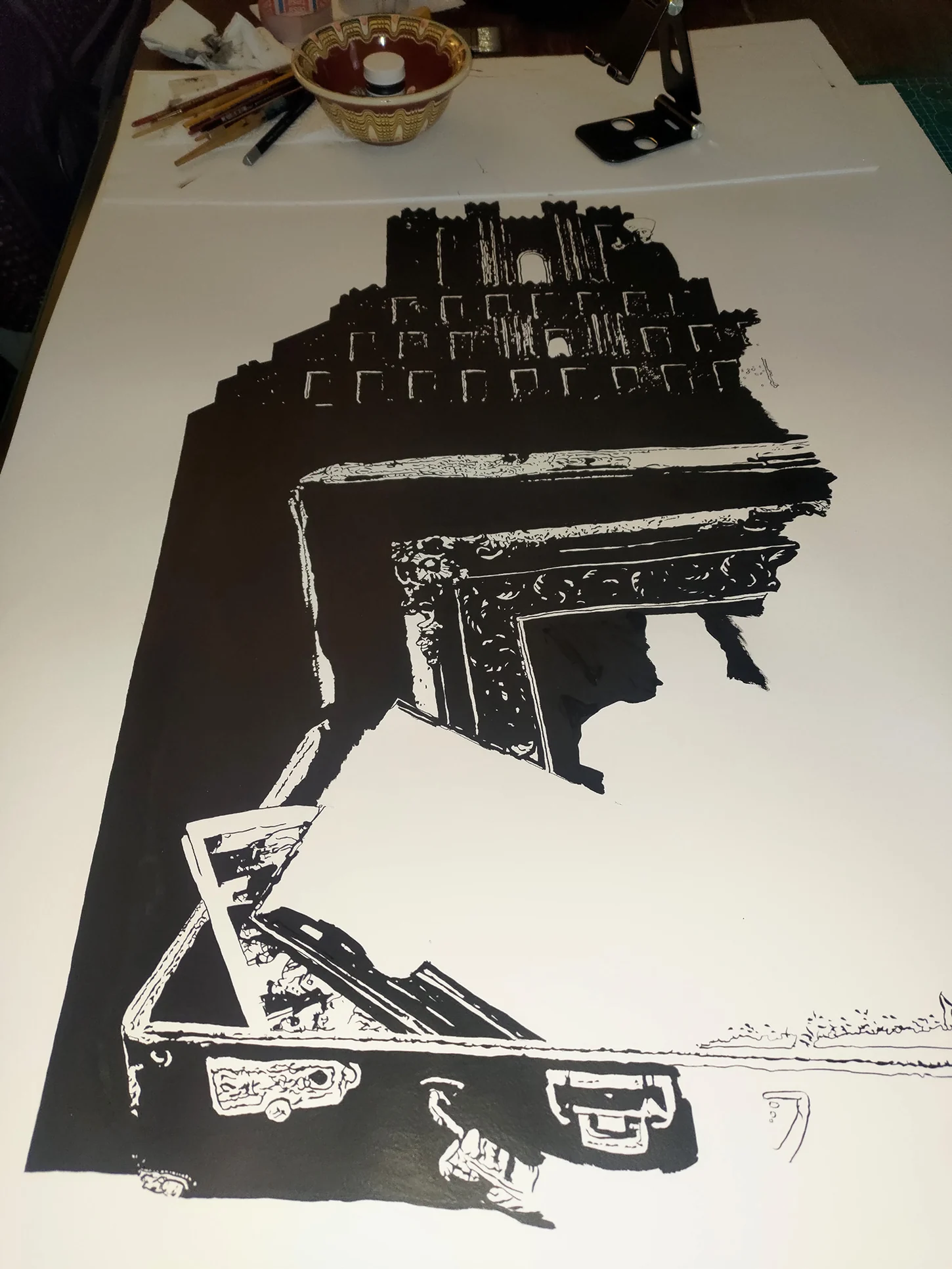
Full Circle, Brussels · 18–19 November 2024
The work was first presented during the international colloquium on the forced exile of Jews, Christians and Yezidis from the countries of the Middle East, held at Full Circle in Brussels on 18–19 November 2024.
View exhibition history
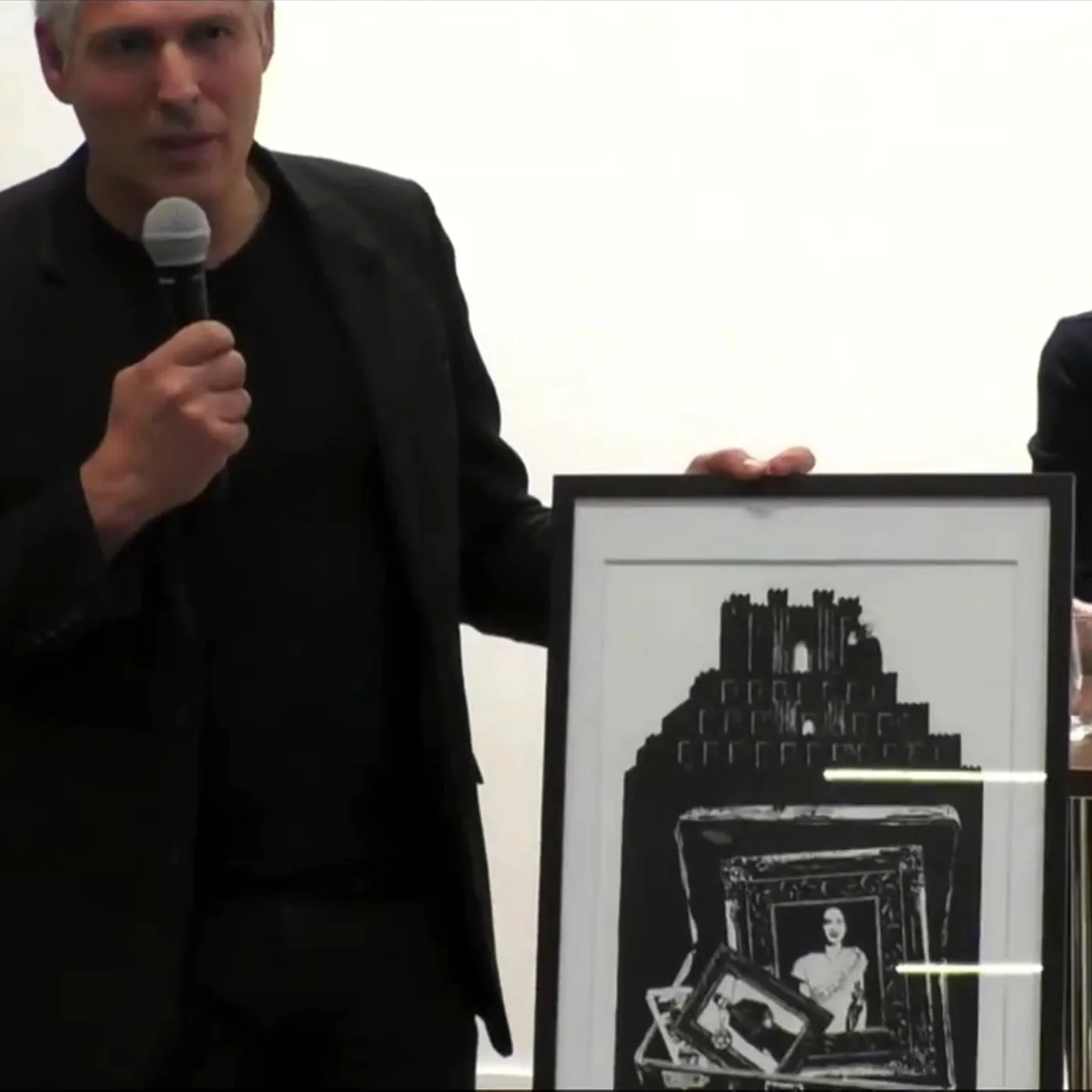
Full Circle, Brussels · 18–19 November 2024
The work was first presented during the international colloquium on the forced exile of Jews, Christians and Yezidis from the countries of the Middle East, held at Full Circle in Brussels on 18–19 November 2024.
That context matters. West of Eden was not conceived as a detached biblical meditation. It was shown in a discussion about communities whose presence in the Middle East long pre-dated the modern states from which many were eventually displaced.
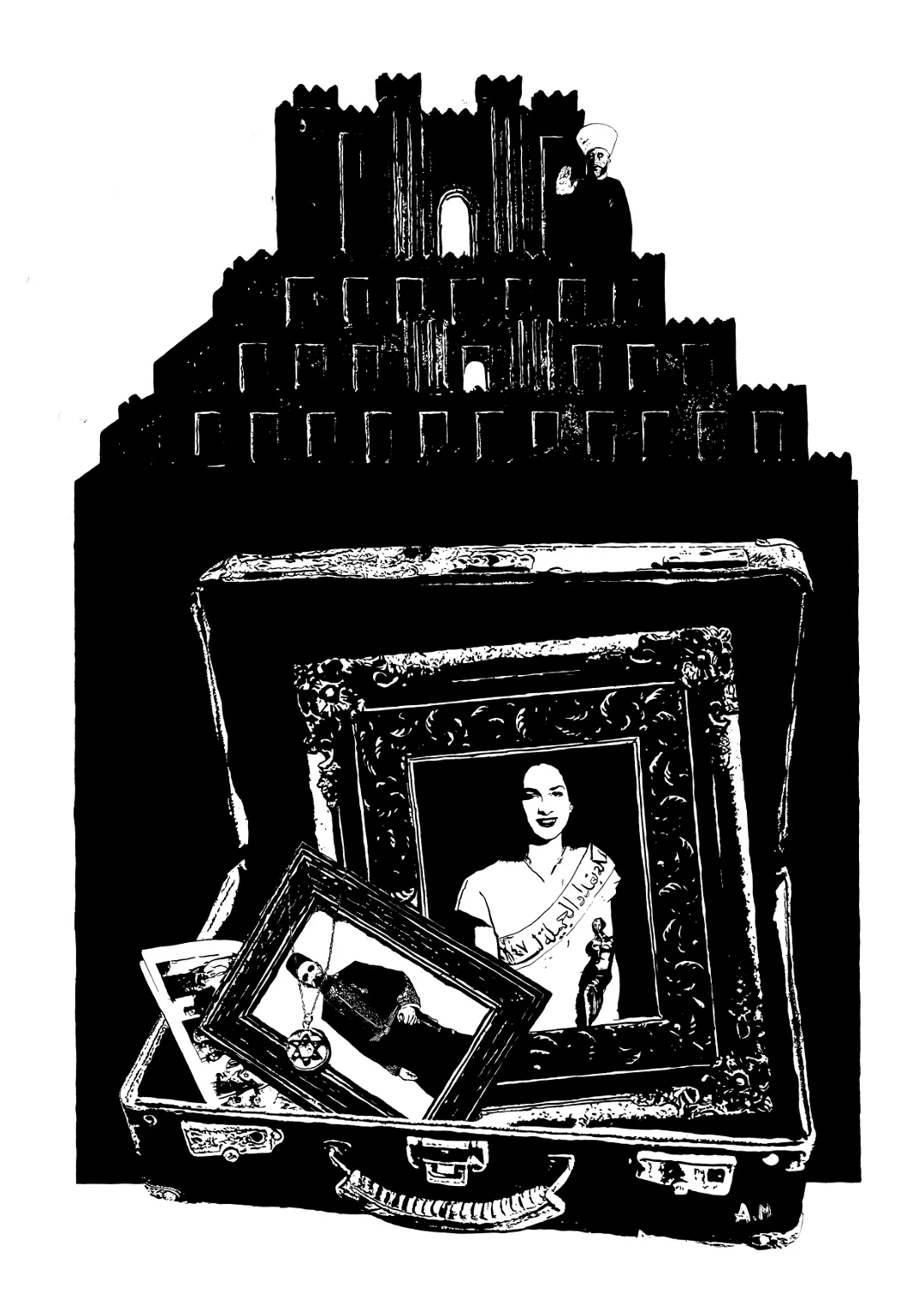
West of Eden · limited edition
A lithographic edition was produced in 2024 from the original composition.
Buy a printBabylon, Baghdad and rupture
View sources & further reading
Babylon, Baghdad and rupture
- United States Holocaust Memorial Museum, “The Farhud” — overview of the June 1941 pogrom and the range of casualty figures. Read online.
- United States Holocaust Memorial Museum, “Hajj Amin al-Husayni: The Mufti of Jerusalem” and “Wartime Propagandist” — Hitler meeting, radio propaganda and recruitment activity with Nazi Germany. Read online.
- The Metropolitan Museum of Art, “Cyrus and the Judean Diaspora” — the Al-Yahudu documents and Judean communities in Babylonia. Read online.
- Cambridge University Press / Israel Law Review, “1948 Refugees” — discussion of the 1950 Iraqi denaturalisation law, property restrictions and the departure of Iraqi Jews. Read online.
- JDC Archives, Geneva Office finding aid and historical timeline — Operation Ezra and Nehemiah and the airlift of approximately 120,000 Iraqi Jews. Read online.
- Encyclopaedia Judaica, entry on Sir Ezekiel Sassoon / Sassoon Eskell — Iraqi statesman and finance minister in the early Iraqi governments.
Historical photographs and archaeological comparanda help explain the visual genealogy of the work.