Where Liberty
Goes to Die
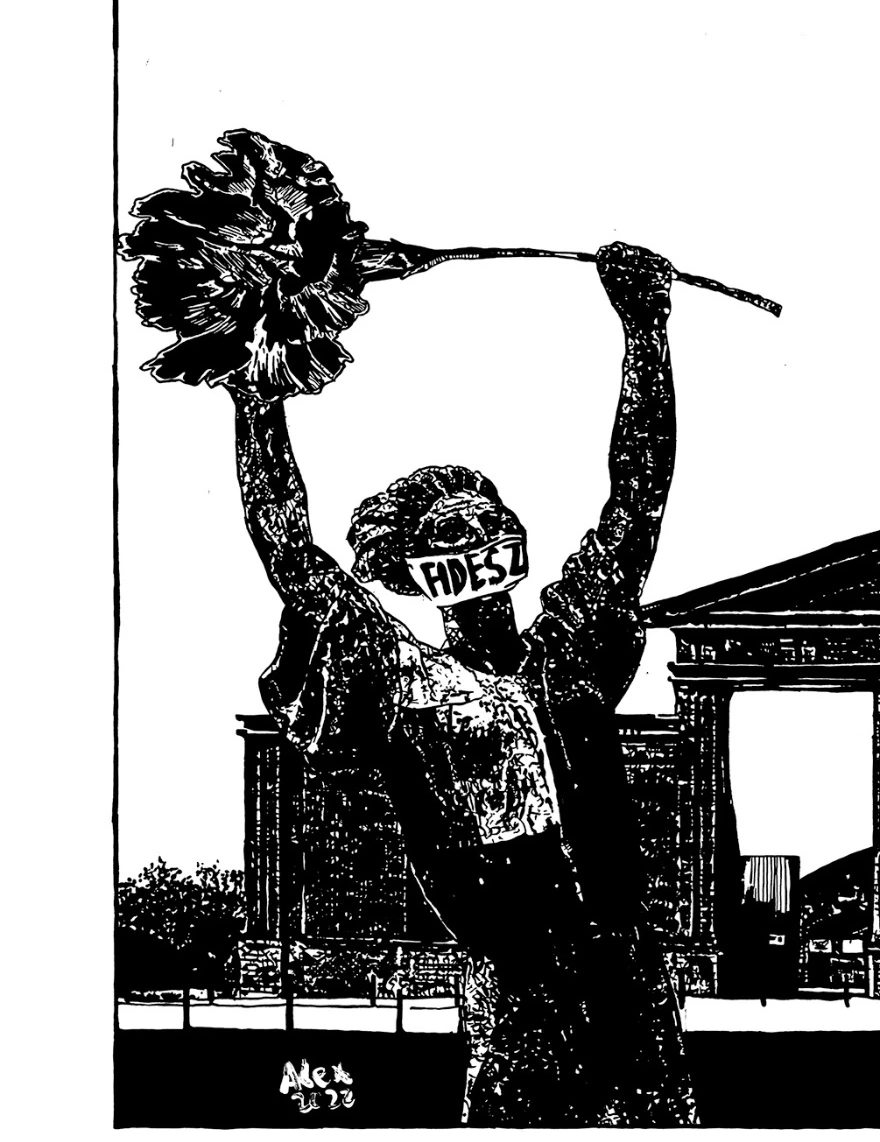
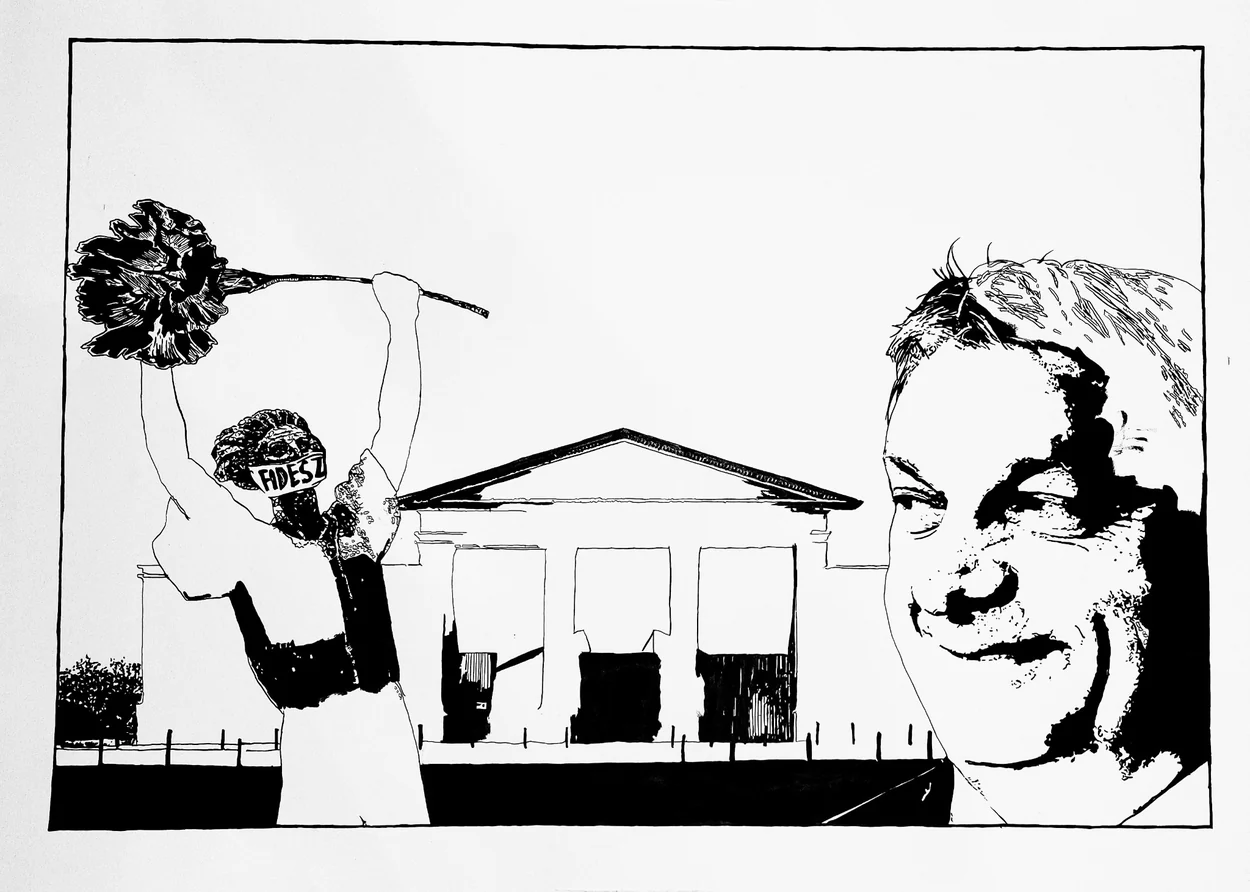
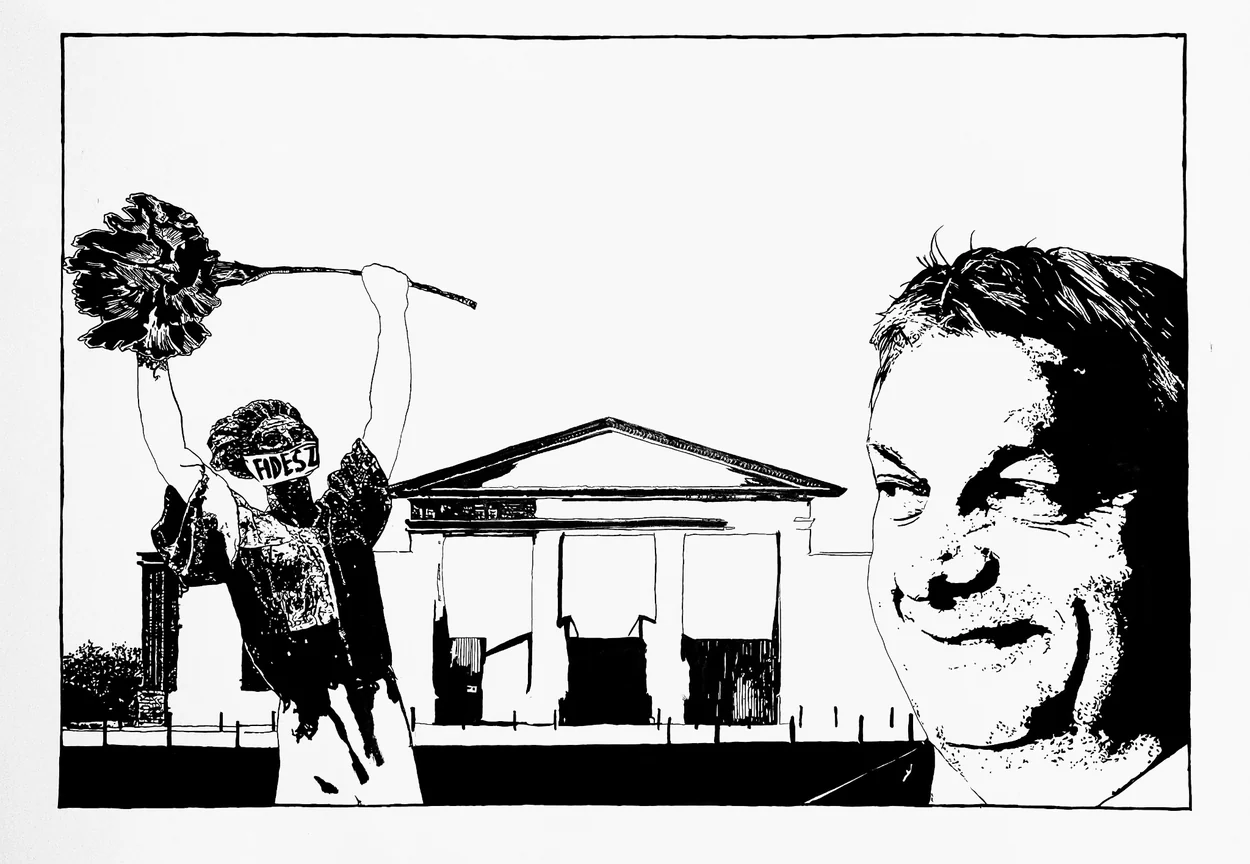
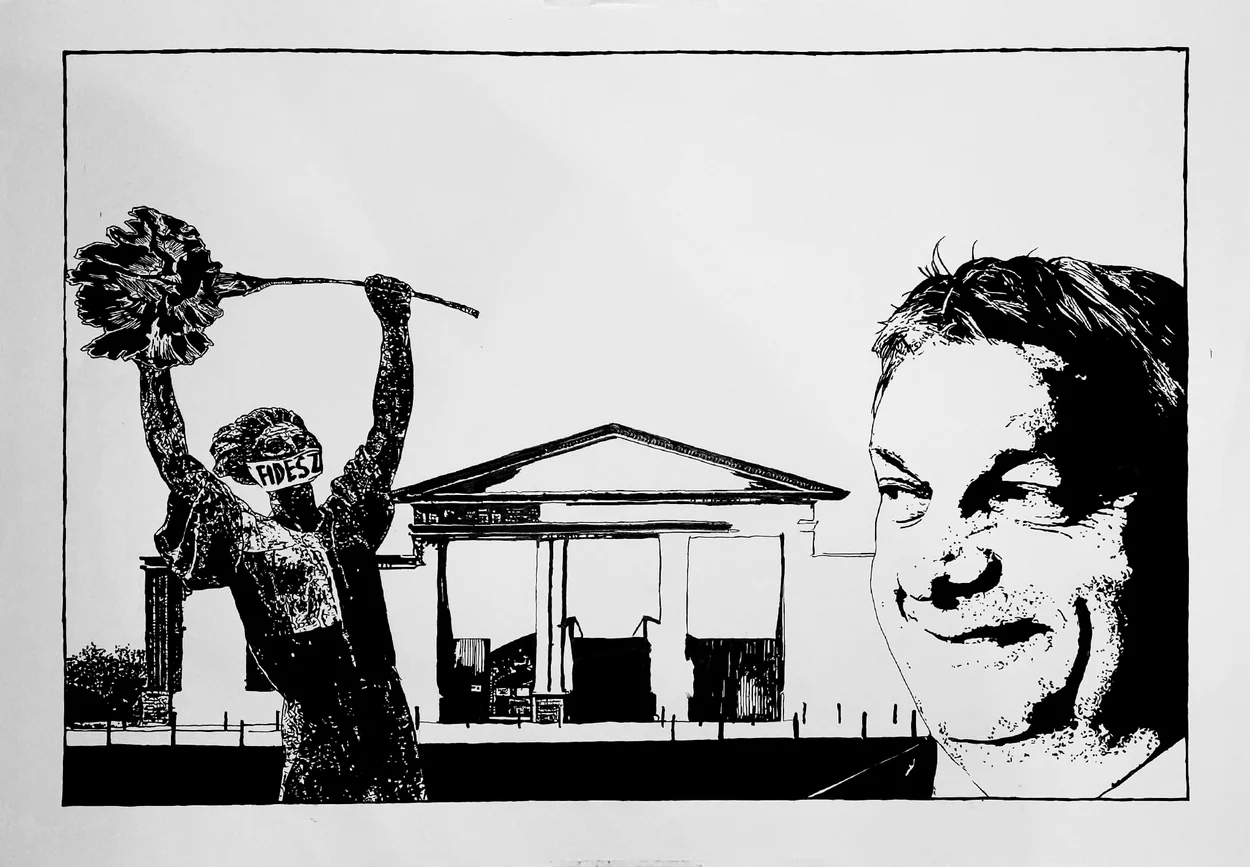
Budapest’s Liberty Statue has been removed from its hilltop and sent, imaginatively, to Memento Park. It is blindfolded with the name FIDESZ and no longer carries its familiar palm leaf.
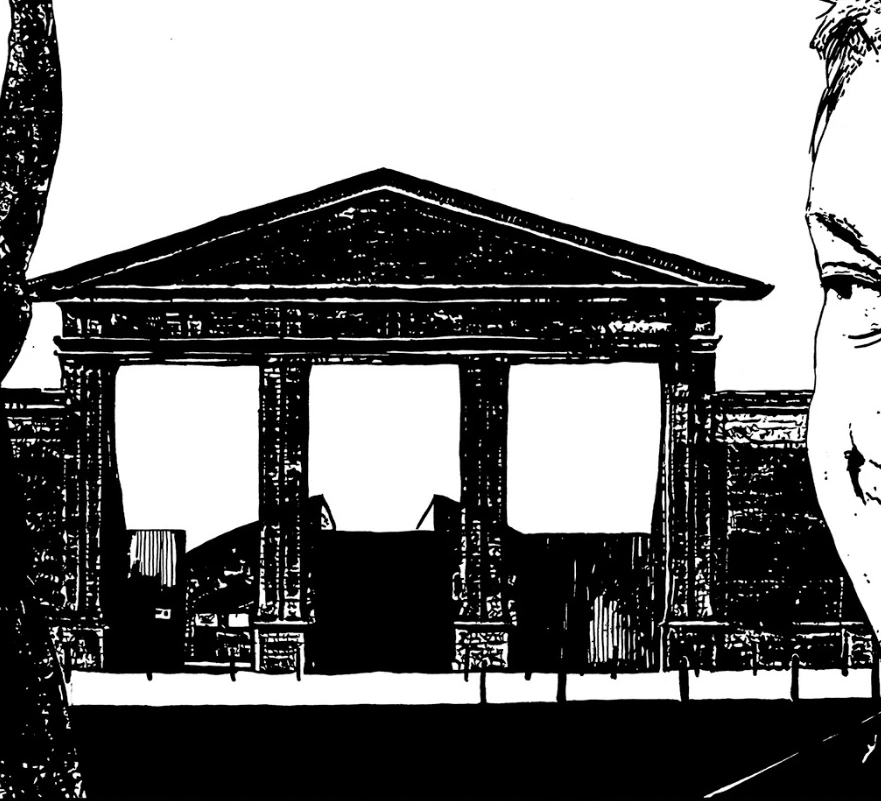
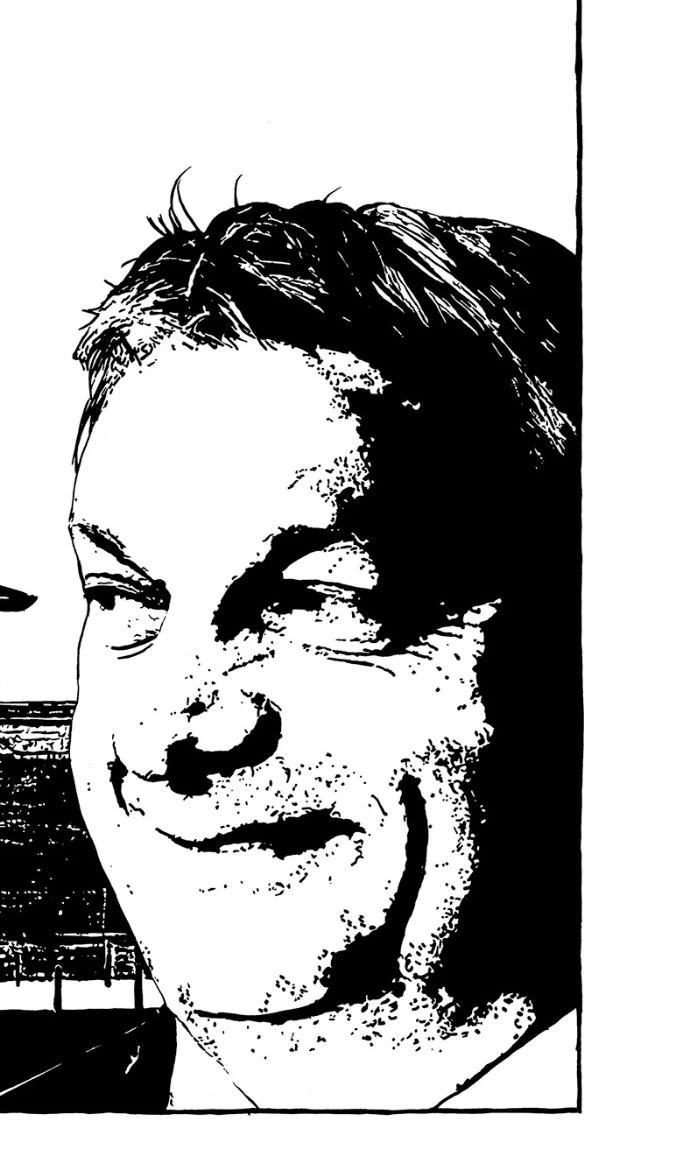
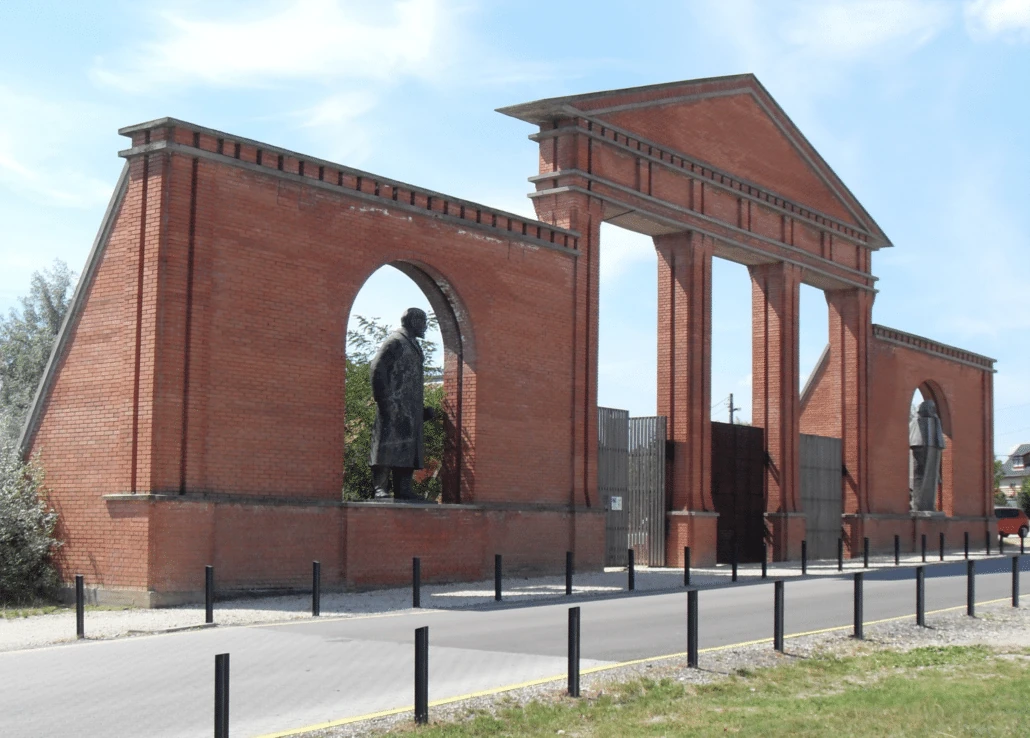
In its place is a carnation: in the drawing it is green, the only colour in an otherwise black-and-white composition. At right, Viktor Orbán’s face fills the frame. Between them stands the monumental entrance to Memento Park, the museum created after the end of communist rule to receive statues that had lost their place in democratic public space.
The image was made in 2022. It does not try to predict Hungary’s future. It fixes a political anxiety to a particular moment and stages that anxiety through a monument whose own meaning had already been rewritten once before.
Three competing claims to liberty
The composition is deliberately theatrical. A public monument, a museum of discarded political imagery and a contemporary political leader are compressed into the same horizontal stage.
A monument that had already changed sides
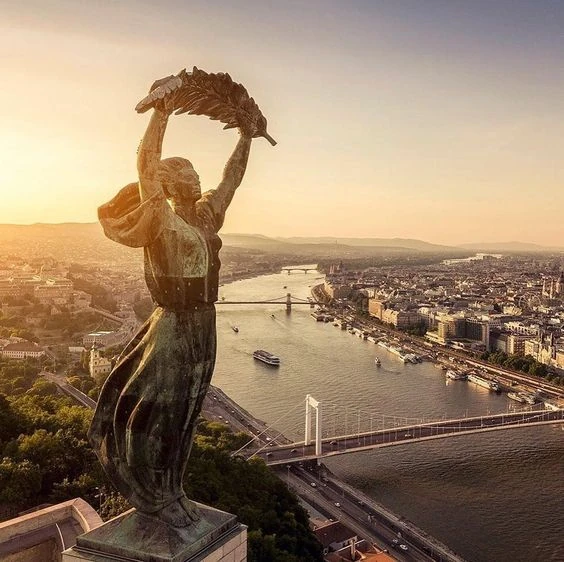
The figure now known as Budapest’s Liberty Statue was erected on Gellért Hill in 1947 as part of a monument celebrating the Soviet defeat of Nazi Germany and the Red Army’s role in the liberation of Hungary. Designed by Zsigmond Kisfaludi Stróbl, the female figure holds a palm leaf high above the city.
Read full historical context
A monument that had already changed sides
The figure now known as Budapest’s Liberty Statue was erected on Gellért Hill in 1947 as part of a monument celebrating the Soviet defeat of Nazi Germany and the Red Army’s role in the liberation of Hungary. Designed by Zsigmond Kisfaludi Stróbl, the female figure holds a palm leaf high above the city.
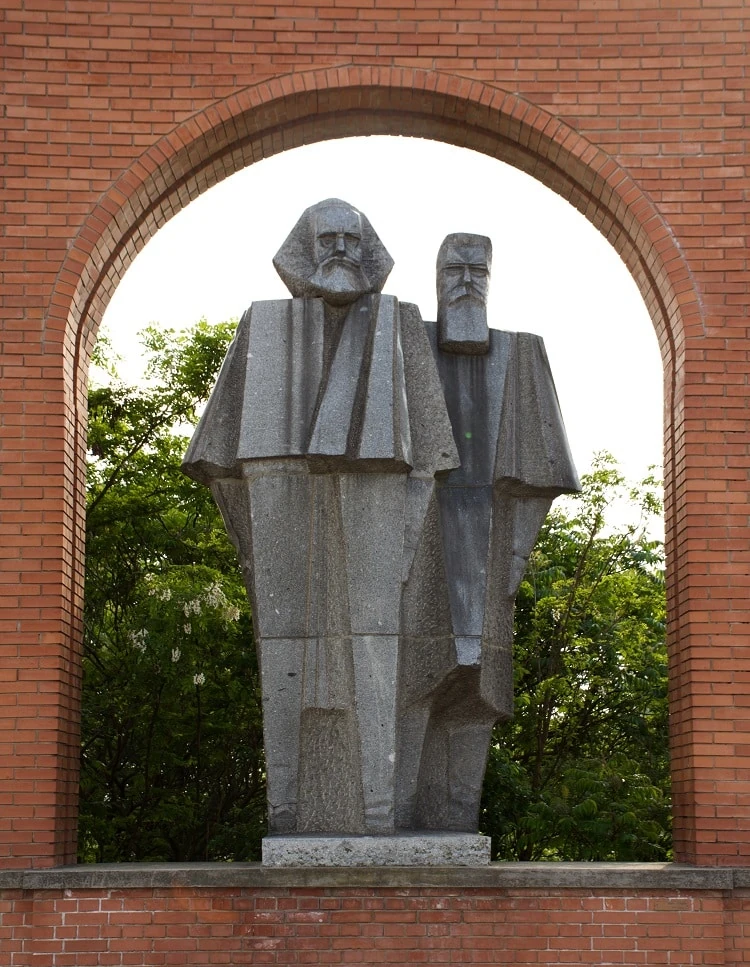
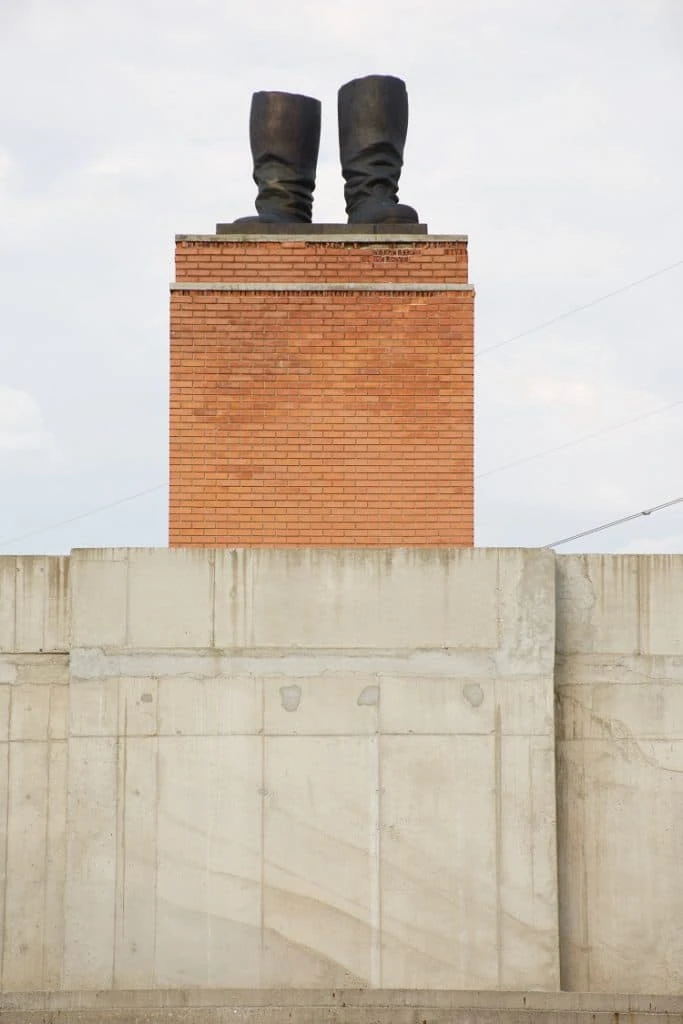
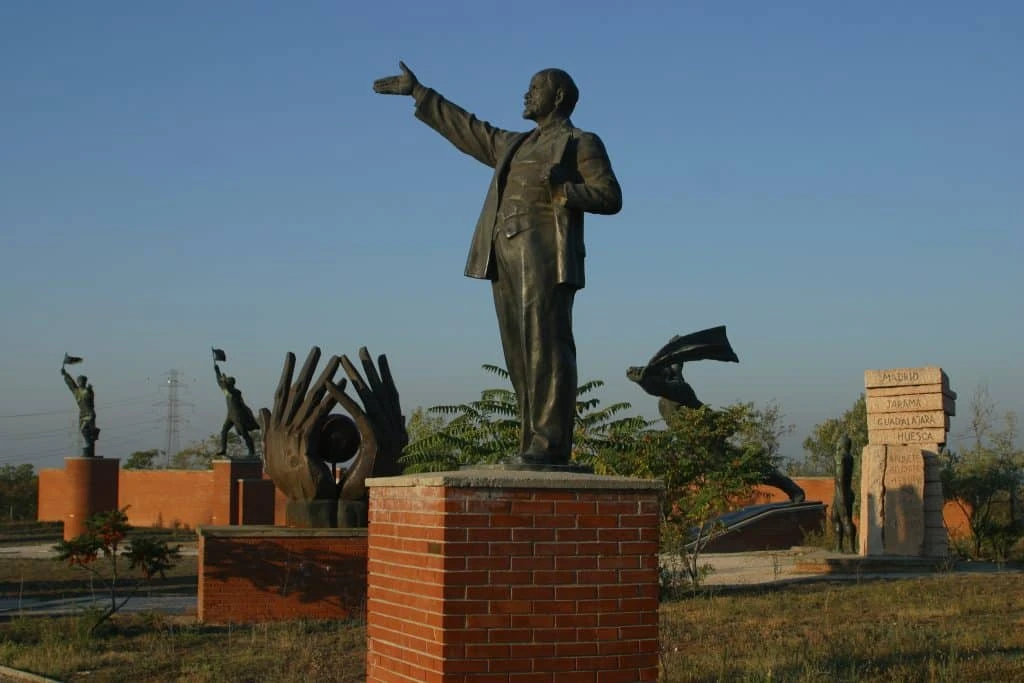
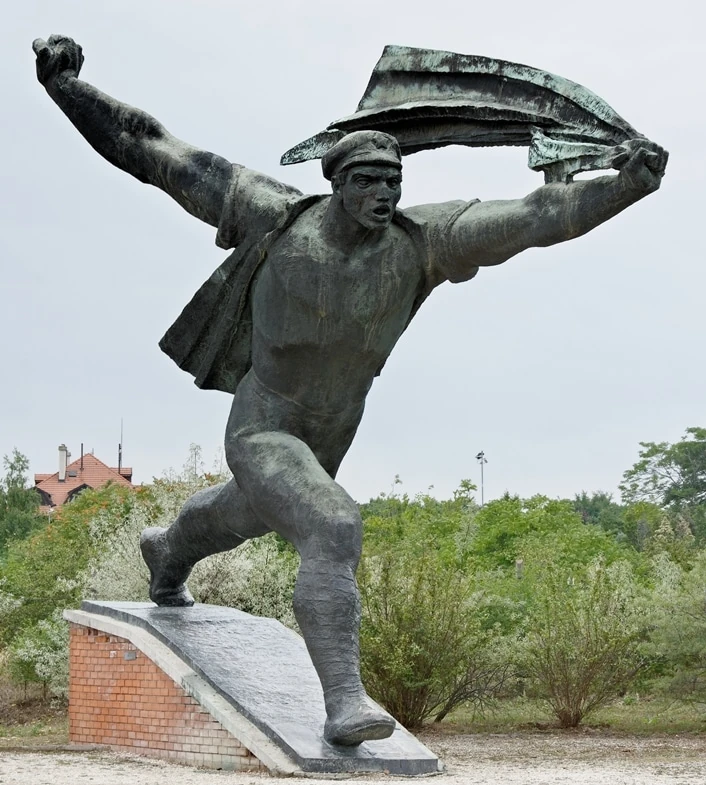
After the collapse of state socialism, Budapest faced the problem of what to do with monuments whose political meanings had become unacceptable. Many were removed. Rather than destroy them, the city created Memento Park, which opened in 1993 and placed communist-era monuments within an explicitly historical and critical setting.
The hilltop figure was treated differently. It remained in place, while the monument’s inscription and meaning were altered. Its survival made it a particularly useful image for a project concerned with memory: the same bronze body could move from “Liberation” to “Liberty” without moving at all.
The green carnation
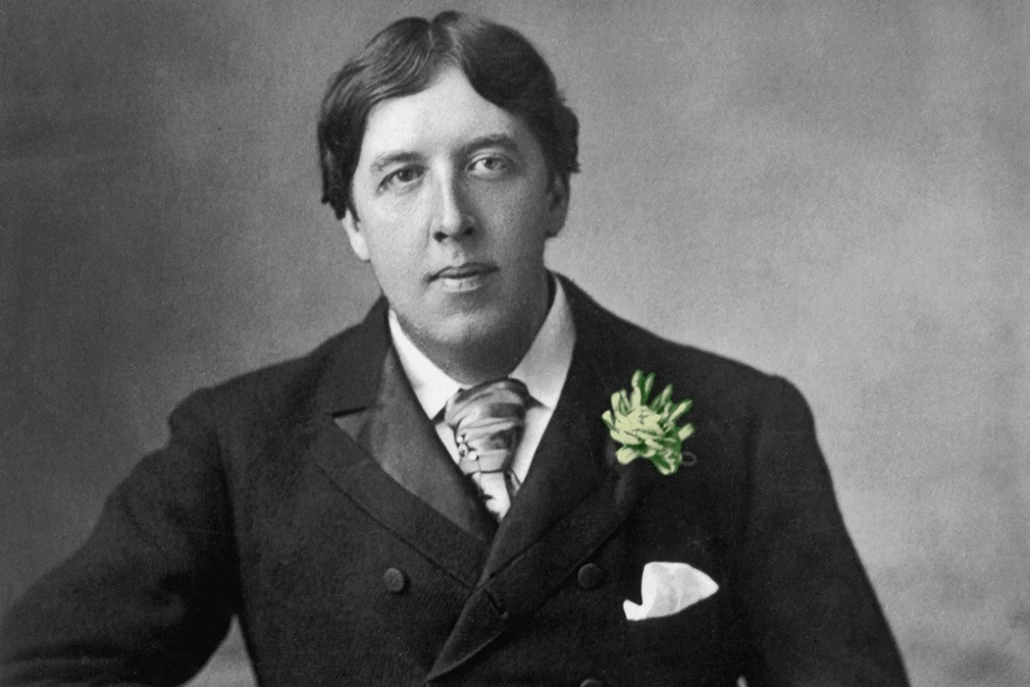
The palm leaf is replaced by a carnation. Its colour cannot be seen in the black-and-white reproduction, but in the work it is conceived as green. Oscar Wilde popularised the green carnation in the 1890s, and the flower subsequently entered queer visual culture as a discreet sign of same-sex identity.
This matters because the immediate political context of the drawing was Hungary’s 2021 legislation restricting access by minors to material portraying or promoting homosexuality, gender reassignment or gender identities differing from sex assigned at birth. The law was presented by the Hungarian government as child protection; its compatibility with EU law and fundamental rights became the subject of a major infringement action.
The statue
A monument whose official meaning changed after 1989 without its body being removed.
The blindfold
FIDESZ is not merely written into the scene; it physically blocks the allegorical figure’s sight.
The flower
The green carnation brings a coded queer symbol into a monument originally created by a communist state.
Building the political stage
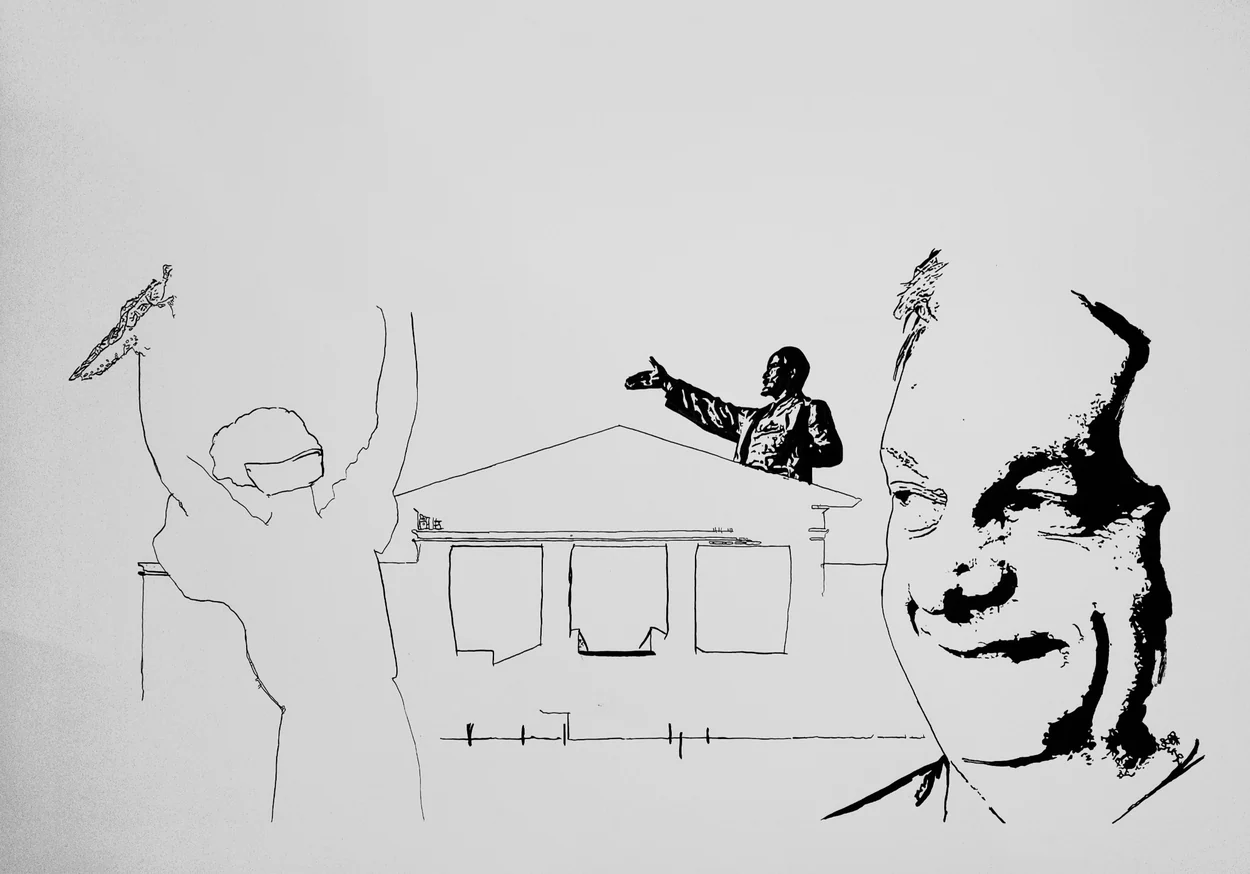
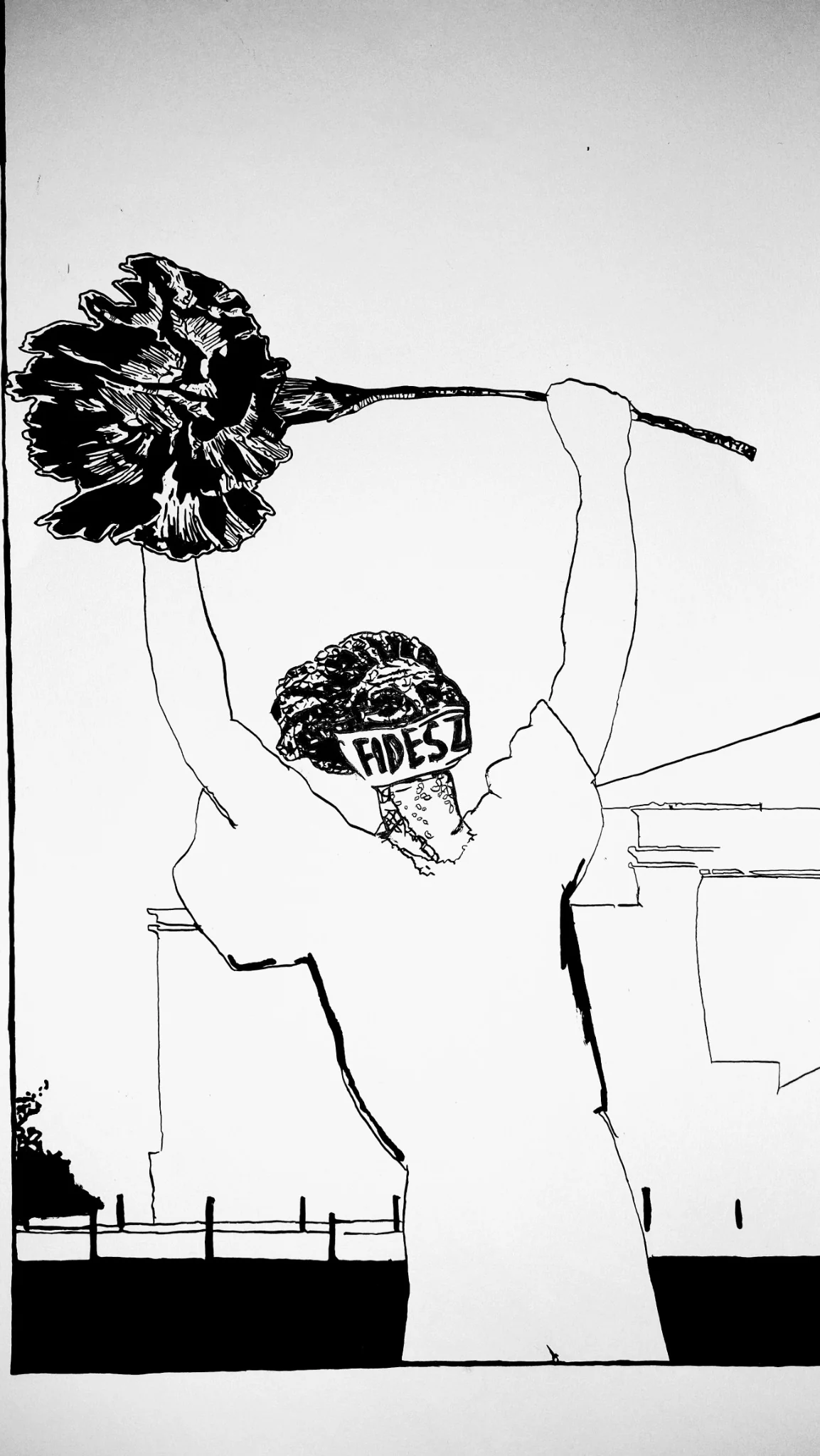
The surviving photographs show the drawing developing element by element. Orbán’s face and the architecture are established early; the blindfolded statue is then built progressively from line into dense black ink. The process photographs make clear how much of the final image depends on leaving large areas of paper untouched.
View process & sketches
Building the political stage
The surviving photographs show the drawing developing element by element. Orbán’s face and the architecture are established early; the blindfolded statue is then built progressively from line into dense black ink. The process photographs make clear how much of the final image depends on leaving large areas of paper untouched.
A work from 2022 in a country that continued to change
Because the drawing names a political party and a living political leader, its date matters. It should not be read as a claim that Hungary’s political condition was permanent.
Read more
A work from 2022 in a country that continued to change
Because the drawing names a political party and a living political leader, its date matters. It should not be read as a claim that Hungary’s political condition was permanent.
Hungary adopted Law LXXIX of 2021, restricting access by minors to content portraying or promoting homosexuality, gender reassignment or certain gender identities.
Where Liberty Goes to Die responds to the climate of the Orbán/Fidesz period through a fictional relocation of Budapest’s Liberty Statue.
Further legislation raised international concern by enabling restrictions on assemblies such as Pride marches and by expanding the use of facial-recognition technology in that context.
On 21 April, the Court of Justice of the European Union held that the 2021 law breached EU law and, for the first time in such an infringement action, Article 2 TEU values. In the April parliamentary election, TISZA defeated Fidesz-KDNP, ending sixteen years of Fidesz-led government; Péter Magyar became prime minister in May.
These later developments do not invalidate the image. They turn it into something more precise: a record of how liberty, identity and democratic institutions were being contested at a particular point in time.
Liberty after Liberty
The story did not stop with the drawing. During the major renovation of the Citadella, the Liberty Statue ensemble was conserved and its surroundings redesigned. The renewed site now places a cross on the pedestal of the principal figure and explicitly connects that addition to Hungary’s Christian heritage and statehood.
Read more
Liberty after Liberty
The story did not stop with the drawing. During the major renovation of the Citadella, the Liberty Statue ensemble was conserved and its surroundings redesigned. The renewed site now places a cross on the pedestal of the principal figure and explicitly connects that addition to Hungary’s Christian heritage and statehood.
Whether one welcomes or questions that intervention, it confirms the central premise of the work: monuments do not possess a single permanent meaning. Political systems, institutions and later generations continue to write upon them.
The original in exhibition
View exhibition history
The original in exhibition
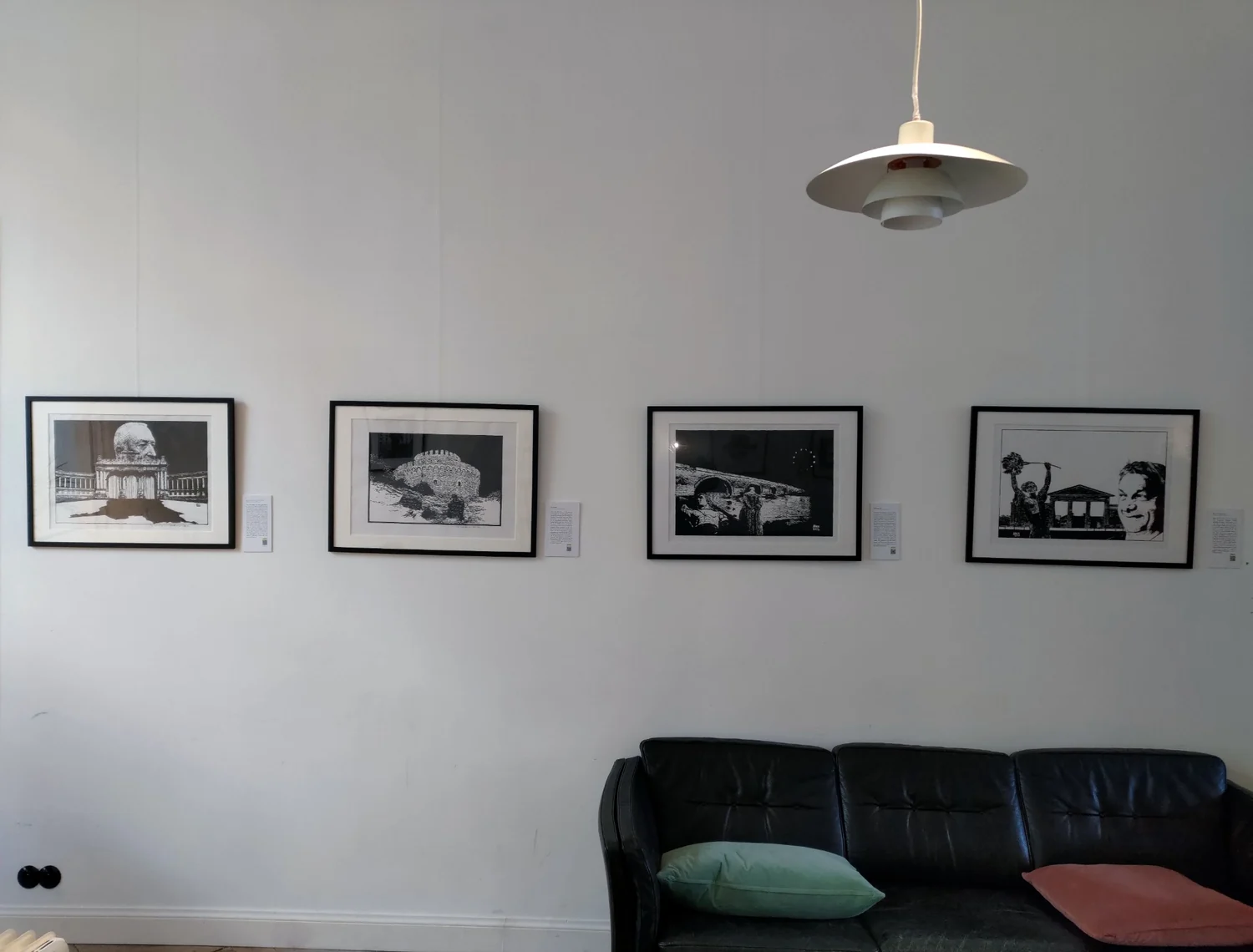
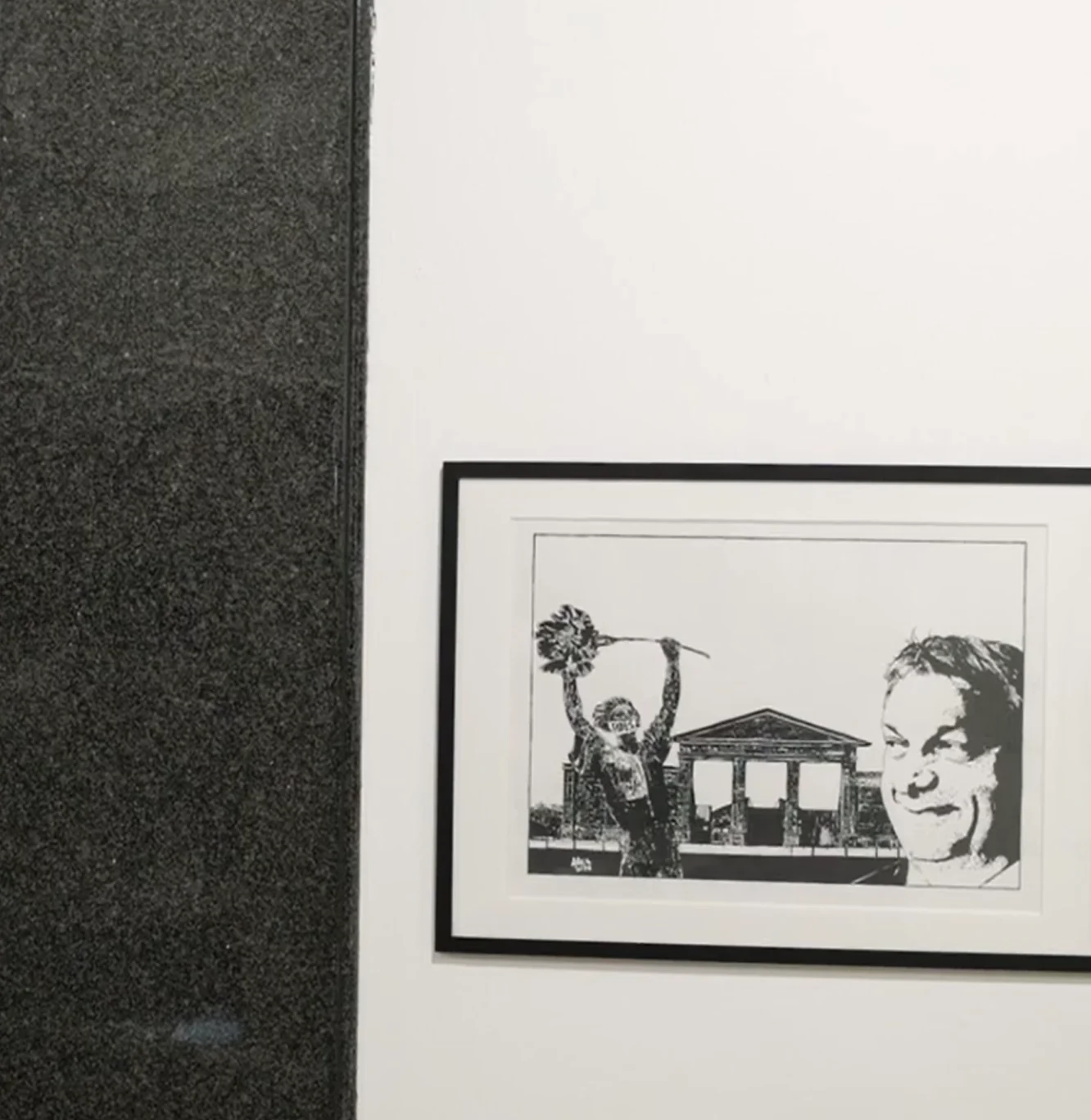
- Full Circle, Brussels3 February – 25 April 2024 · original drawing
- Teloglion Fine Arts Foundation, Thessaloniki8 October – 10 November 2024 · original drawing
Monuments, rights and political change
View sources & further reading
Monuments, rights and political change
- Memento Park, official history and description of the park, its 1993 opening and its purpose as a critical setting for communist-era monuments. Official site.
- Memento Park, “Sights,” including the Statue Park and Stalin’s Grandstand. Official site.
- Court of Justice of the European Union, Case C-769/22, Commission v Hungary, judgment of 21 April 2026. Case summary.
- Council of Europe Commissioner for Human Rights, 2 April 2025, on the Hungarian law on assemblies and its implications for LGBTI people. Read online.
- Inter-Parliamentary Union, official parliamentary election data for Hungary, 12 April 2026. Election results.
- Citadella, official account of the renovated monument and the new symbolic layer added to the Liberty Statue ensemble. Official site.
- V&A Dundee, “The Language of Pride,” on Oscar Wilde and the green carnation as a later symbol of gay identity. Read online.