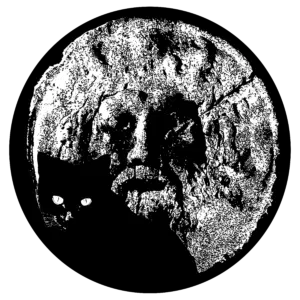
Miroir de
sanglots
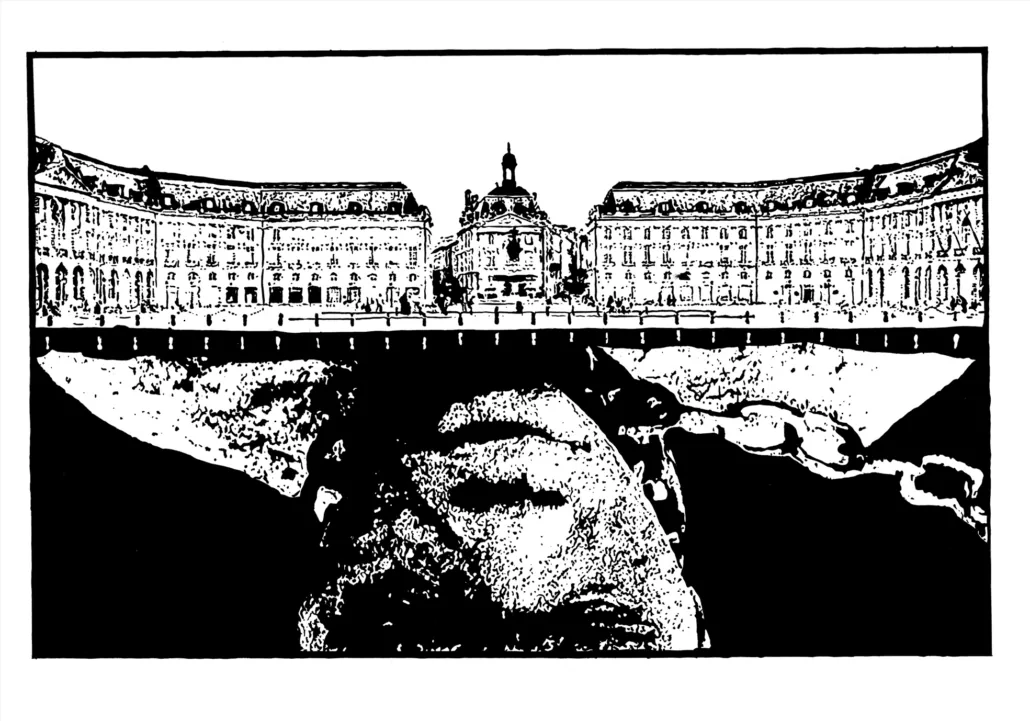
A familiar Bordeaux postcard is made unstable. The Place de la Bourse sits above its celebrated water mirror; beneath it, the reflected city becomes the face of an enslaved person. Turn the sheet through 180 degrees and the hierarchy reverses: what had been a reflection becomes the image that confronts the viewer.
The title transforms the city’s Miroir d’eau — mirror of water — into a Miroir de sanglots, a mirror of sobs. The drawing asks what a prosperous urban image reflects when the history that helped produce that prosperity is allowed back into view.
When the reflection changed
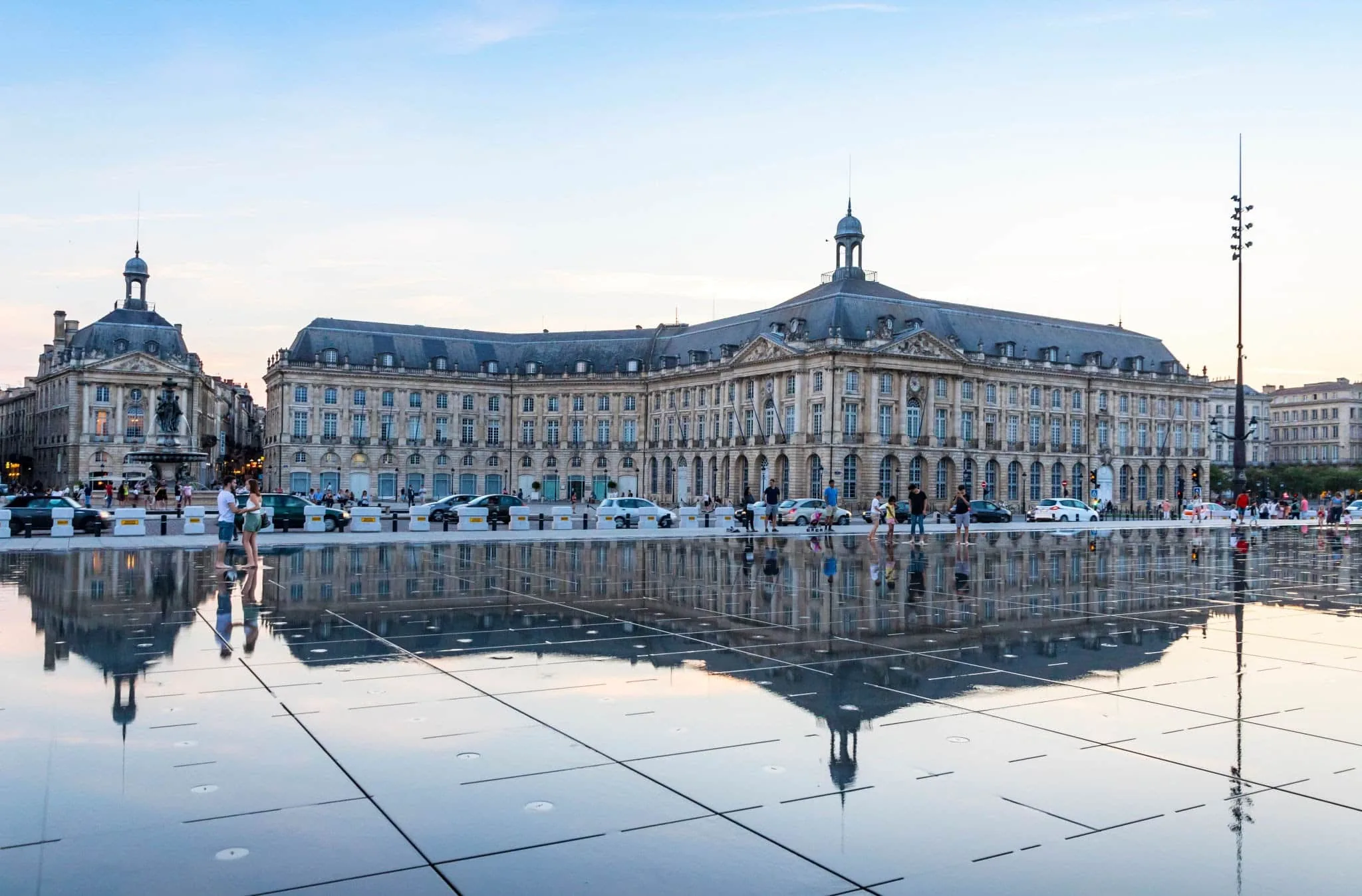
I often went to Bordeaux and its region on holiday with my children. Watching them splash about in Michel Corajoud’s Miroir d’eau, like all the other innocent children around them, surrounded by the magnificent buildings of the Place de la Bourse, I could not help thinking about the history behind that beauty — and about the fortunes built through Bordeaux’s involvement in the slave trade and colonial economy.
For a long time I searched for a way to show the sinister past beneath the beautiful city. Then the image came to me: the past itself could appear in the mirror. The Miroir d’eau would no longer simply reflect the façades above it; it would become a Miroir de sanglots — a mirror of sobs.
City, mirror, body
The composition is built around a horizontal hinge. Architecture occupies one field; the human figure another. The line between them behaves like the surface of the Miroir d’eau — except that the reflection carries a history the monumentality above can no longer keep outside the frame.
The second image is already there
The first orientation gives the Place de la Bourse the visual authority of a skyline, with the enslaved figure pushed below the waterline as a dark reflection.
At 180 degrees, the body takes the upper field and the city is overturned beneath it. The mechanism is simple, but the change of emphasis is physical: the viewer has to alter the object in order to alter the hierarchy of what is seen.
What Bordeaux’s mirror reflects
Bordeaux’s eighteenth-century prosperity was inseparable from the Atlantic colonial economy. The city was a major centre for the import, finance and redistribution of commodities produced by enslaved labour, and Bordeaux merchants also organised slave-trading voyages themselves.
Read full historical context
What Bordeaux’s mirror reflects
Bordeaux’s eighteenth-century prosperity was inseparable from the Atlantic colonial economy. The city was a major centre for the import, finance and redistribution of commodities produced by enslaved labour, and Bordeaux merchants also organised slave-trading voyages themselves.
The Musée d’Aquitaine and the City of Bordeaux now cite around 180 Bordeaux shipowners responsible for approximately 480 slave-trading expeditions between 1672 and 1837. Those voyages deported an estimated 120,000 to 150,000 African men, women and children. The trade in human beings formed part of a wider colonial system whose profits were also generated through sugar, coffee, cotton, indigo and other goods produced by enslaved labour.
480 expeditions
The figure covers the longer period 1672–1837. The historical chart reproduced below shows 417 Bordeaux departures for the narrower period 1713–1792; the difference is chronological, not contradictory.
120,000–150,000 people
The current Bordeaux memorial and museum figures estimate that this many Africans were deported on voyages organised by Bordeaux shipowners.
Memory in public space
Since the early twenty-first century, Bordeaux has increasingly addressed this history through museum galleries, commemorative plaques, research and public memorial initiatives.
A title built on a monument
The Miroir d’eau, installed opposite the Place de la Bourse, has become one of Bordeaux’s most recognisable contemporary images. Its alternation of water and mist turns the eighteenth-century façades into a spectacle of symmetry and reflection. Miroir de sanglots keeps that visual device but changes what the mirror is permitted to show.
France’s law of 21 May 2001 recognises the transatlantic and Indian Ocean slave trades and slavery as crimes against humanity. The drawing belongs to the same broader movement from silence towards public acknowledgement, but it works through visual reversal rather than inscription: the history is not added beside the city; it is made to occupy the city’s reflection.
Water, routes and sites of memory
These references explain the visual genealogy of the work rather than serving as illustrations of a single narrative. Bordeaux’s polished water mirror, maps of Atlantic commerce, places associated with the slave trade, and later memorial sculpture all occupy different historical moments. Together they show how slavery is remembered through landscapes, statistics, buildings and bodies.
View visual context
Water, routes and sites of memory
These references explain the visual genealogy of the work rather than serving as illustrations of a single narrative. Bordeaux’s polished water mirror, maps of Atlantic commerce, places associated with the slave trade, and later memorial sculpture all occupy different historical moments. Together they show how slavery is remembered through landscapes, statistics, buildings and bodies.
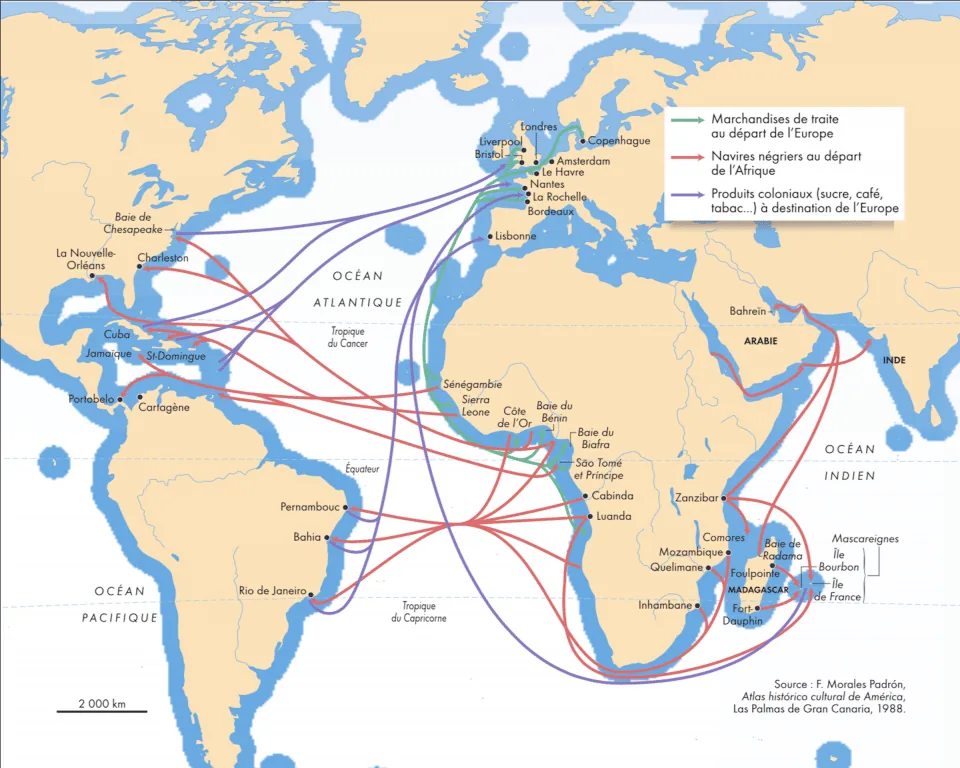
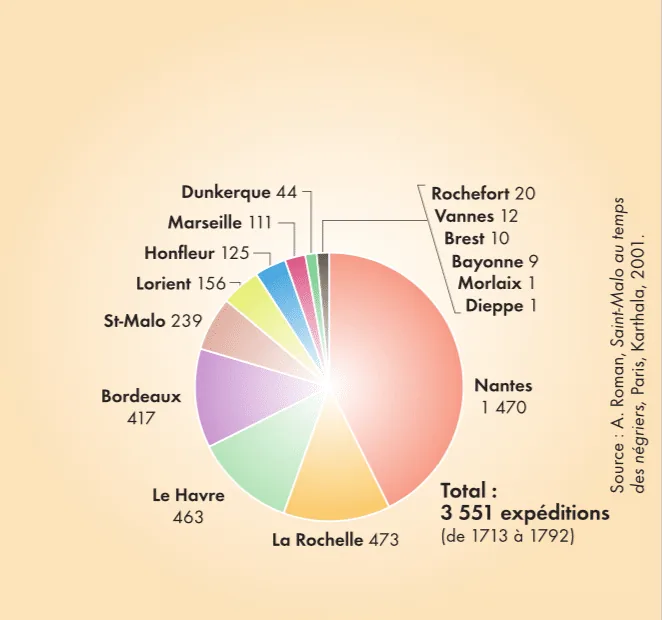
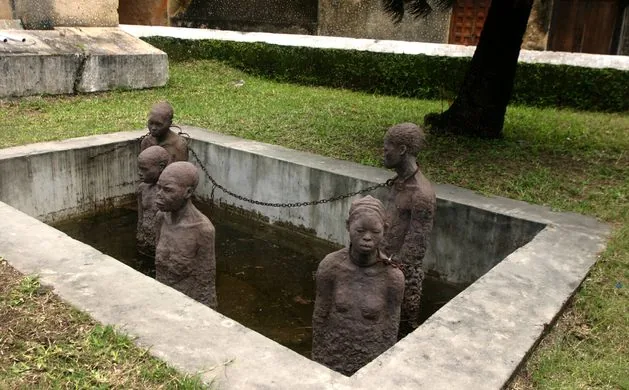
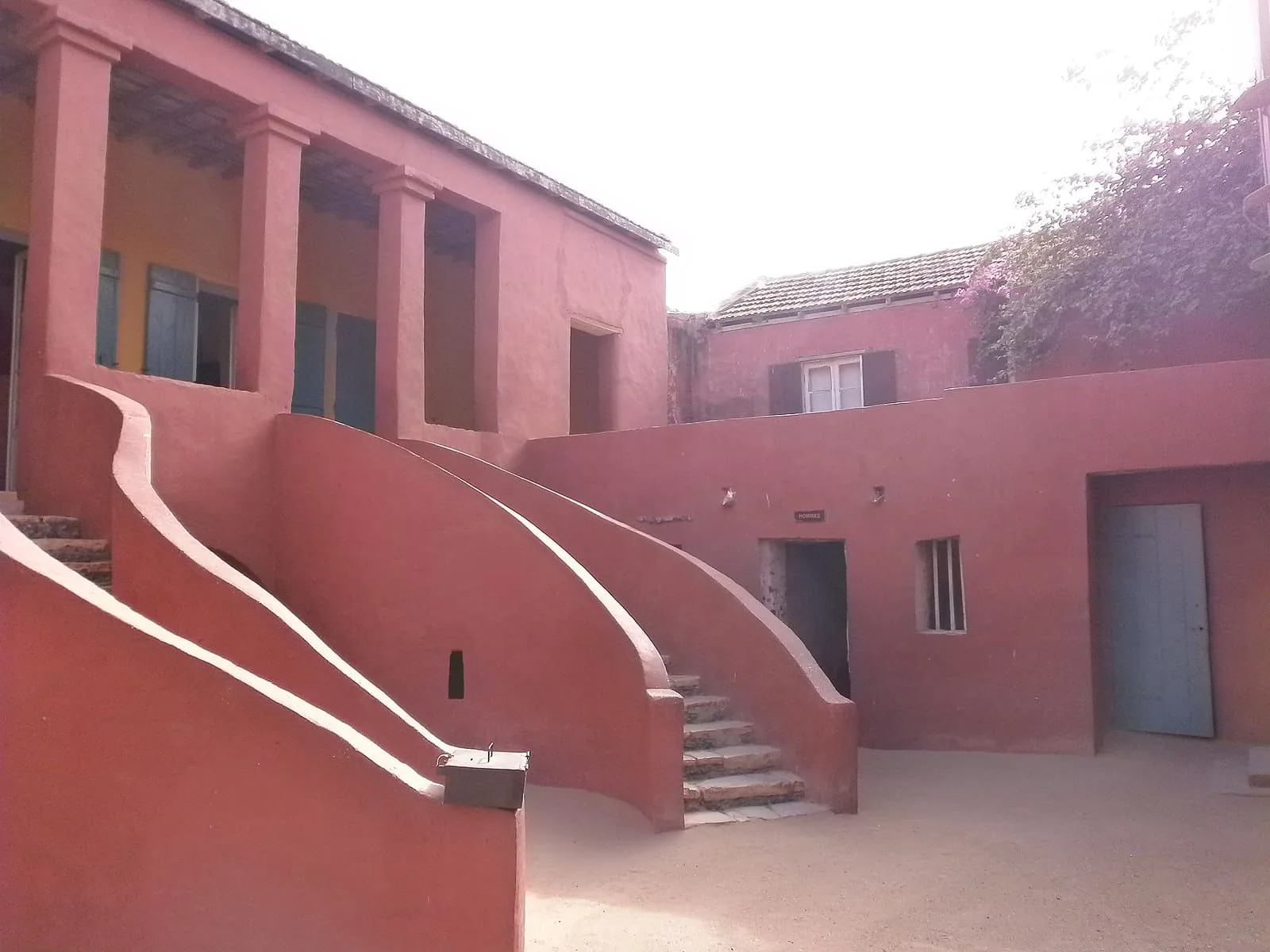
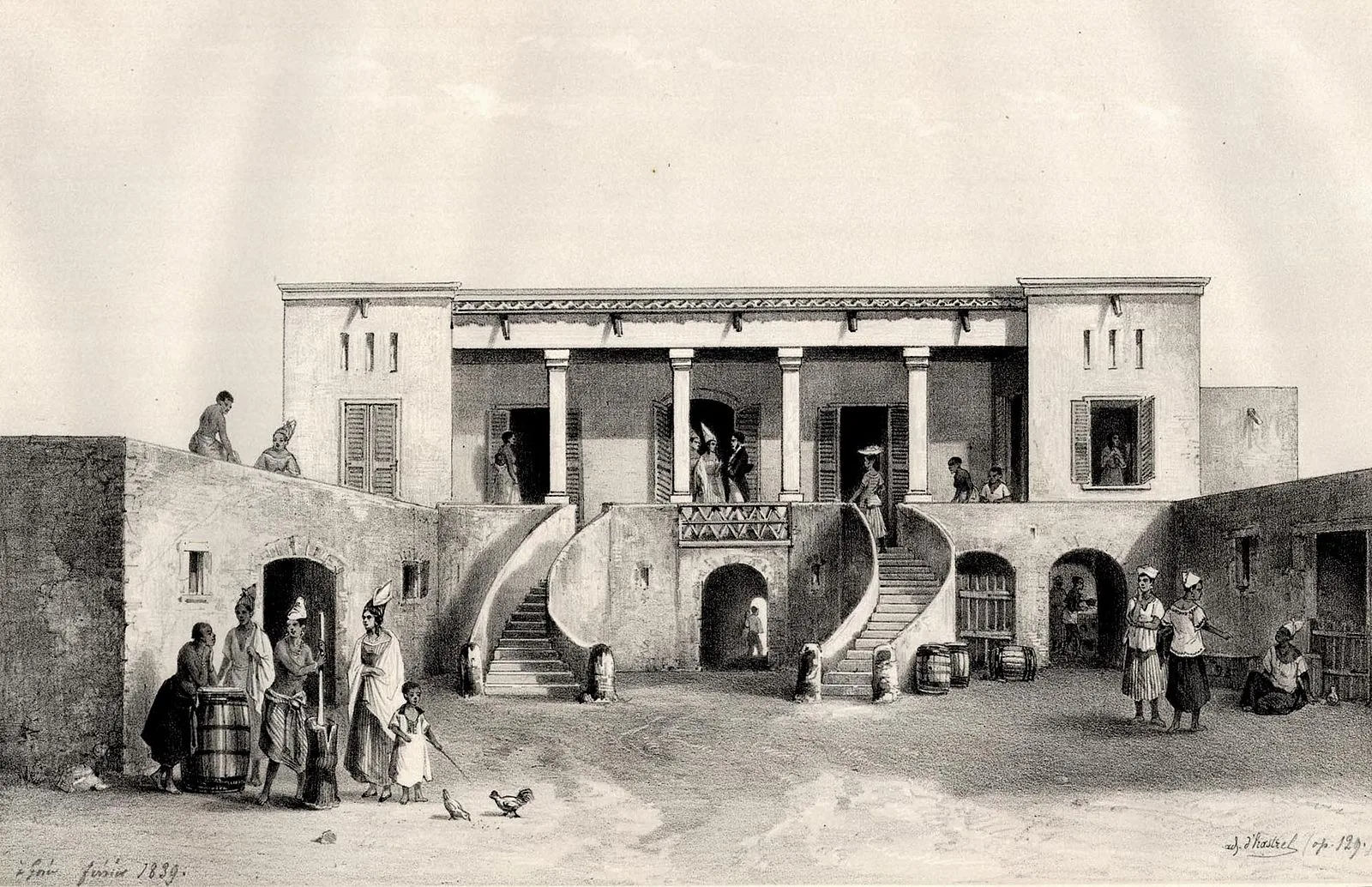
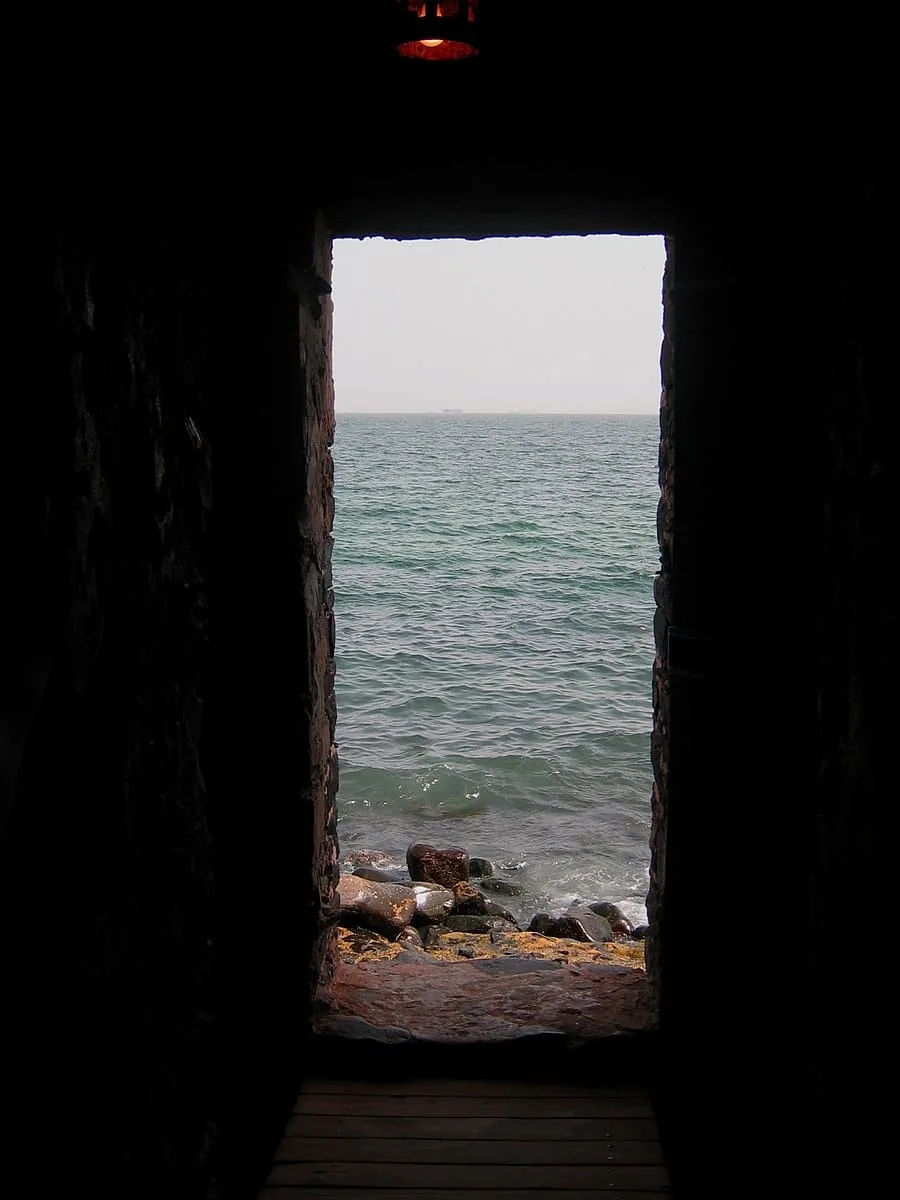
Building a reversible image
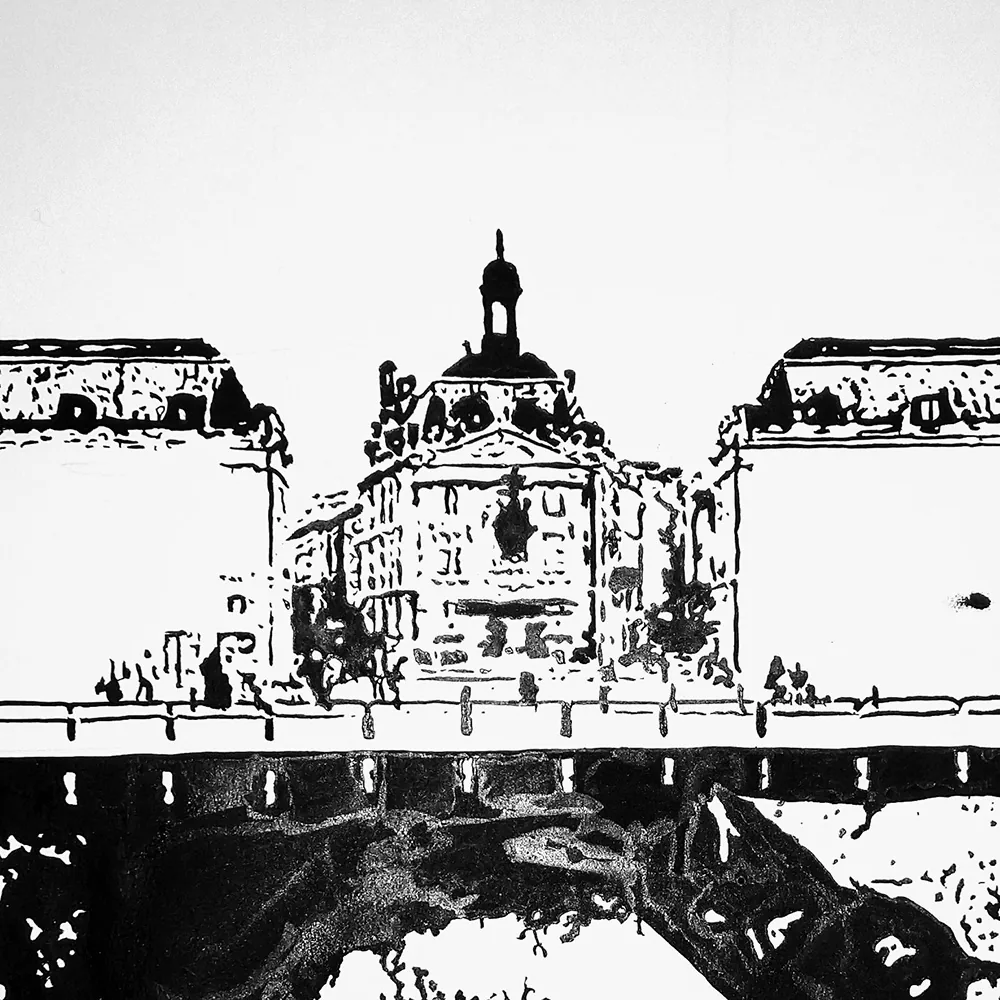
The surviving photographs show that the drawing was constructed in layers rather than conceived as two separate compositions. The architectural panorama is established first. The lower field then acquires large black masses, after which the face emerges through reserves of white paper and dense stippling. The 180-degree logic is present from the first framing lines, but its visual force only becomes clear as the two halves reach comparable weight.
View process & sketches
Building a reversible image
The surviving photographs show that the drawing was constructed in layers rather than conceived as two separate compositions. The architectural panorama is established first. The lower field then acquires large black masses, after which the face emerges through reserves of white paper and dense stippling. The 180-degree logic is present from the first framing lines, but its visual force only becomes clear as the two halves reach comparable weight.
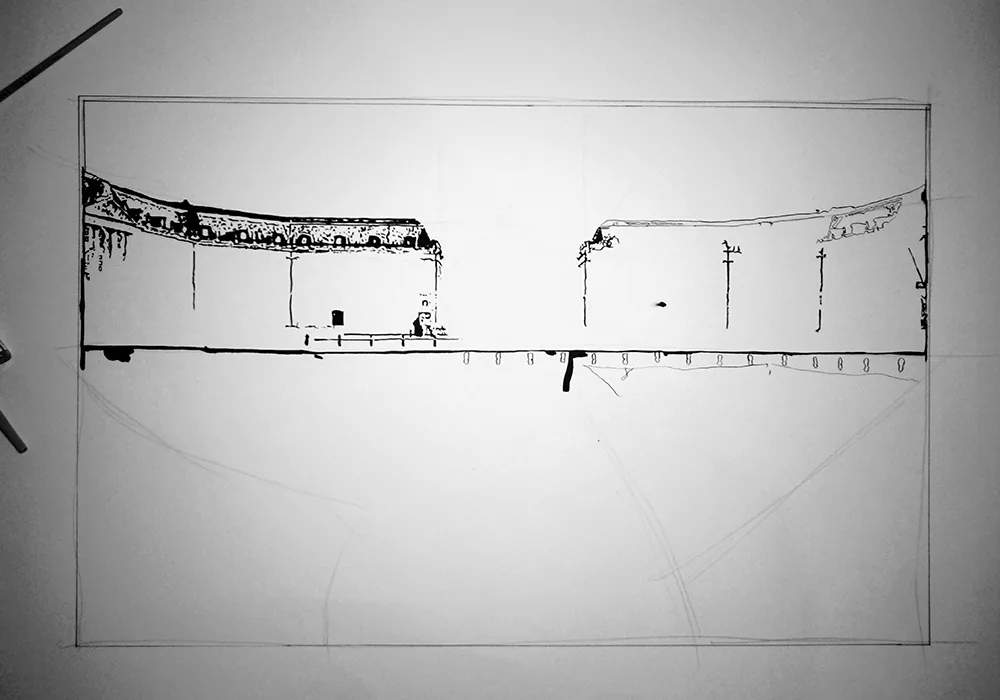
1 · The curved façades and horizontal waterline establish the basic architecture.
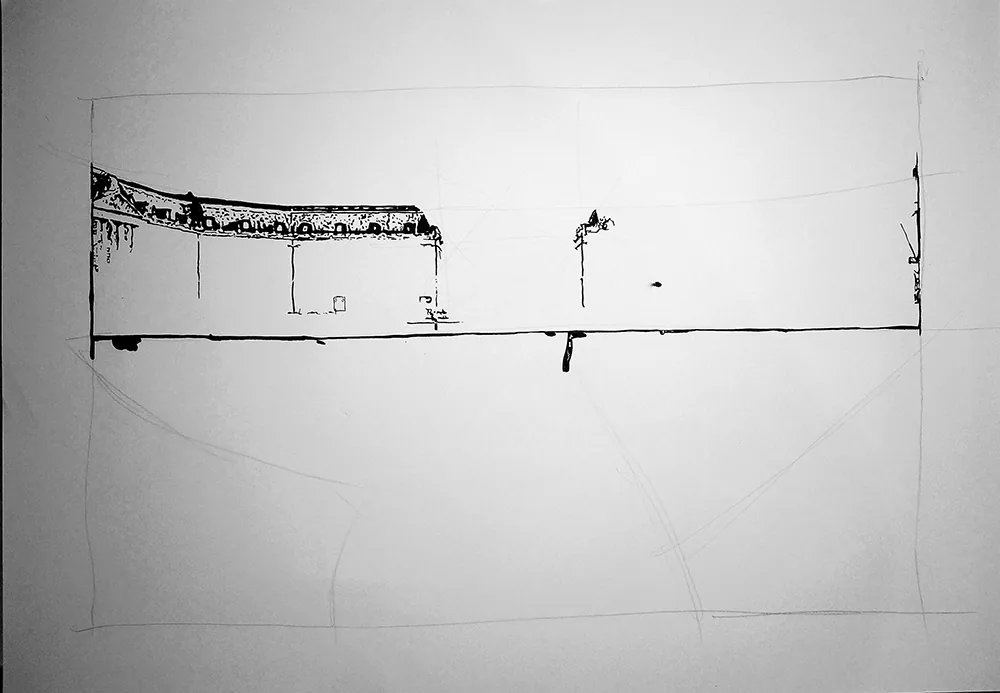
2 · Architectural contours begin to move from pencil into ink.
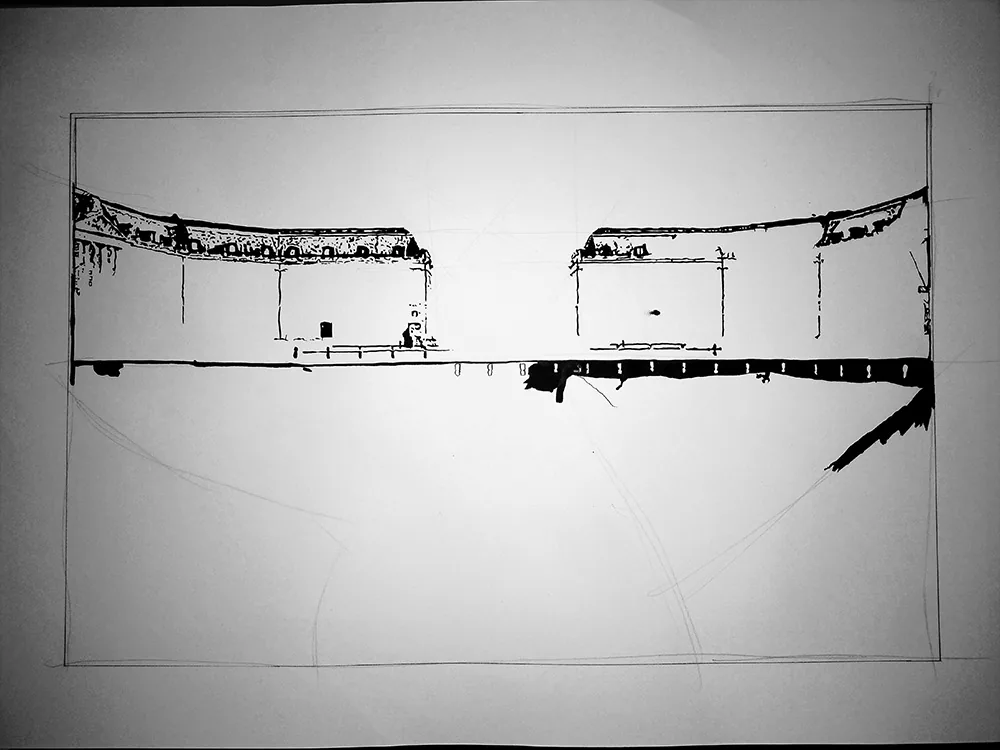
3 · Both sides of the Place de la Bourse are fixed around the central pavilion.
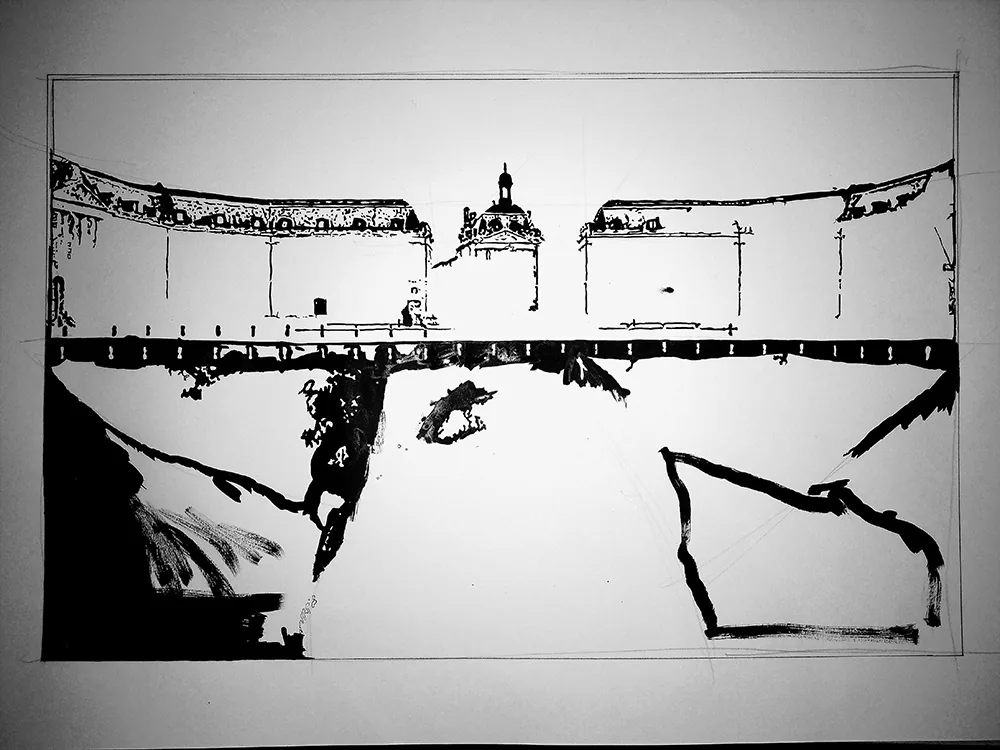
4 · The first heavy black areas define the lower field and the future figure.
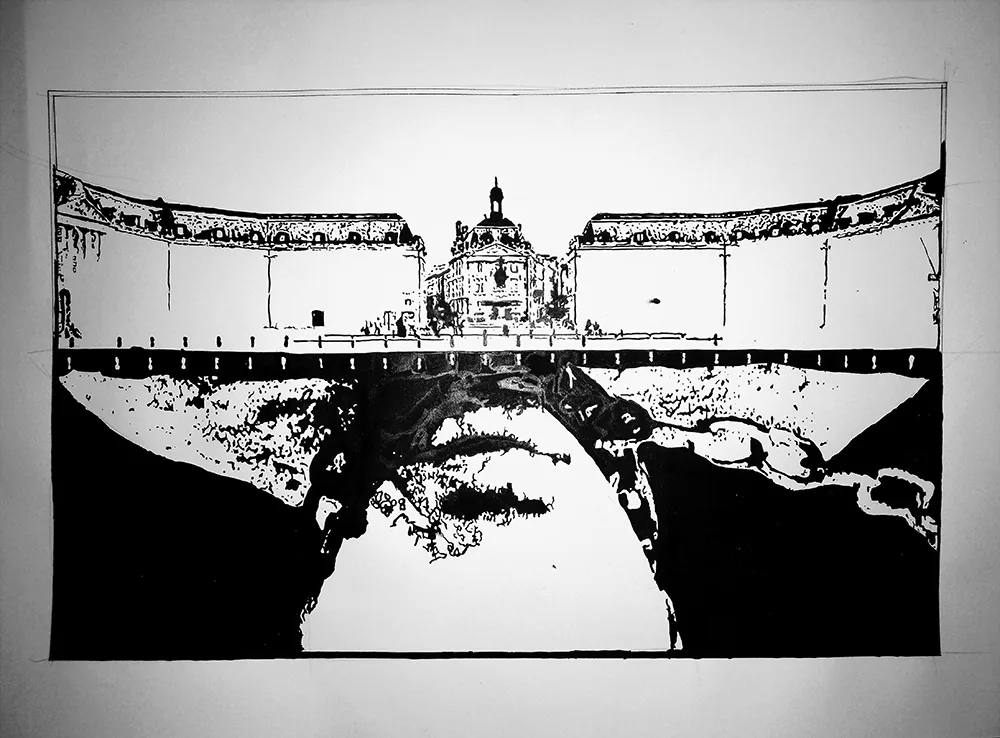
5 · The face appears through untouched paper inside the black reflection.
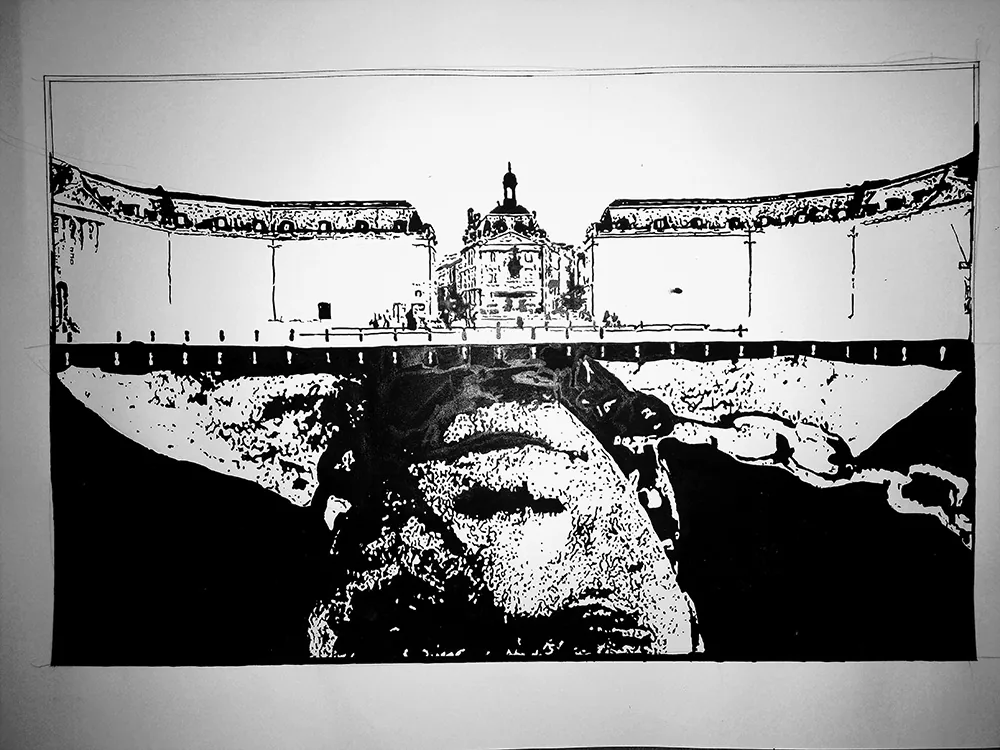
6 · Stippling and line give the figure enough presence to compete with the city.
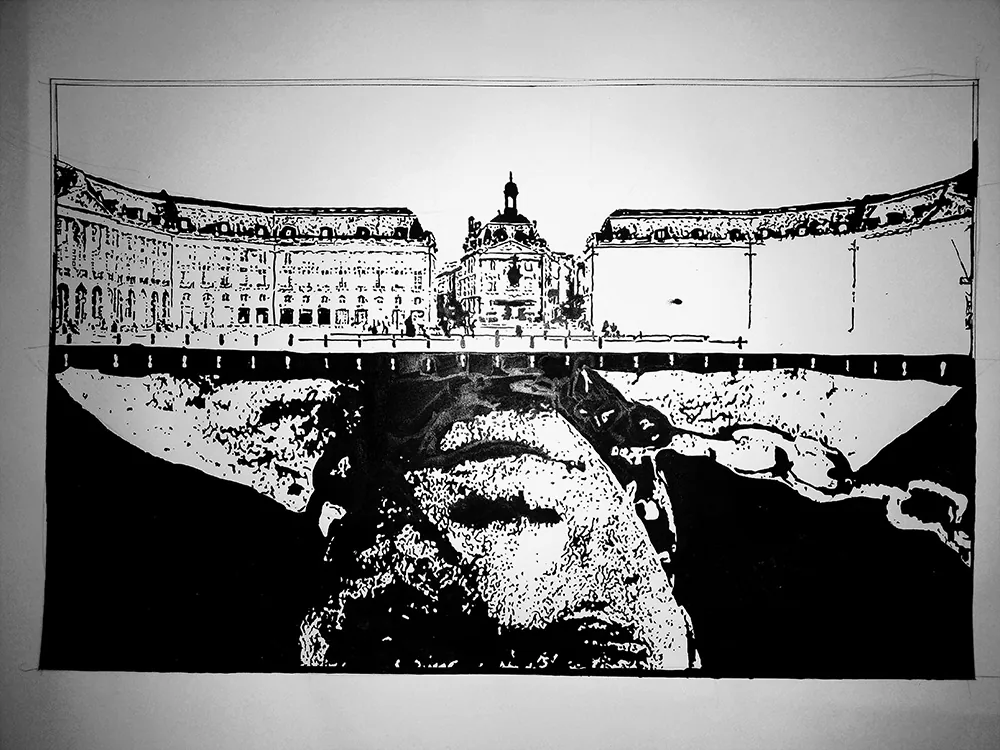
7 · The façades are filled in, tightening the contrast between architectural precision and bodily mass.
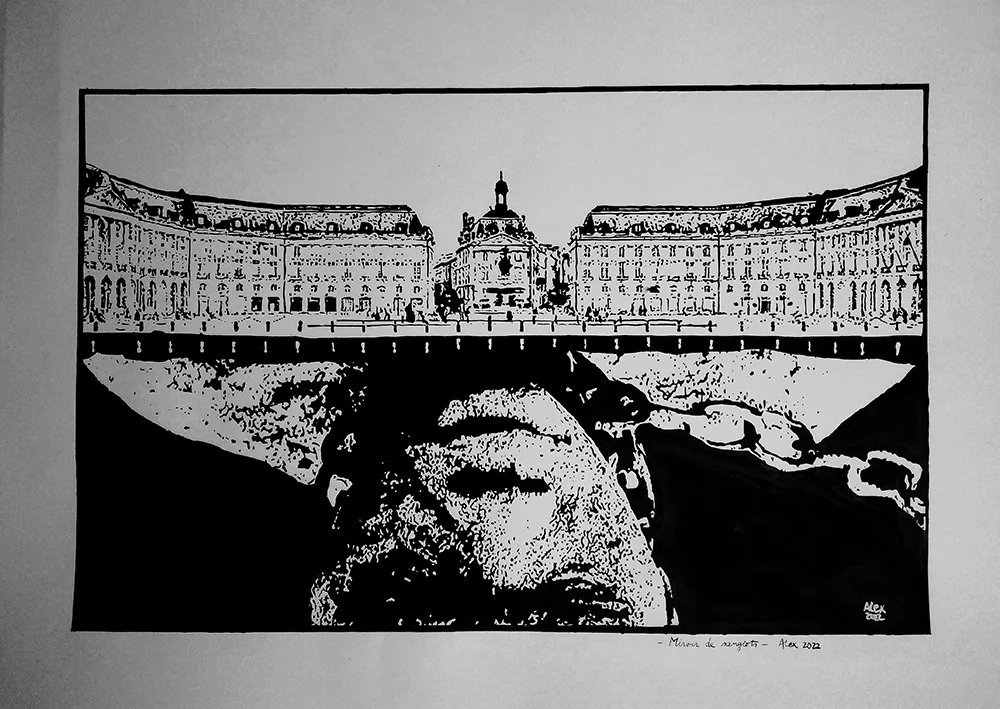
8 · Late state: the two halves now balance as a single image capable of being turned.
Lithograph, 2023
The drawing was translated into a hand-printed lithograph the following year. The edition preserves the stark black-and-white architecture of the original while giving the image a different material presence on heavy paper.
€250 · Brussels hand delivery by appointment · Elsewhere in Belgium & EU: €15 packaging/shipping · EU delivery only
Buy this lithographBrussels hand delivery · €250A drawing made to turn
At the Teloglion Fine Arts Foundation in Thessaloniki, the museum staff turned the drawing’s conceptual instruction into a physical exhibition device. Dimitris Kontakis (technical support) and Nikos Leontaridis (graphic design) devised a mechanism that allowed the framed work to rotate through 180 degrees on the wall. The visitor could therefore perform the same reversal built into the sheet itself.
View exhibition history
A drawing made to turn
At the Teloglion Fine Arts Foundation in Thessaloniki, the museum staff turned the drawing’s conceptual instruction into a physical exhibition device. Dimitris Kontakis (technical support) and Nikos Leontaridis (graphic design) devised a mechanism that allowed the framed work to rotate through 180 degrees on the wall. The visitor could therefore perform the same reversal built into the sheet itself.
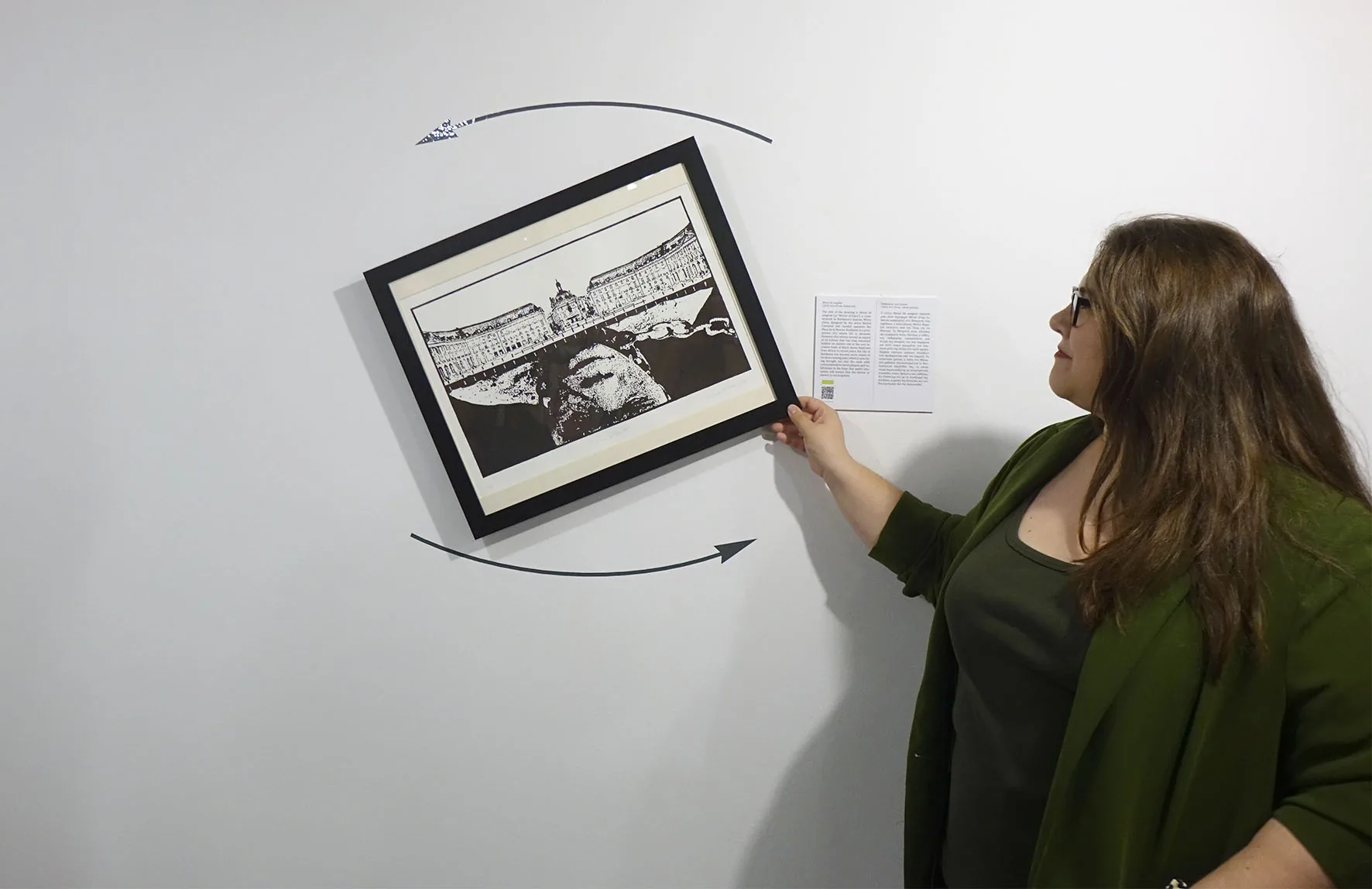
- Teloglion Fine Arts Foundation, Thessaloniki · 8 October–10 November 2024Cities of Lost Memory — 23 works. The museum created the rotating display specifically for this drawing.
Bordeaux, slavery and public memory
View sources & further reading
Bordeaux, slavery and public memory
- Musée d’Aquitaine, Bordeaux au 18e siècle : le commerce atlantique et l’esclavage — current museum overview of Bordeaux’s colonial economy, 480 expeditions and the estimated 120,000–150,000 Africans deported by Bordeaux slave-trading ventures. Read online.
- Ville de Bordeaux / Mémoire de l’esclavage et de la traite négrière, historical overview and public-memory resources. Read online.
- Légifrance, Law no. 2001-434 of 21 May 2001 recognising the slave trades and slavery as crimes against humanity. Read the law.
- UNESCO World Heritage Centre, Island of Gorée — a major site of memory associated with the Atlantic slave trade. Read online.
- Daget, Serge (ed.) et al., De la traite à l’esclavage, 2 vols., 1988; Villiers, Patrick, Traite des noirs et navires négriers, 1982; Duprat, Julie, Présences noires à Bordeaux, 2017.