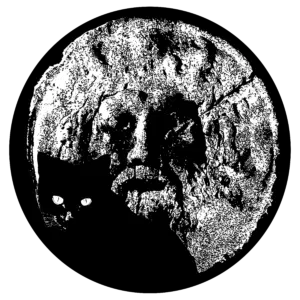
The Devourer of Lives:
Leopold II’s Congo
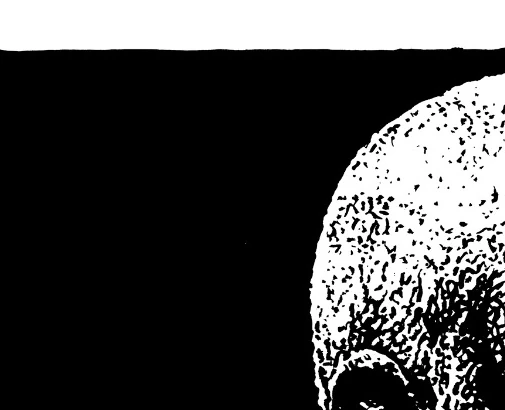
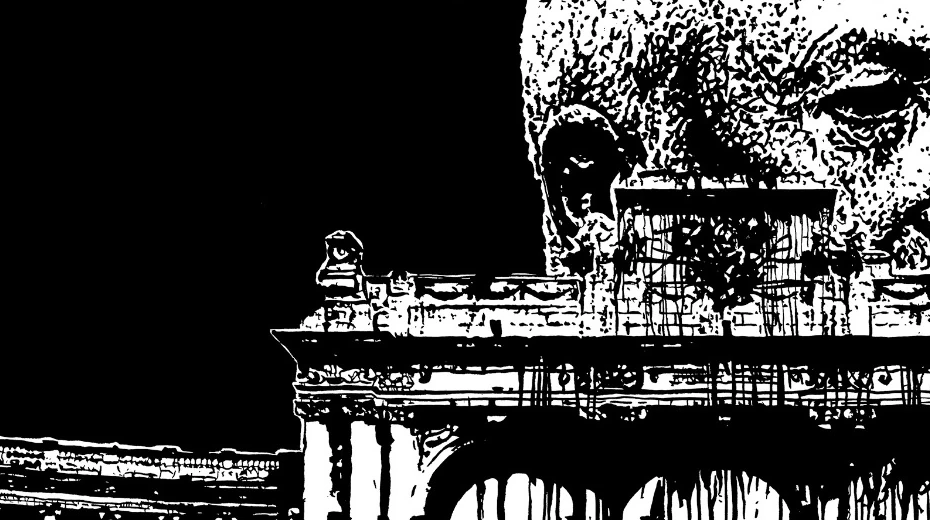
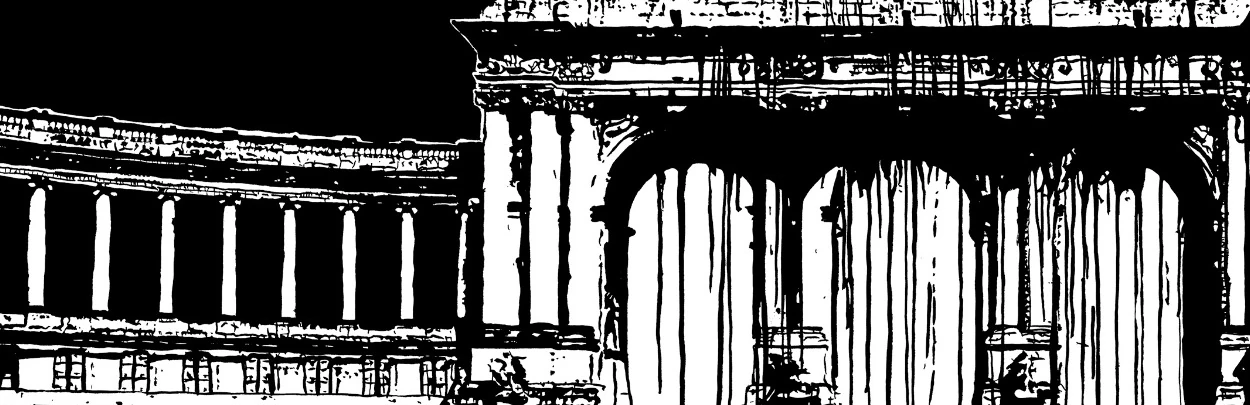
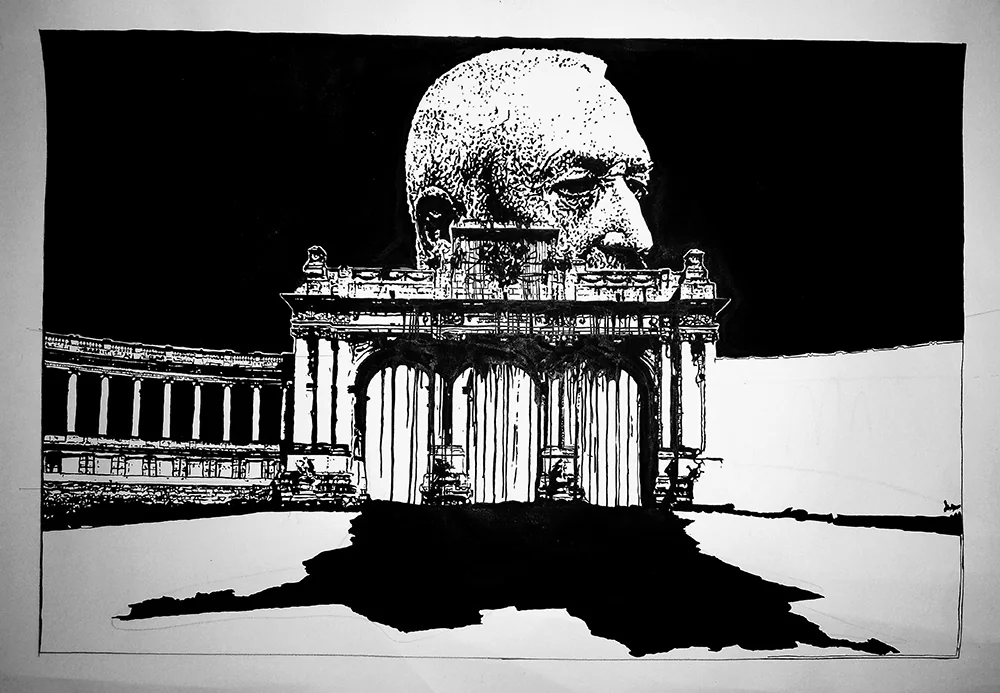
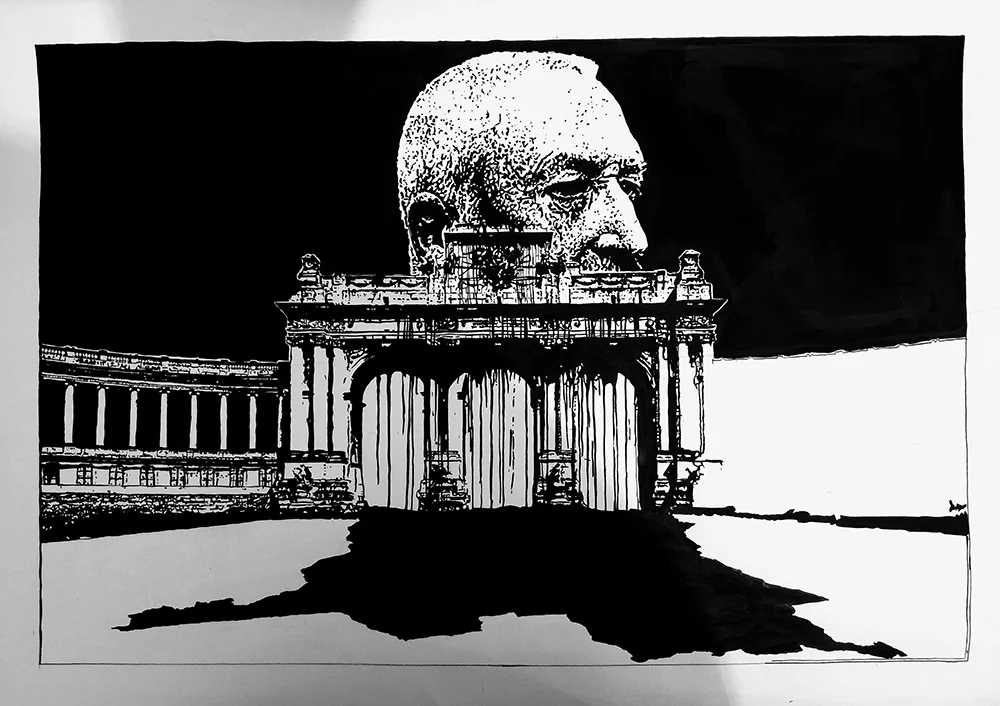
Leopold II rises behind Brussels’ Cinquantenaire as though the monument had grown into his body. From the arcade, ink descends into a black pool shaped as a distorted map of the Congo.
The drawing compresses royal portrait, urban monument and colonial territory into a single architectural anatomy. The ceremonial façade remains recognisable, but the black ink passing through it turns civic grandeur into a conduit between Brussels and the violence of the Congo Free State.
This is not an argument for erasing the monument. It uses the monument’s survival as a condition of historical confrontation: the architecture remains visible, but the history beneath its monumental surface is made impossible to ignore.
Portrait, monument, territory
Three images are fused together. None is merely background: Leopold’s face, the Cinquantenaire and the Congo each changes the meaning of the others.
Brussels above, Congo below
From 1885 to 1908, the Congo Free State was ruled by Leopold II as sovereign. It was not yet a Belgian colony. The extraction of ivory and, increasingly, wild rubber rested on systems of concession, taxation and coerced labour. In many regions, quotas were enforced through hostage-taking, punitive expeditions, beatings, mutilation and killing.
Read full historical context
Brussels above, Congo below
From 1885 to 1908, the Congo Free State was ruled by Leopold II as sovereign. It was not yet a Belgian colony. The extraction of ivory and, increasingly, wild rubber rested on systems of concession, taxation and coerced labour. In many regions, quotas were enforced through hostage-taking, punitive expeditions, beatings, mutilation and killing.
The human cost cannot be reduced to a single number. Violence interacted with displacement, hunger, epidemic disease, disrupted agriculture and collapsing birth rates. The Royal Museum for Central Africa stresses that precise figures are impossible to establish; modern estimates of the resulting population deficit range from hundreds of thousands to several million.
The Cinquantenaire
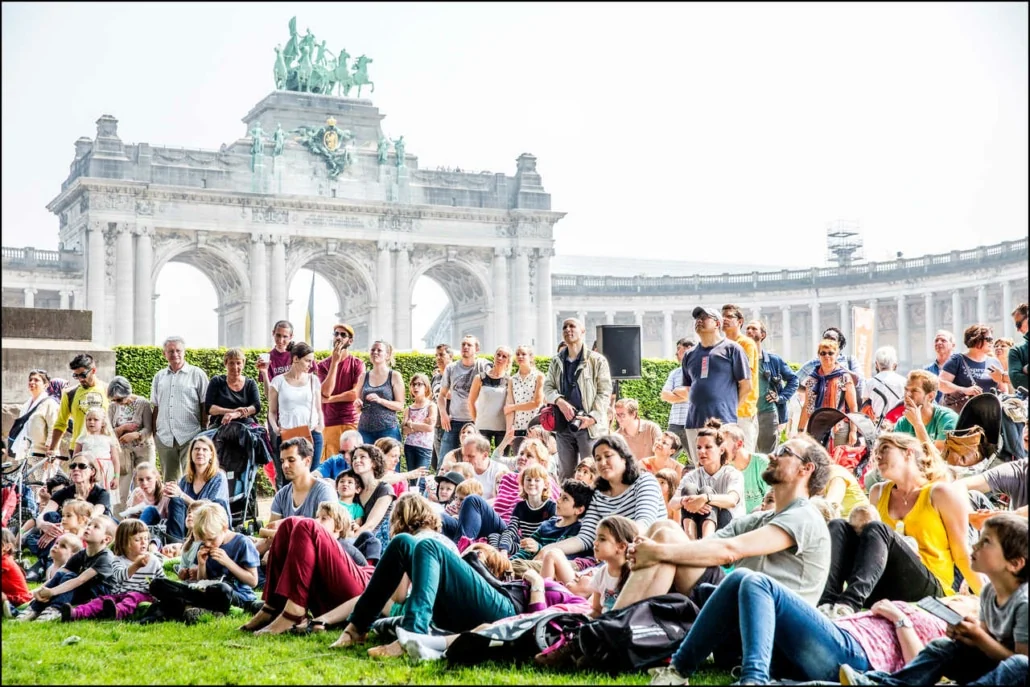
The Cinquantenaire complex began as a national exhibition project for the fiftieth anniversary of Belgian independence. Its present monumental triple arcade was completed in 1905 after Leopold II brought in the French architect Charles Girault and pressed for a more imposing solution. The arcade belongs to a larger urban axis extending towards the Avenue de Tervueren and the institutions created around Belgium’s colonial project.
The drawing turns that geography into a visual argument. Leopold’s head becomes a pediment; the arcade becomes a body; the dark form of the Congo becomes both shadow and stain. The architecture is not represented as neutral scenery but as part of the way power presents itself to posterity.
Keep the marker, change the reading
Public monuments can be removed, preserved, altered, counter-monumentalised or recontextualised. This work chooses recontextualisation. The Cinquantenaire remains standing, but another history is made to pass through it. The point is not to make the past disappear; it is to prevent monumental splendour from becoming historical amnesia.
The head
A familiar official portrait is enlarged until it becomes part of the architecture itself.
The arcade
The civic monument serves as a visual passage between metropolitan display and colonial power.
The black map
Ink becomes territory, shadow and accumulated violence at the same time.
The monument and its counter-images
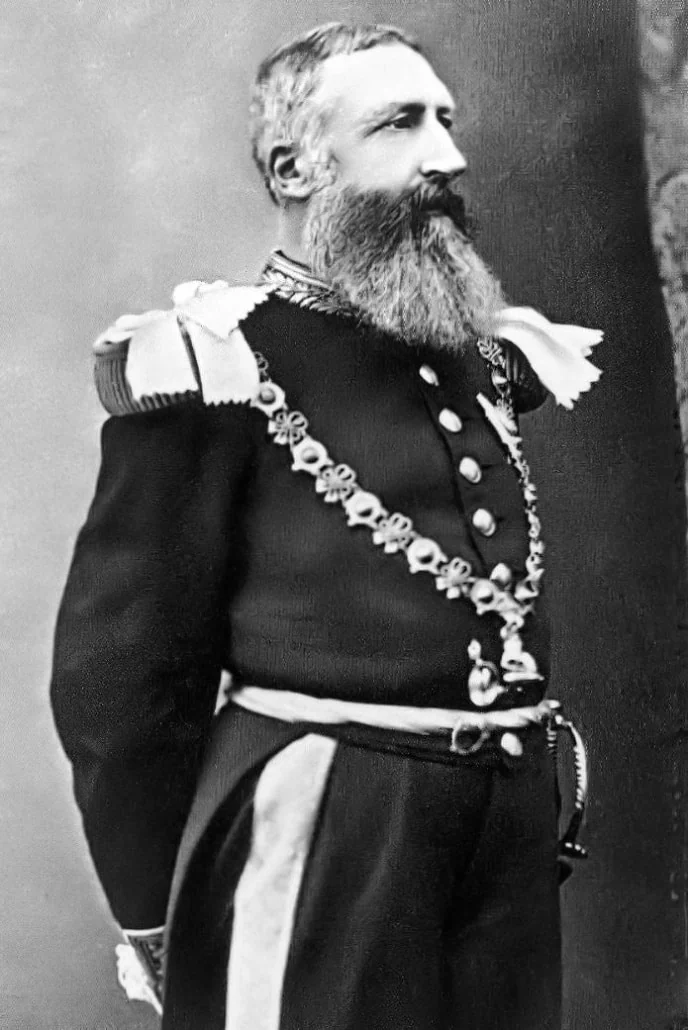
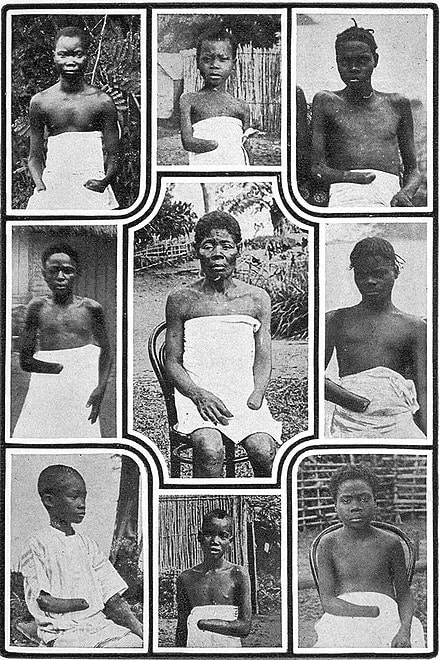
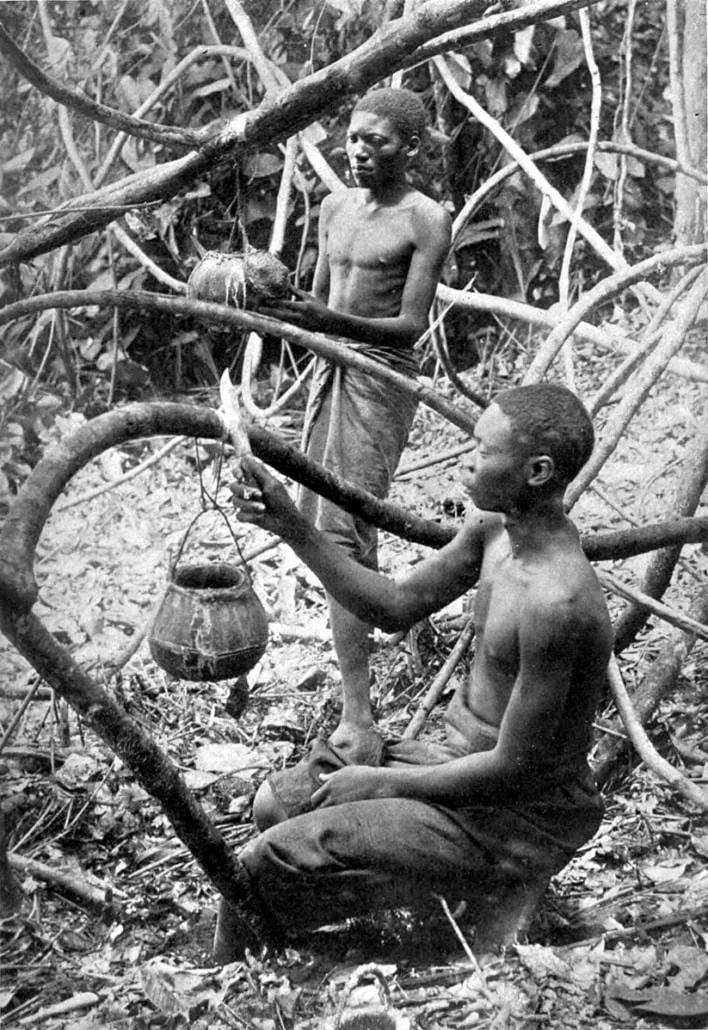
The drawing belongs to a longer visual history. Leopold II was represented through official portraiture and monumental architecture, but the Congo reform campaign also produced photographs and satirical images that exposed the violence hidden behind that public image.
View visual context
The monument and its counter-images
The drawing belongs to a longer visual history. Leopold II was represented through official portraiture and monumental architecture, but the Congo reform campaign also produced photographs and satirical images that exposed the violence hidden behind that public image.
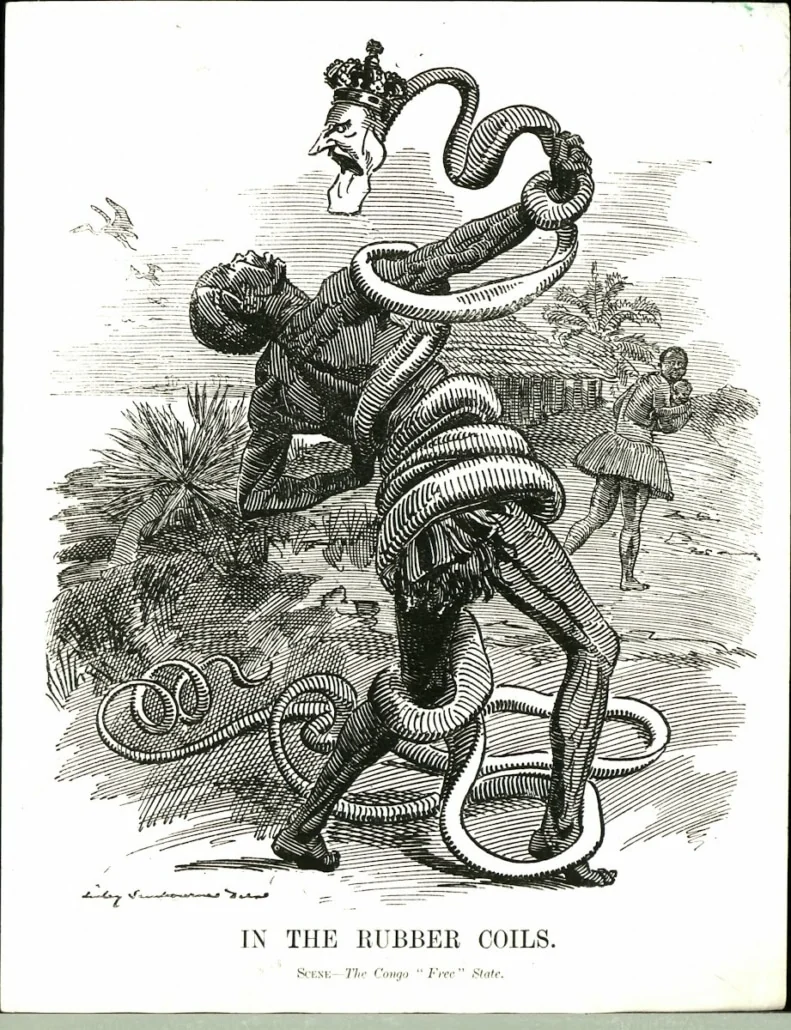
From a few lines to a field of black
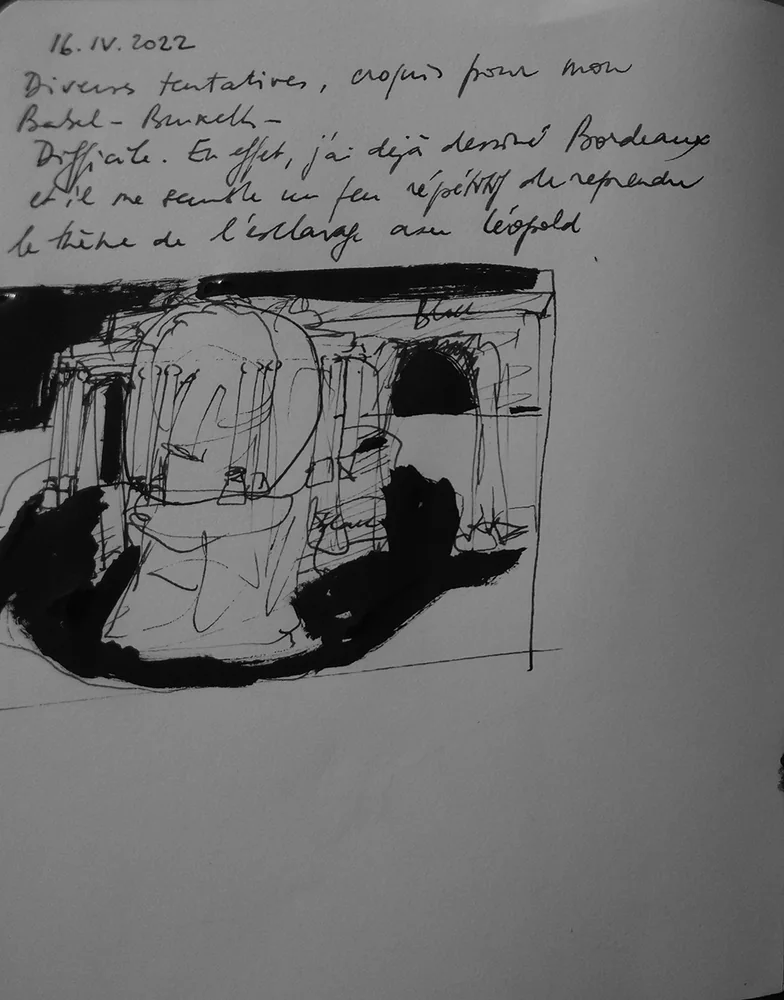
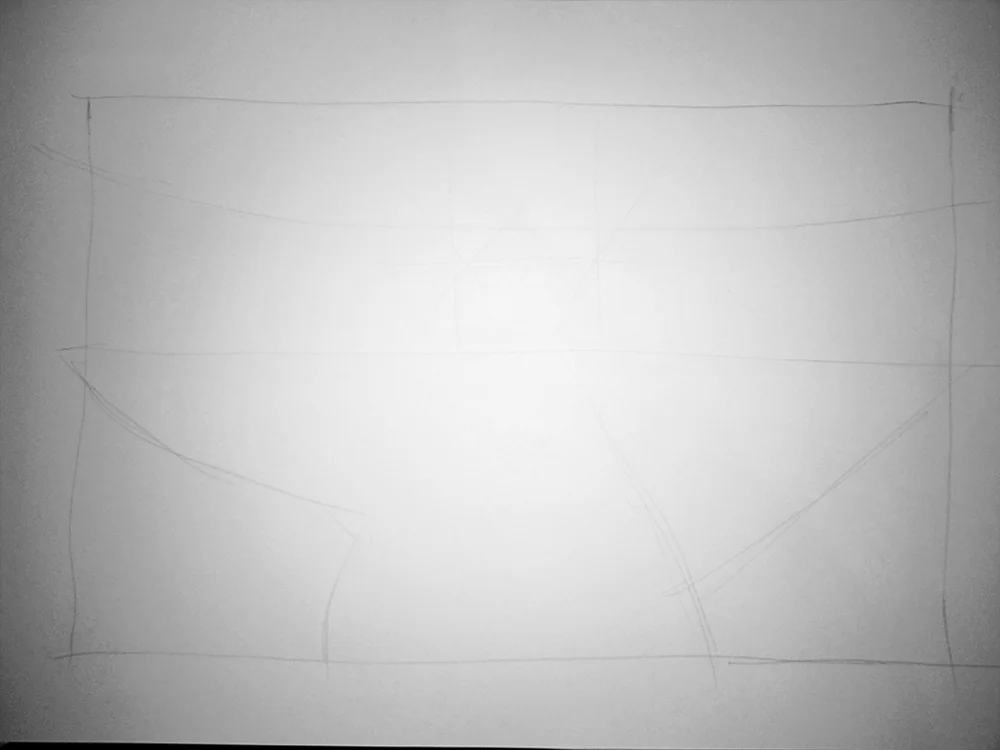
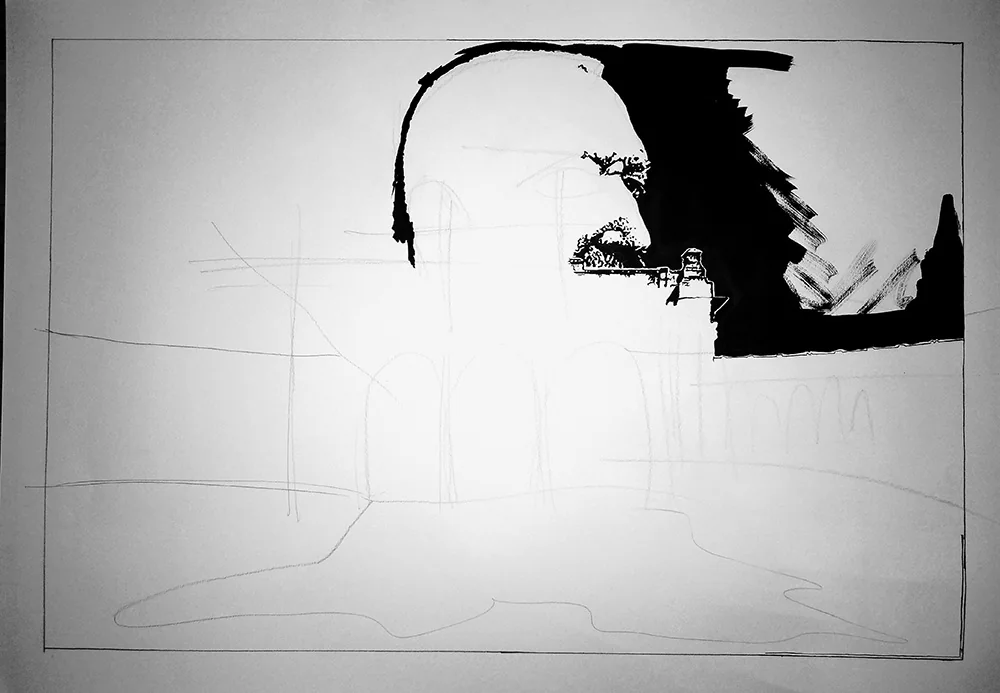
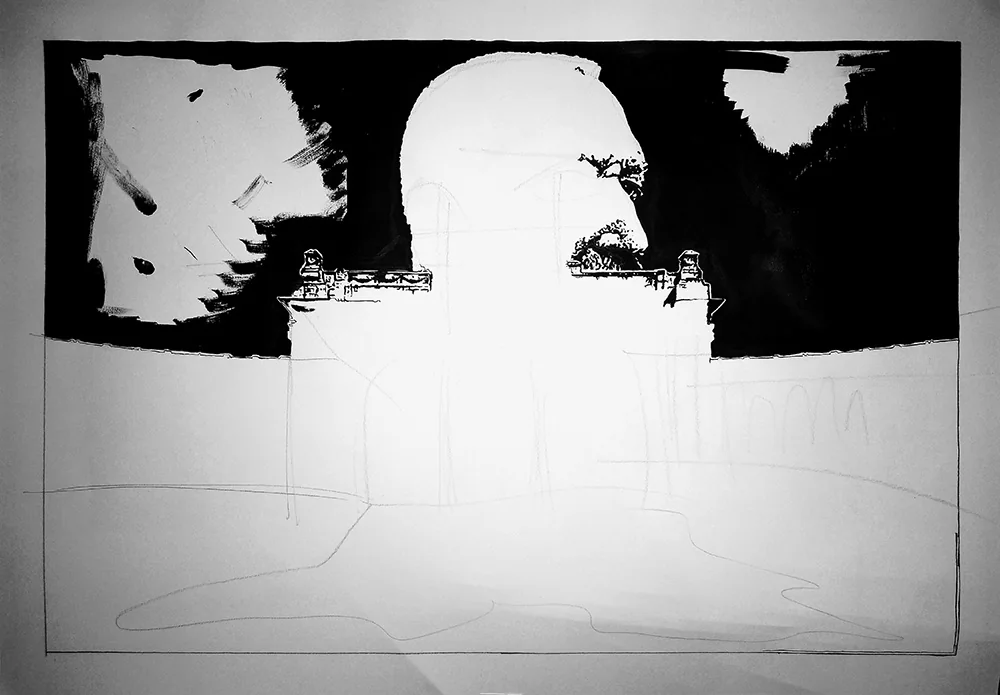
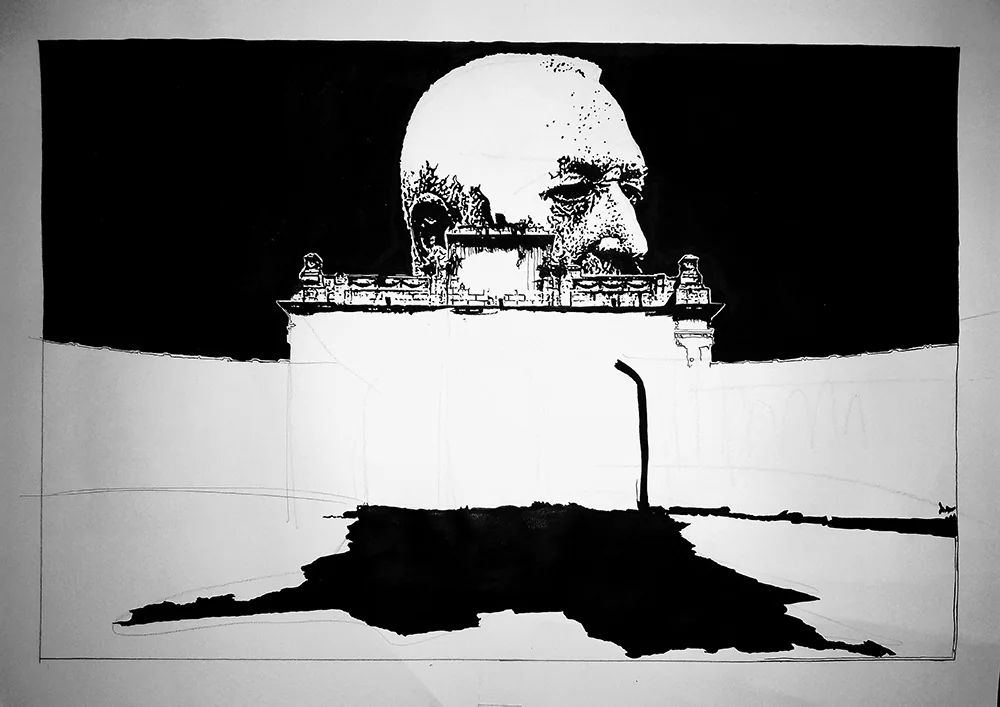
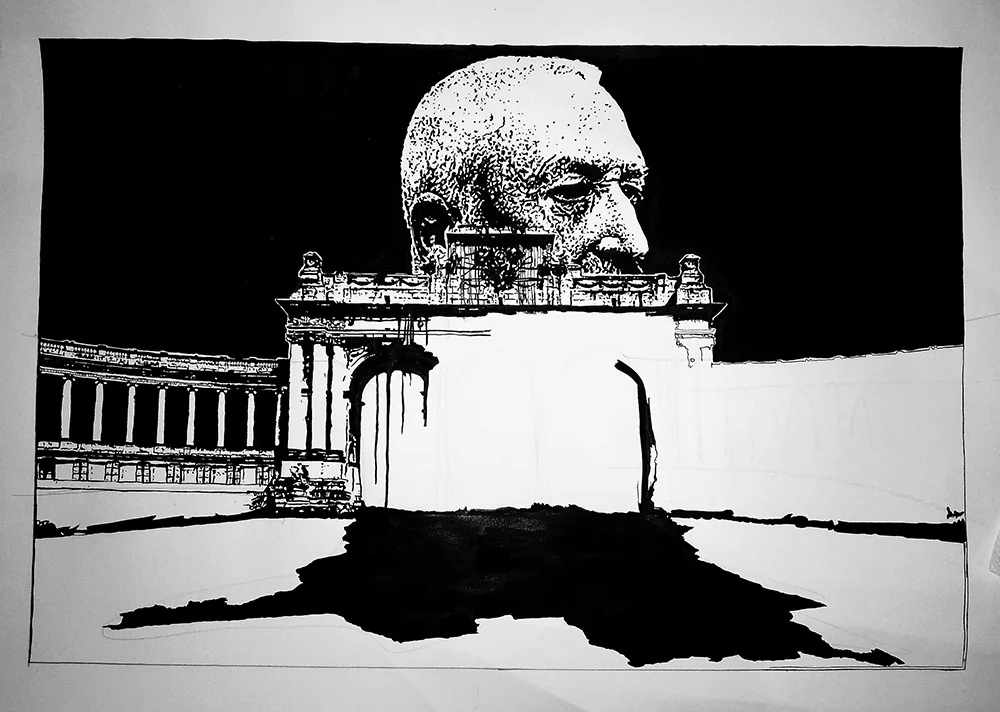
A selected sequence of surviving work-in-progress photographs documents the drawing unusually closely. The composition begins with the geometry of the arcade and separate studies of Leopold’s head. Large black areas are established early, while the central architecture is allowed to emerge slowly from untouched paper. The Congo first appears as a faint outline before becoming the heaviest mass in the image.
View process & sketches
From a few lines to a field of black
A selected sequence of surviving work-in-progress photographs documents the drawing unusually closely. The composition begins with the geometry of the arcade and separate studies of Leopold’s head. Large black areas are established early, while the central architecture is allowed to emerge slowly from untouched paper. The Congo first appears as a faint outline before becoming the heaviest mass in the image.
The drawing in exhibition
View exhibition history
The drawing in exhibition
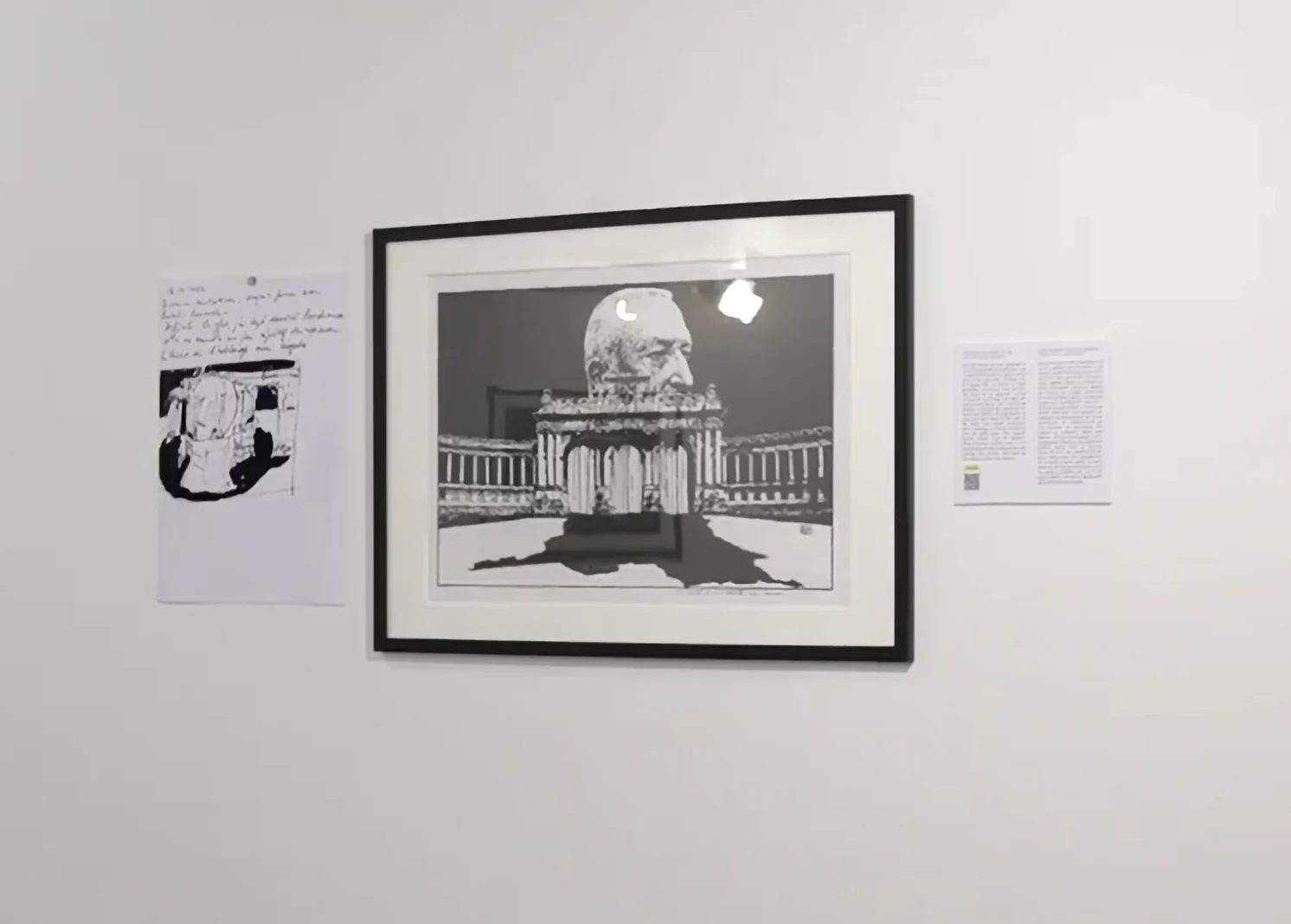
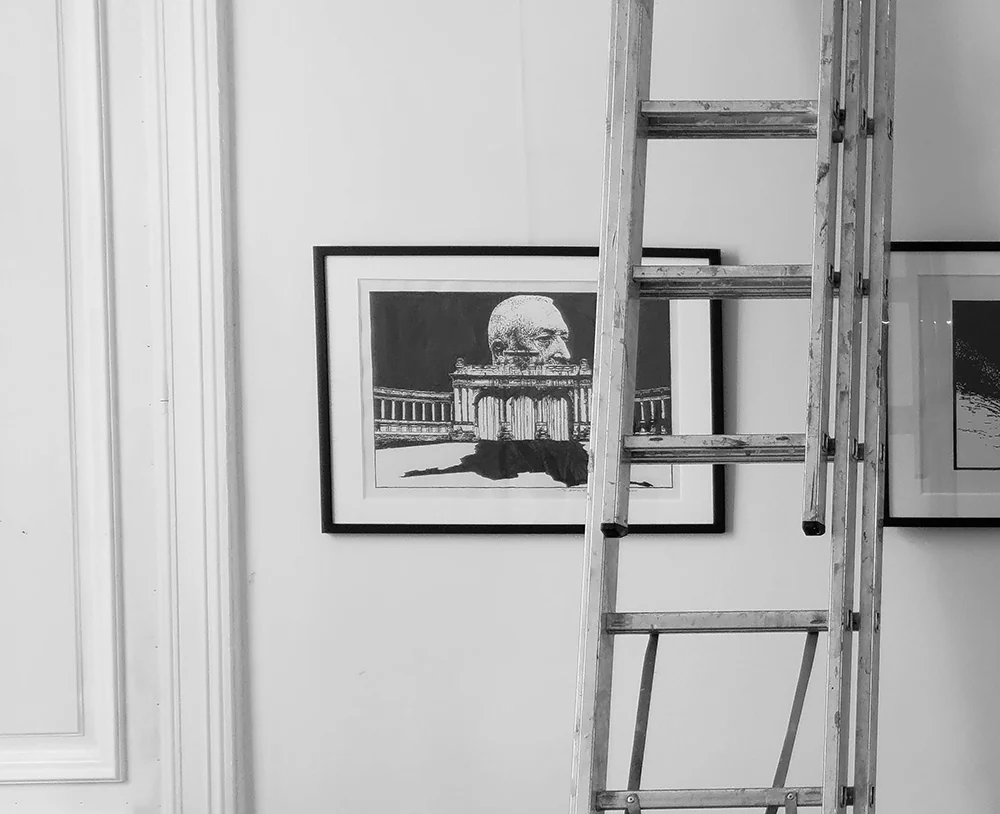
- Teloglion Fine Arts Foundation, Thessaloniki · 2024Original drawing and contextual material.
- Full Circle, Brussels · 2024Original drawing.
Congo Free State, Brussels and visual memory
View sources & further reading
Congo Free State, Brussels and visual memory
- Royal Museum for Central Africa, overview of the Congo Free State regime, forced labour, violence and the difficulty of establishing a precise demographic toll. Read online.
- Royal Museum for Central Africa, history of the Kongo kingdom and the imposition of concessionary exploitation of ivory and rubber after 1885. Read online.
- AfricaMuseum Archives, history of the Anglo-Belgian India Rubber Company (ABIR), its concession, coercive rubber taxes and the resulting regime of terror. Archive entry.
- Brussels-Capital Region, Architectural Heritage Inventory, history of the Cinquantenaire arcade, its completion under Leopold II and Charles Girault, and its place in the wider monumental axis towards Tervueren. Read online.
- Edward Linley Sambourne, In the Rubber Coils. Scene — The Congo “Free” State, Punch, 28 November 1906. UCLouvain record.
- Adam Hochschild, King Leopold’s Ghost, 1999; Matthew G. Stanard, Selling the Congo, 2012; Guy Vanthemsche, Belgium and the Congo, 1885–1980, 2012.