Testing
Germania
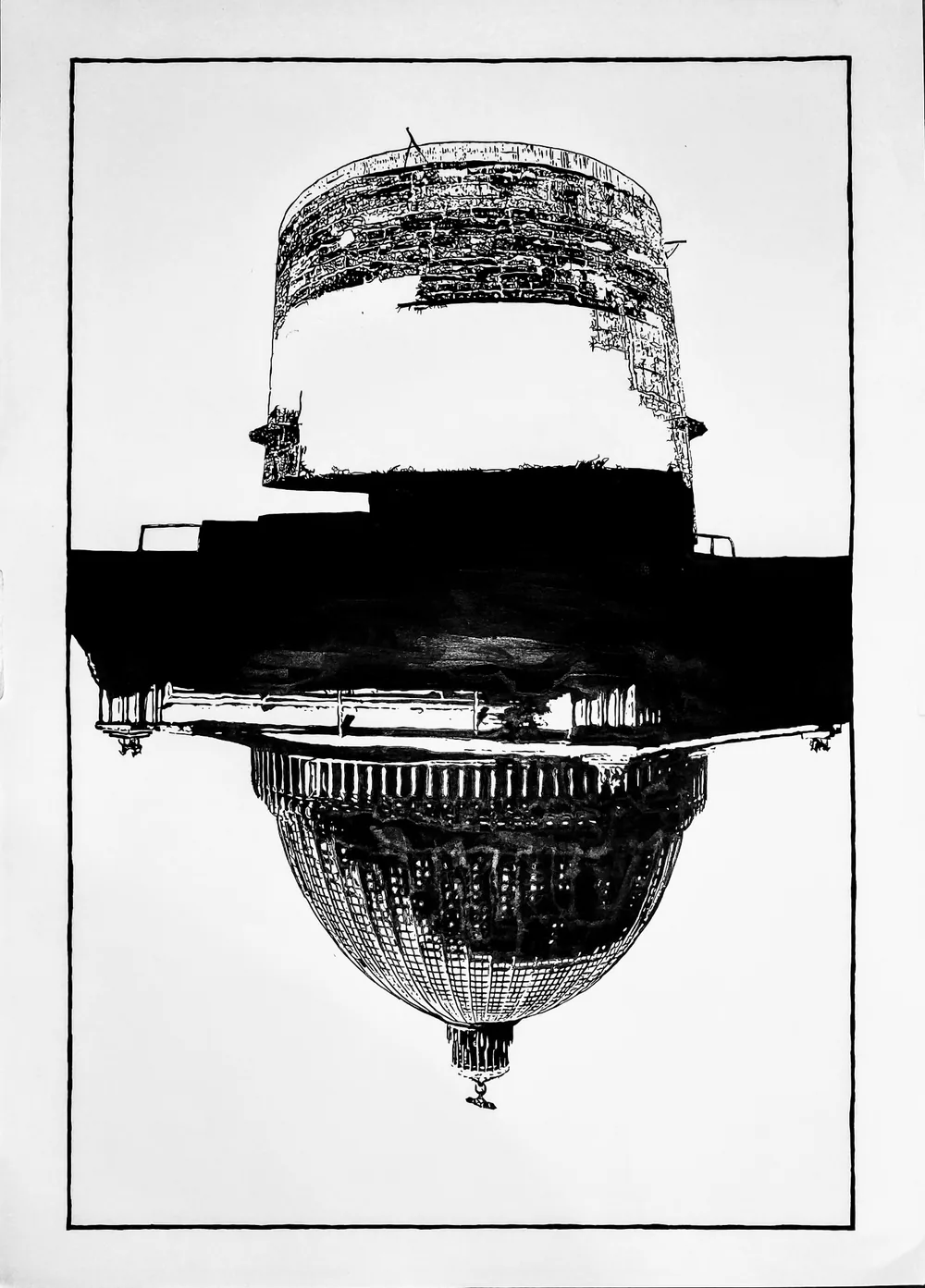
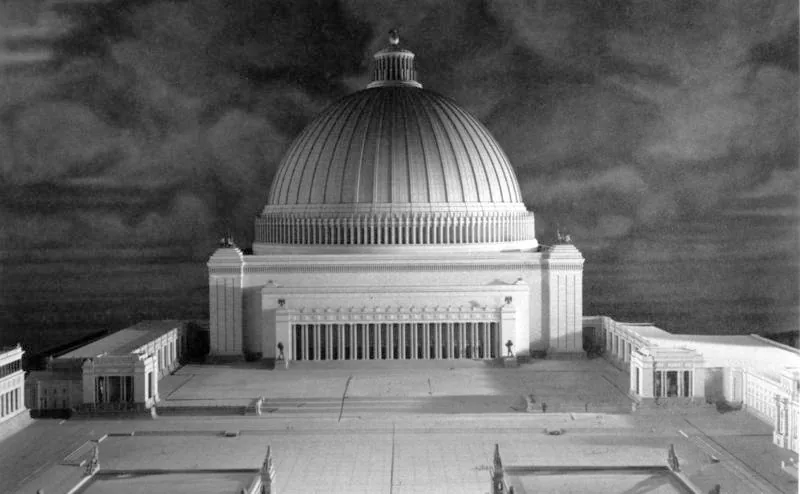
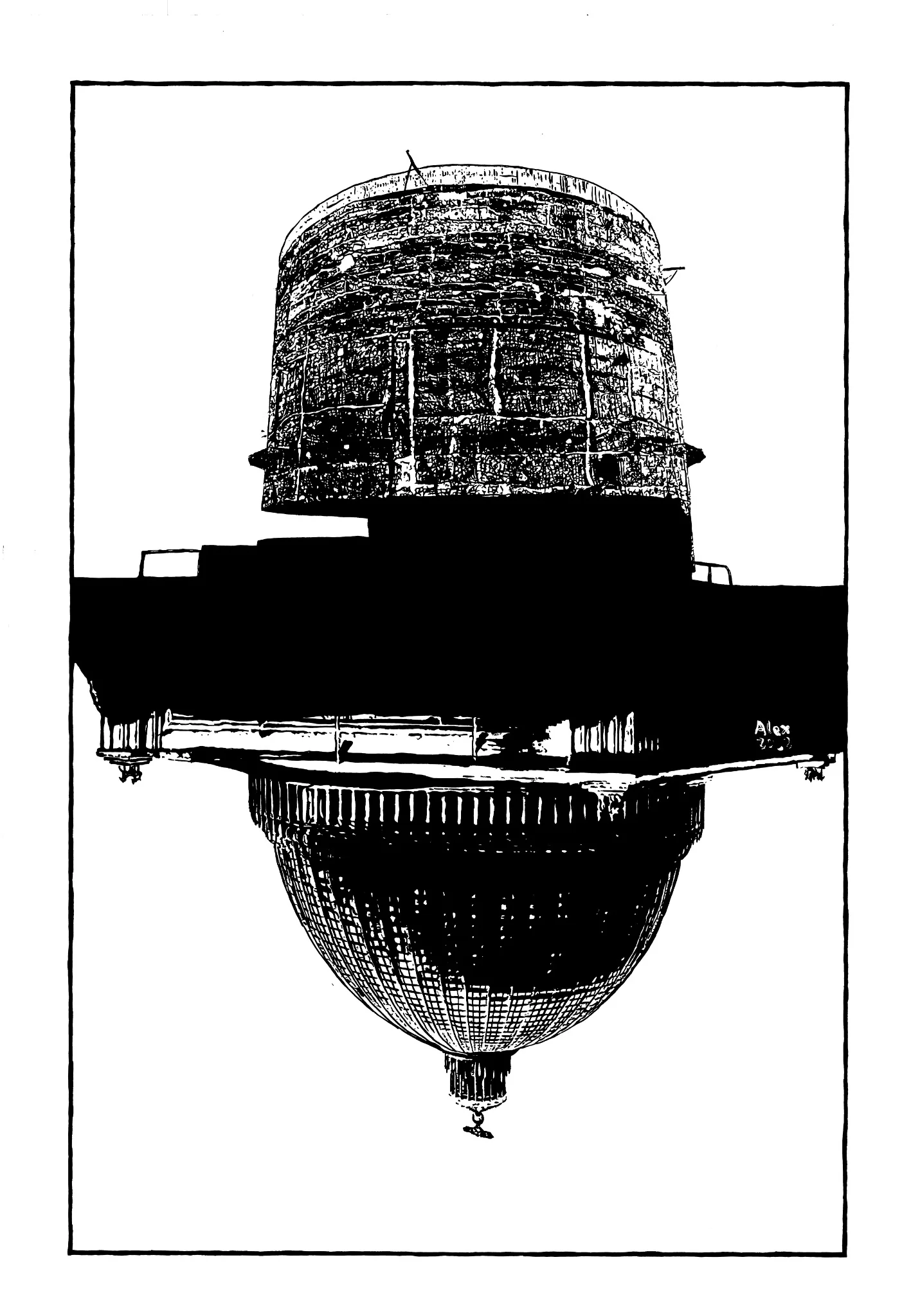
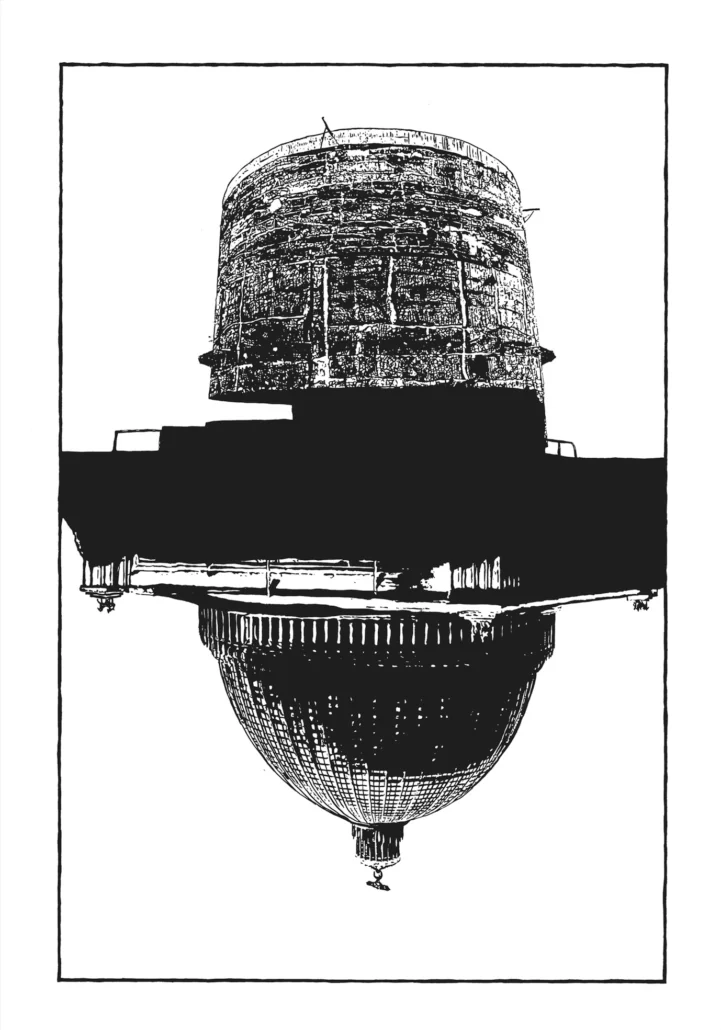
Two monumental architectures meet across a black horizontal band: the surviving concrete test cylinder built for Nazi Berlin and the unrealised dome of the regime’s projected Great Hall. Turn the sheet and the hierarchy reverses.
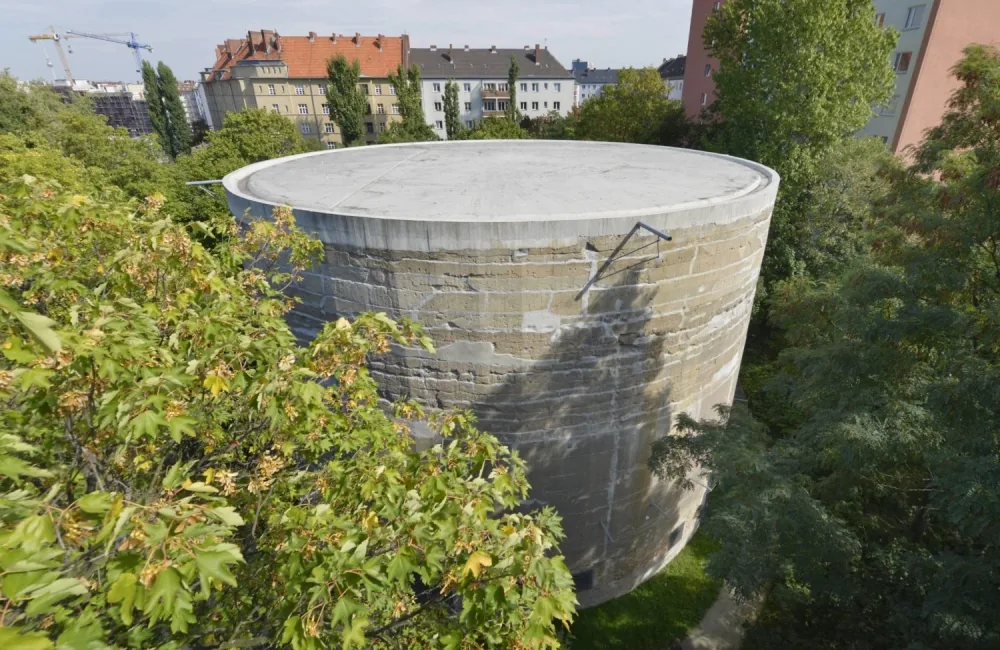
A strange concrete cylinder in Berlin.
In 2001, while working in Berlin during my doctoral research, I came across an extraordinary concrete structure whose purpose was not immediately obvious. Years later, while looking for a Berlin subject, I remembered it.
The object turned out to be the Schwerbelastungskörper — the “heavy load-bearing body” — built to test whether Berlin’s ground could support the enormous triumphal architecture planned for Hitler and Albert Speer’s projected capital, “Germania”. The surviving cylinder became the point of departure for the drawing.
Constructing two architectures on one sheet.
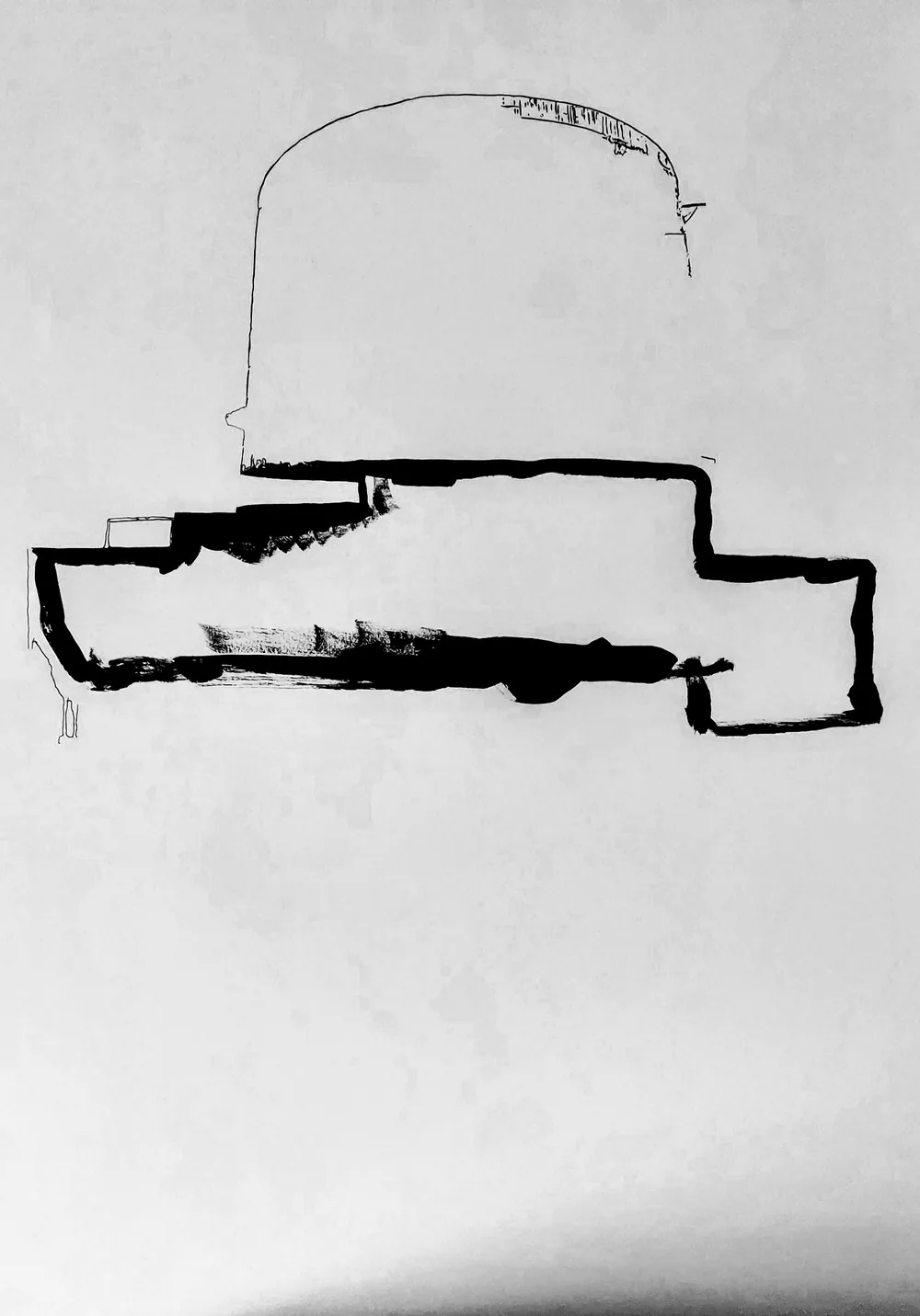
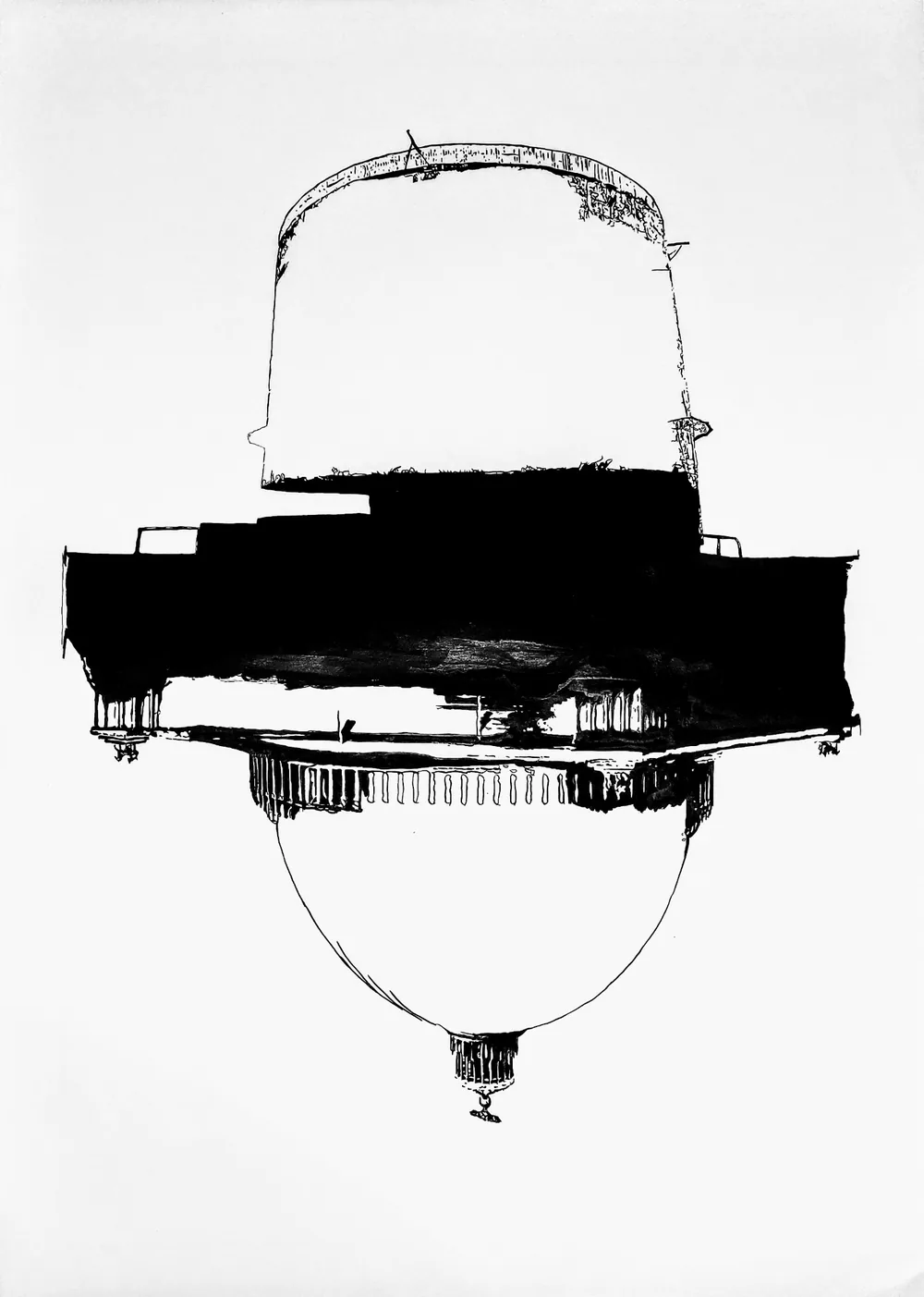
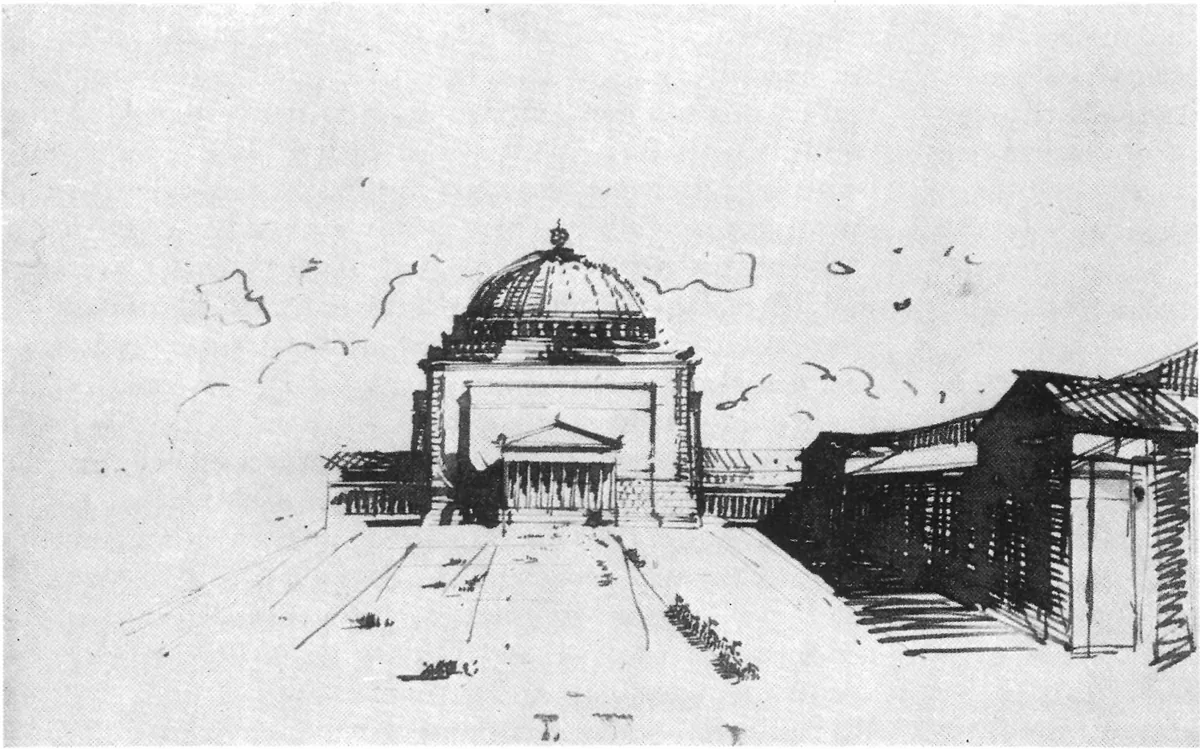
The work-in-progress photographs show the drawing developing from the central black axis outwards. The surviving cylinder is built at one end of the sheet while the projected dome takes form inverted at the other.
View process & sketches
Constructing two architectures on one sheet.
The work-in-progress photographs show the drawing developing from the central black axis outwards. The surviving cylinder is built at one end of the sheet while the projected dome takes form inverted at the other.
The weight of a city that was never built
The Schwerbelastungskörper is one of the few material remnants of the enormous plans to reconstruct Berlin under National Socialism. Built in 1941–42, the concrete cylinder was designed to test the load-bearing capacity of the ground for a planned triumphal arch. The structure weighs about 12,650 tonnes; its foundation extends deep below ground, and instruments were installed to measure settlement under the load.
Read full historical context
The weight of a city that was never built
The Schwerbelastungskörper is one of the few material remnants of the enormous plans to reconstruct Berlin under National Socialism. Built in 1941–42, the concrete cylinder was designed to test the load-bearing capacity of the ground for a planned triumphal arch. The structure weighs about 12,650 tonnes; its foundation extends deep below ground, and instruments were installed to measure settlement under the load.
The test mattered because the proposed architecture was deliberately gigantic. The projected triumphal arch was intended to dwarf the Arc de Triomphe in Paris, while the Great Hall or Volkshalle was conceived as the monumental centrepiece of the new capital. The surviving test cylinder therefore embodies a peculiar contradiction: it is a real structure built in preparation for an architecture that remained unrealised.
A monument to an absence
After the war, the cylinder remained because demolition would have been extremely difficult and dangerous in the surrounding urban environment. It later became protected as a historical monument. In that sense, the utilitarian test object survived the ideological architecture it was meant to enable.
Testing Germania brings that survivor into direct confrontation with the imagined architecture for which it existed. One is squat, heavy and physically present; the other is monumental, domed and unreal. By placing them opposite one another and allowing the sheet itself to turn, neither structure is granted a stable position of dominance.
There is no fixed top.
The image was made to be physically turned. On the web, that should remain part of the experience rather than being reduced to a static reproduction.
At one orientation the Schwerbelastungskörper stands above the black axis while the dome hangs below it. Rotate the sheet 180 degrees and the relationship reverses. The work does not acquire a second image: the same image changes its hierarchy.
Testing Germania · lithograph
The 2024 lithograph translates the original into a separate signed and numbered printed edition.
€250 · Brussels hand delivery by appointment · Elsewhere in Belgium & EU: €15 packaging/shipping · EU delivery only
Buy this lithographBrussels hand delivery · €250Exhibition history
View exhibition history
Exhibition history
- European Jewish Community Centre, Brussels8 December 2023 – 15 January 2024 · original drawing
- Full Circle, Brussels3 February – 25 April 2024 · original drawing
- Teloglion Fine Arts Foundation, Thessaloniki8 October – 10 November 2024 · original drawing
Germania and the Schwerbelastungskörper
View sources & further reading
Germania and the Schwerbelastungskörper
- Clare Copley, “‘Stones do not Speak for Themselves’: Disentangling Berlin’s Palimpsest”, Fascism 8.2 (2019), 219–249.
- Martin Kitchen, Speer: Hitler’s Architect, Yale University Press, 2015.
- Thomas Friedrich, Hitler’s Berlin: Abused City, Yale University Press, 2012.
- Informationsort Schwerbelastungskörper — documentation on the test structure and its later history.