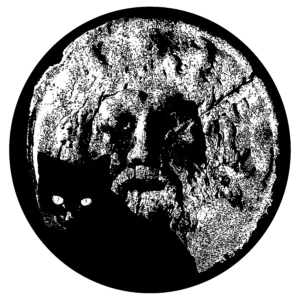
The Artistic Process
Research comes first. Then sketches, composition, black ink — and, for selected works, lithography.
The process behind Cities of Lost Memory can take months. It begins with reading, archival and museum research, travel and conversations with specialists. The drawing grows from that material, but it does not simply illustrate it: historical sources are rearranged, simplified, distorted or combined until the composition finds its own logic.
Not monochrome, but bichrome
Black and white are equally active in the drawings. Indian ink supplies the black; the white is the paper left untouched. Strong contrast makes it possible to simplify the image, direct the eye and keep the historical argument visible inside the composition.
The drawing therefore develops almost in reverse. Darkness is added, while the light remains the material of the sheet itself.
Before the first line
Books, articles, museum collections, field visits and specialist conversations may all enter the preparatory work. Archaeological training matters here less as a subject than as a method: knowing where to look, how to compare evidence, and when to ask someone who knows more.
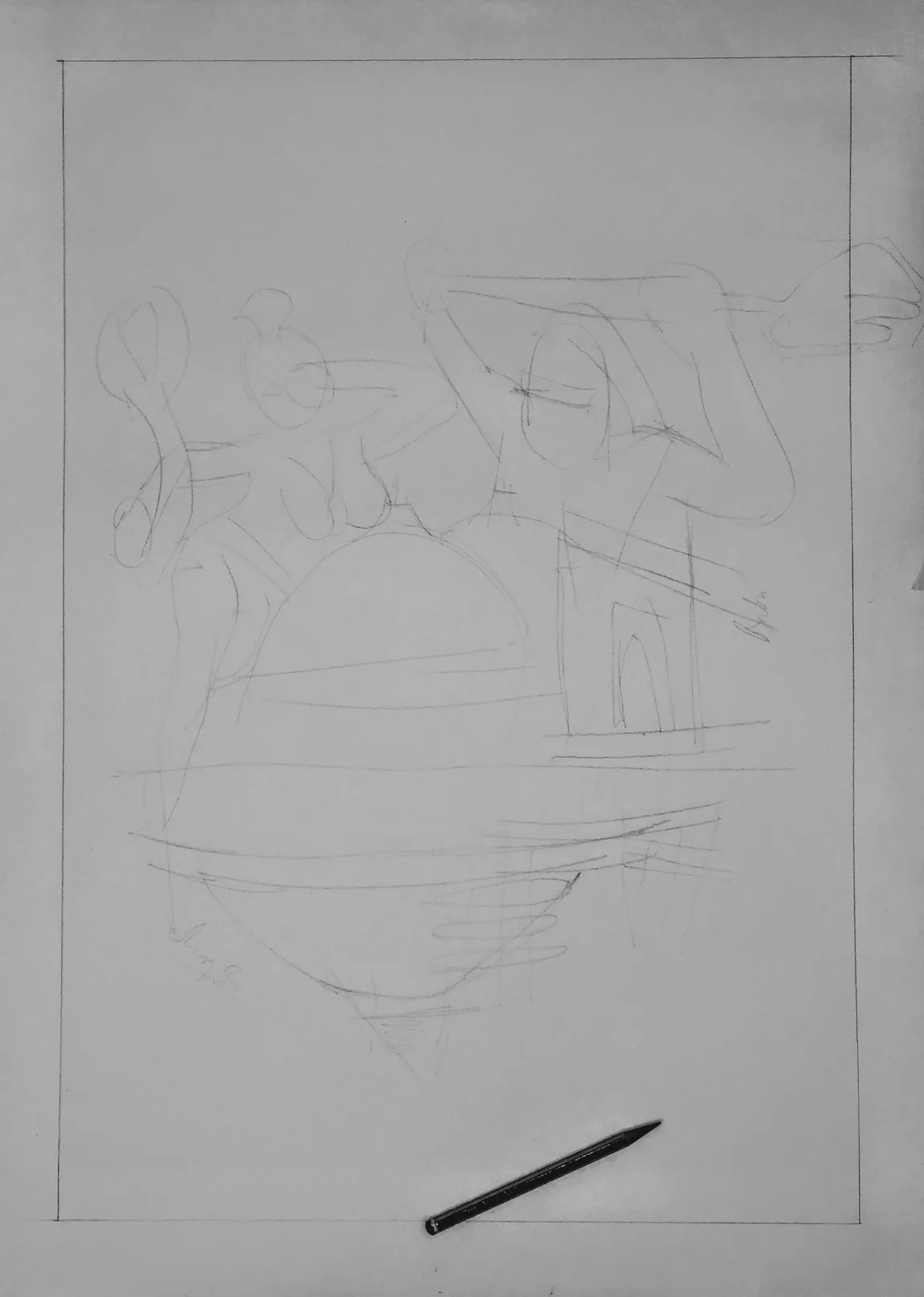
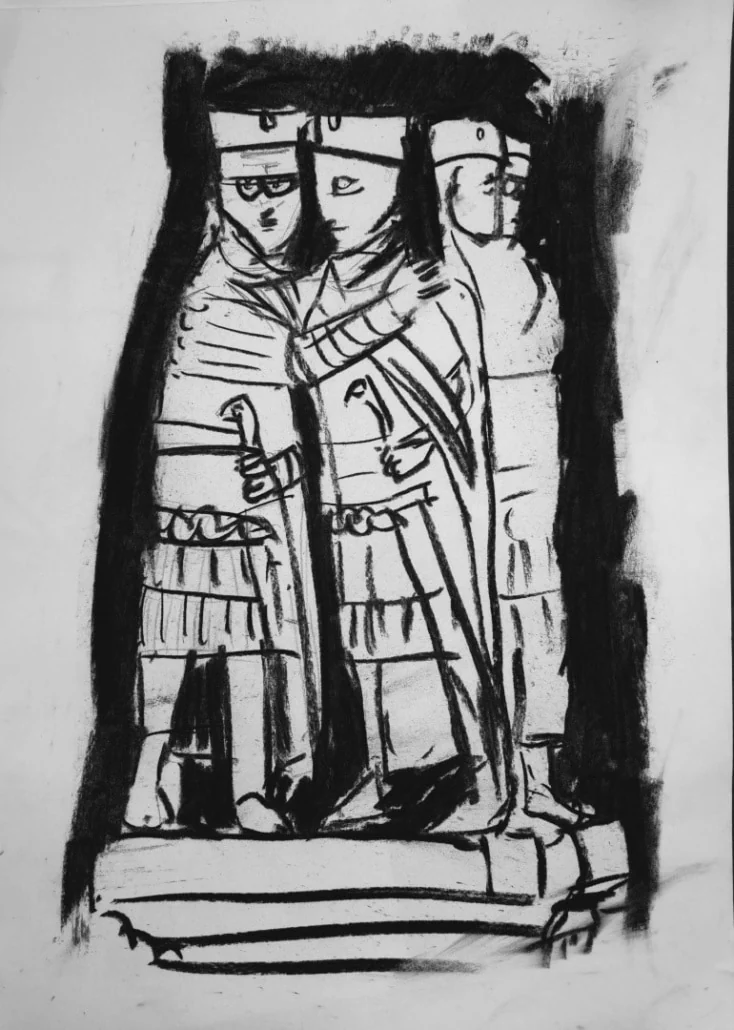
Research is not a guarantee of literal accuracy in the final image. Once the evidence is understood, it can be bent deliberately to serve the composition.
Making the image move
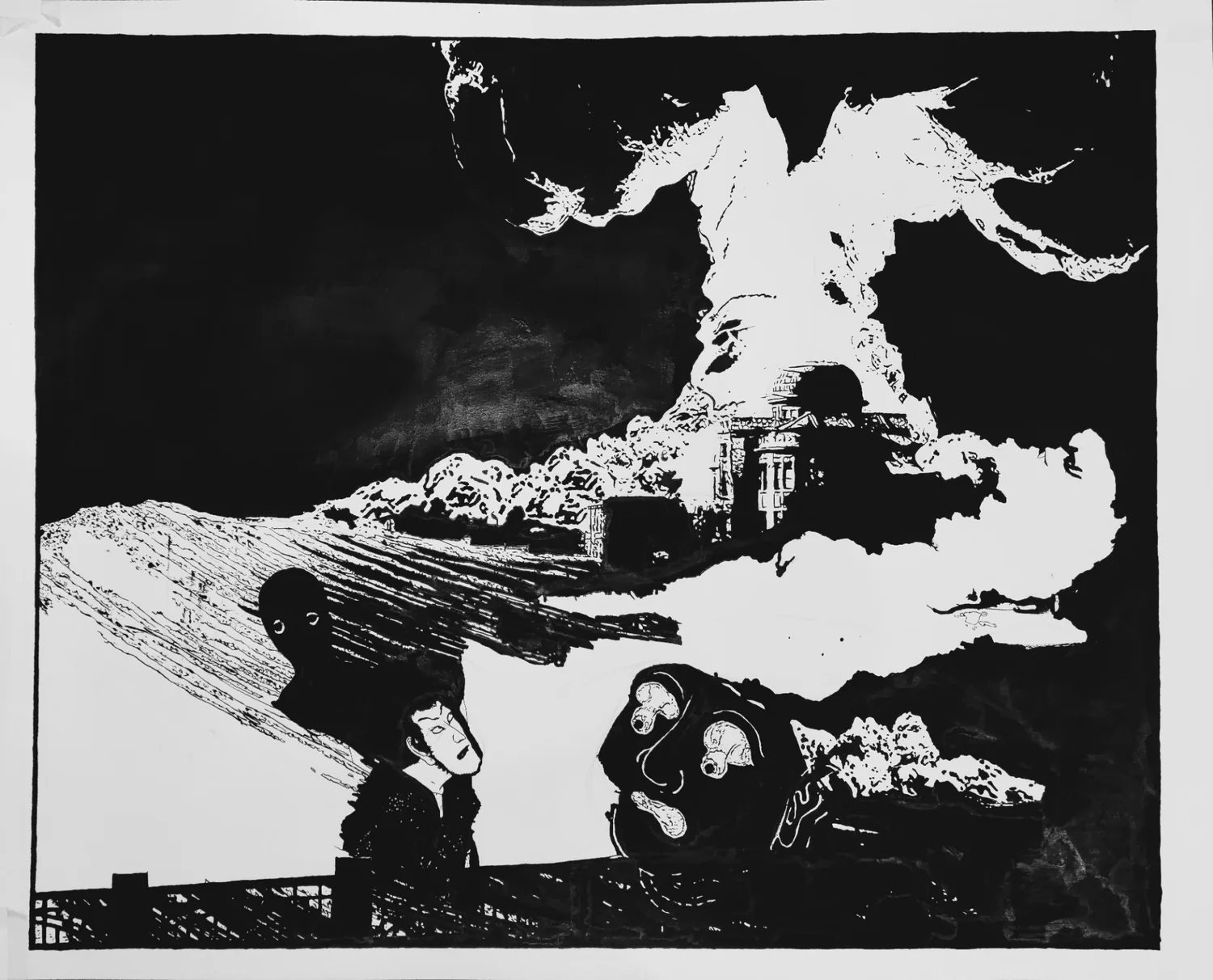
Composition is often the longest stage. Buildings, figures and objects are reduced to strong directions and elementary geometries, then moved repeatedly until the image has the right weight and rhythm. Sometimes an idea generates the image; sometimes a complete image arrives first and demands to be explained afterwards.
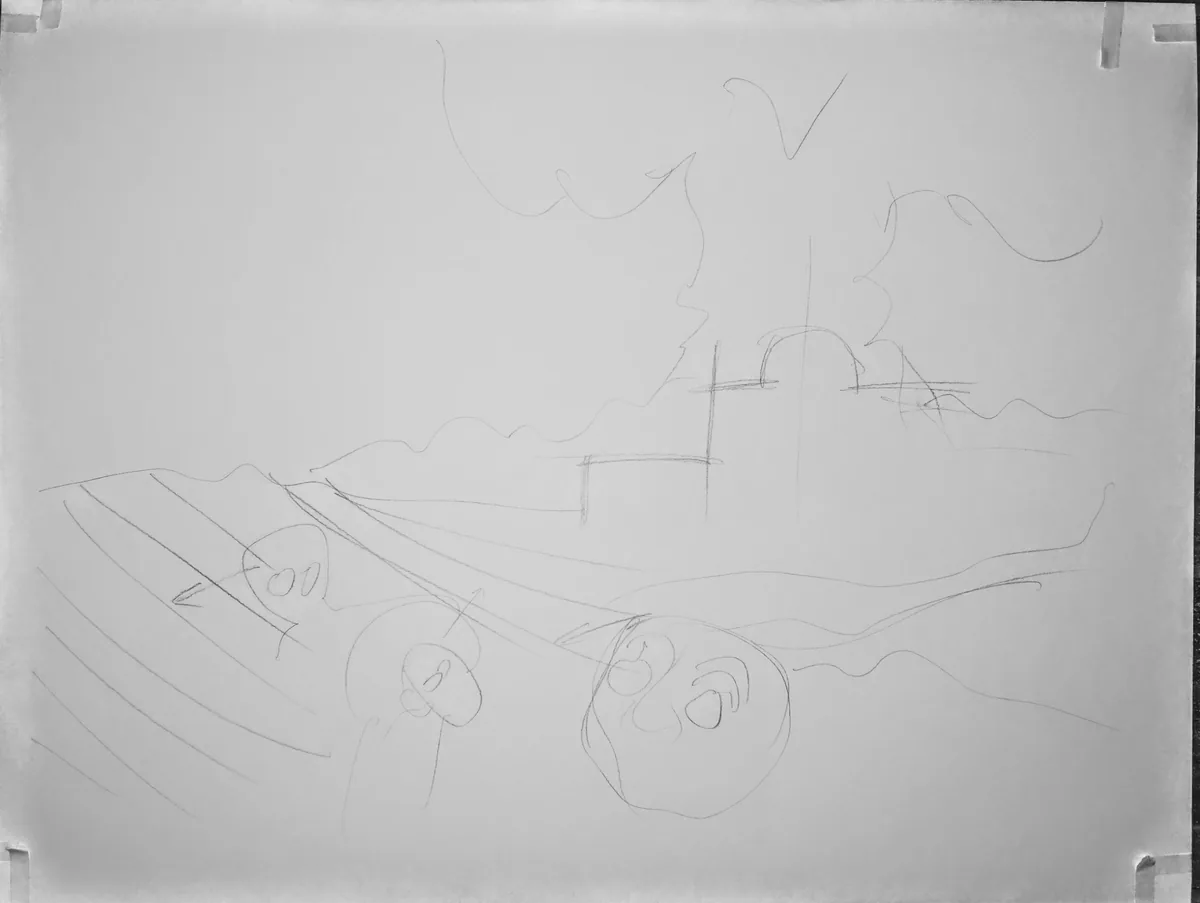
Little room for error
The final drawing is made in Indian ink with brushes and pen. Because the ink is indelible, the image develops slowly. Large black fields are balanced against untouched areas of paper, and details emerge progressively rather than through later white correction.
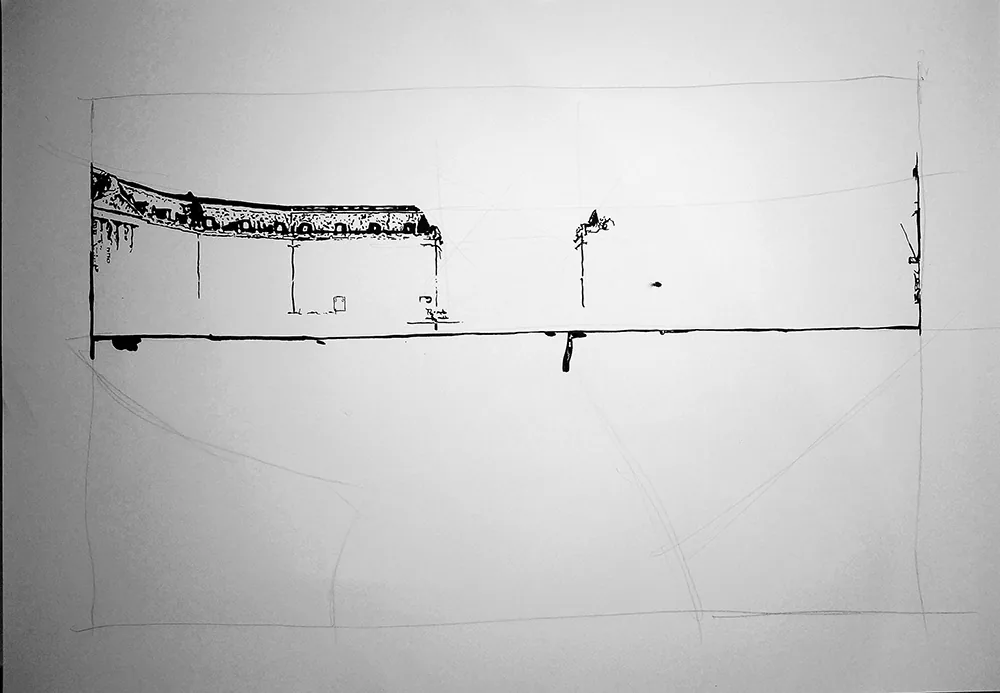
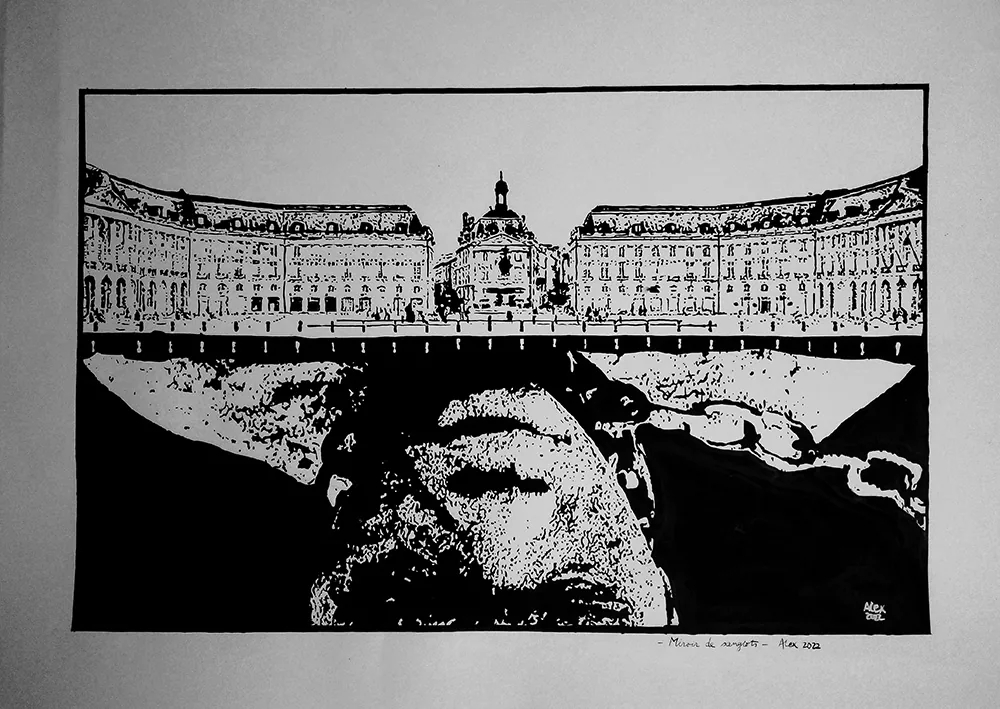
The finished work retains traces of this irreversible process: the black is applied; the white survives.
A second life in print
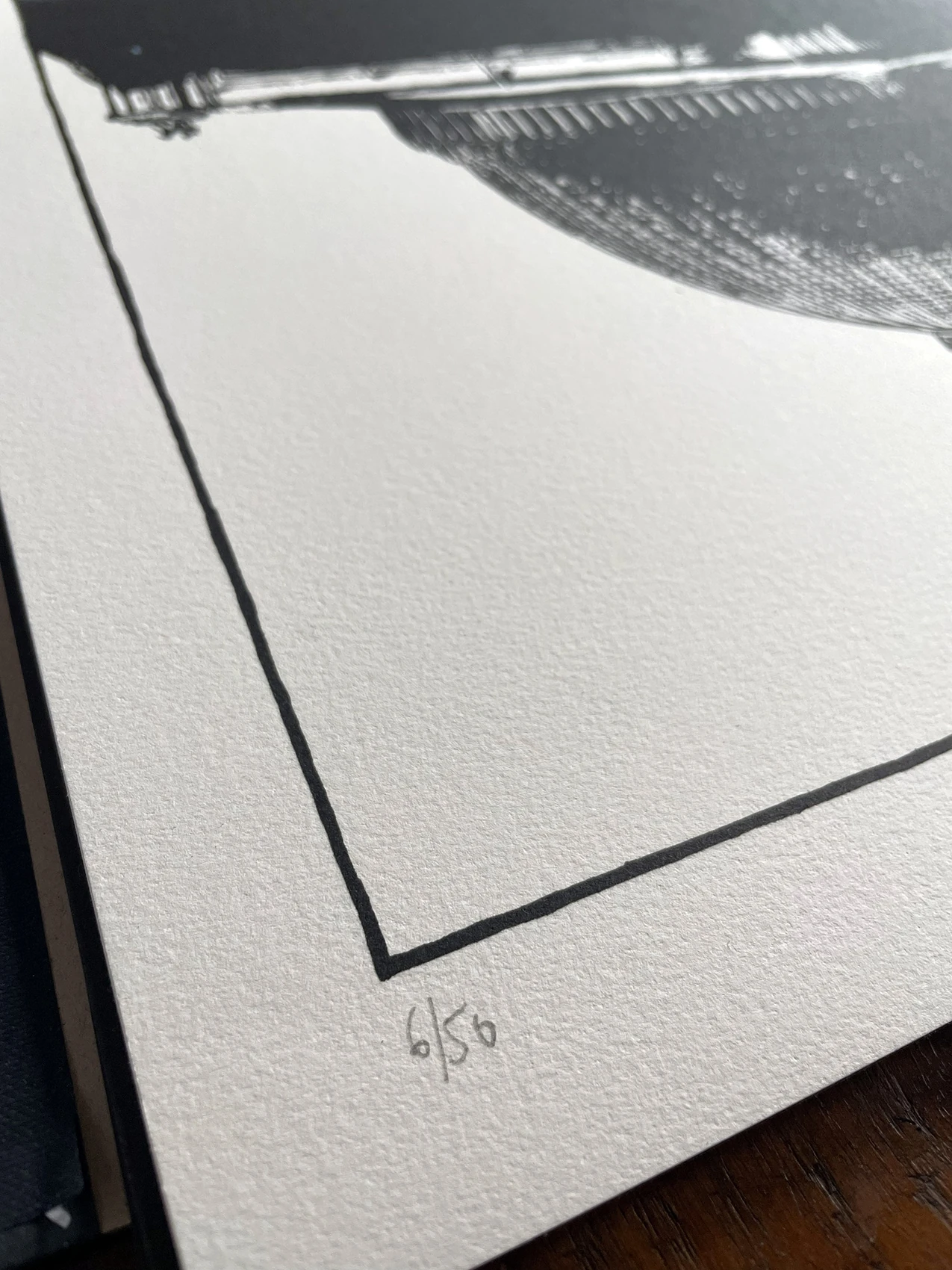
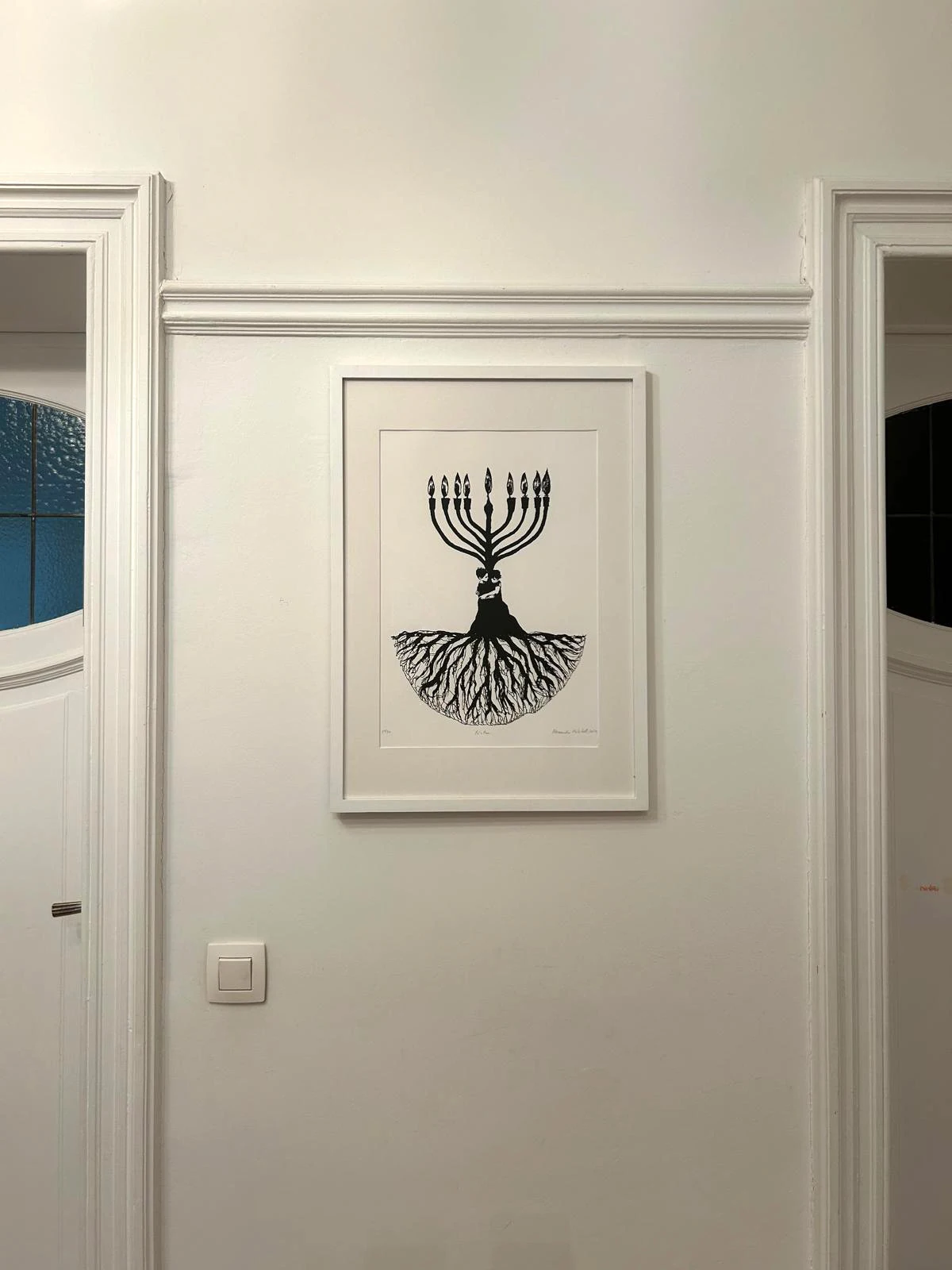
Selected drawings have been translated into lithography in collaboration with master lithographer Bruno Robbe. The process can intensify the relationship between deep black and untouched white, while turning the drawing into a printed object with its own material presence.
The lithograph is not treated as a reproduction hidden behind the original. It is another state of the image.
Unearthing what has become invisible
The project often deals with disturbing histories, but the aim is not darkness for its own sake. Research and drawing are used to recover what has been obscured, forgotten or made difficult to see.
That is also why so many artwork pages preserve sketches, working states and source material: the route into the image is part of its meaning.
Explore the works →