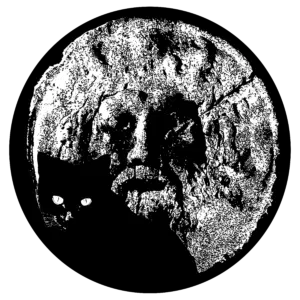
London in Red
Turn the drawing one way and a Soviet monument towers over Parliament. Turn it back and King Arthur rises beneath the same skyline, drawing another sword from another stone.
London in Red is built around a physical choice: there is no permanently correct orientation. The sheet opposes two forms of political imagination — a monumental image created by a modern state and a medieval legend that became part of Britain’s inherited cultural memory.
The pivot is the sword. In one direction it is being hammered into a supposed instrument of peace; in the other it confers legitimacy on a king. The same object becomes propaganda, weapon, promise and myth depending on which way the viewer stands.
Three images locked on one axis
The drawing does not hide its references. It collides them. A heroic body, the Westminster skyline and a medieval king remain legible separately, but rotation forces each to change rank within the composition.
The argument is mechanical
The painting swivels through 180 degrees. Rotation is not a trick added to the page; it is part of the work itself.
Shown here first with Vuchetich upright, the Soviet figure stands above Parliament while Arthur falls beneath it. Rotate the drawing and the hierarchy is reversed: Arthur’s crown and face resolve themselves, the modern colossus is inverted, and the lower half becomes the point of entry.
Neither orientation cancels the other. The point is precisely that political images acquire authority by controlling what appears upright, central and natural. A physical turn of the sheet is enough to expose how quickly that authority can change.
Swords into ploughshares
In December 1959 the Soviet Union presented the United Nations with Evgeniy Vuchetich’s bronze Let Us Beat Swords into Ploughshares. The official symbolism was disarmament: a muscular man raises a hammer while transforming a sword into an agricultural tool.
Read more
Swords into ploughshares
In December 1959 the Soviet Union presented the United Nations with Evgeniy Vuchetich’s bronze Let Us Beat Swords into Ploughshares. The official symbolism was disarmament: a muscular man raises a hammer while transforming a sword into an agricultural tool.
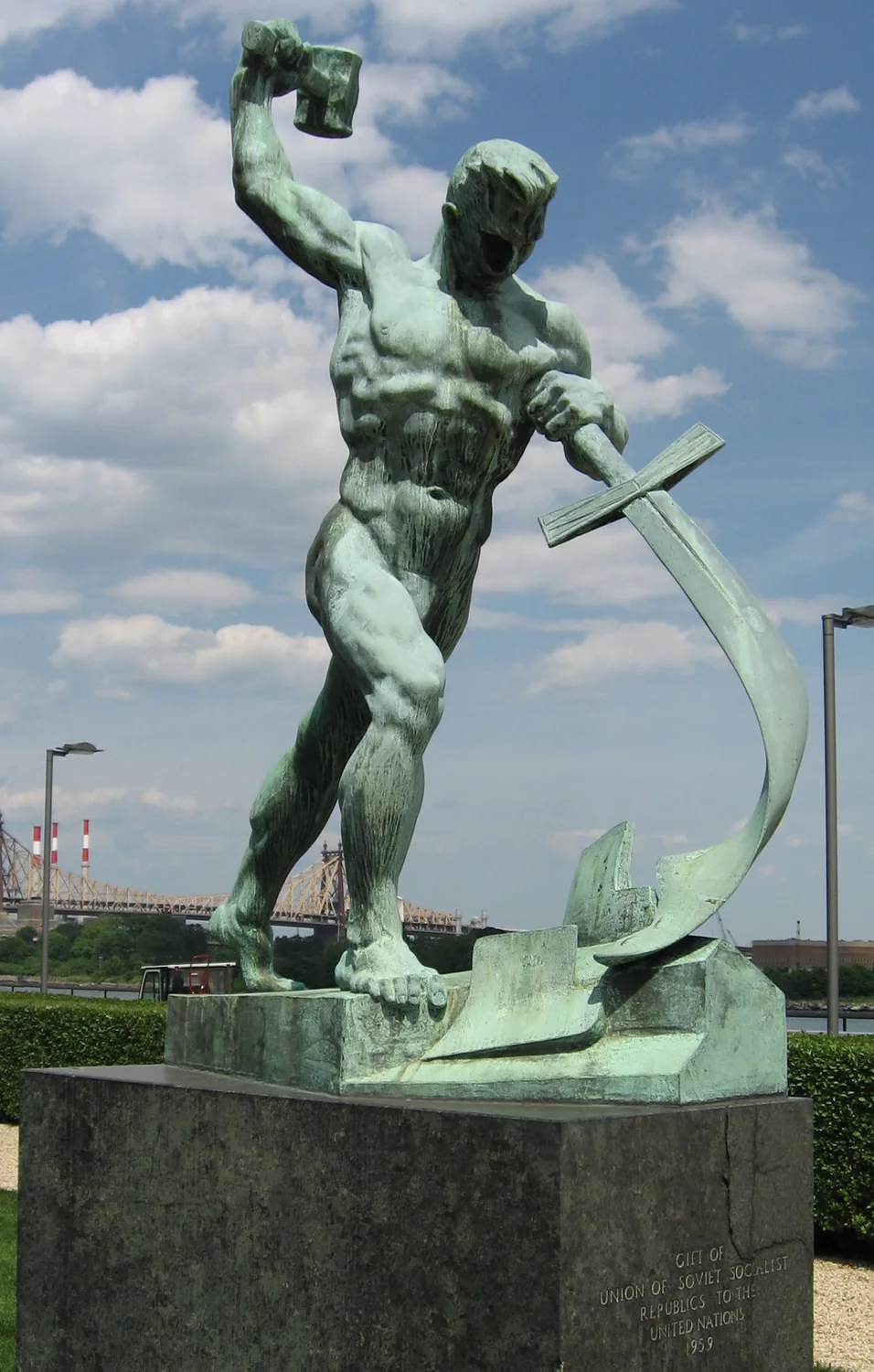
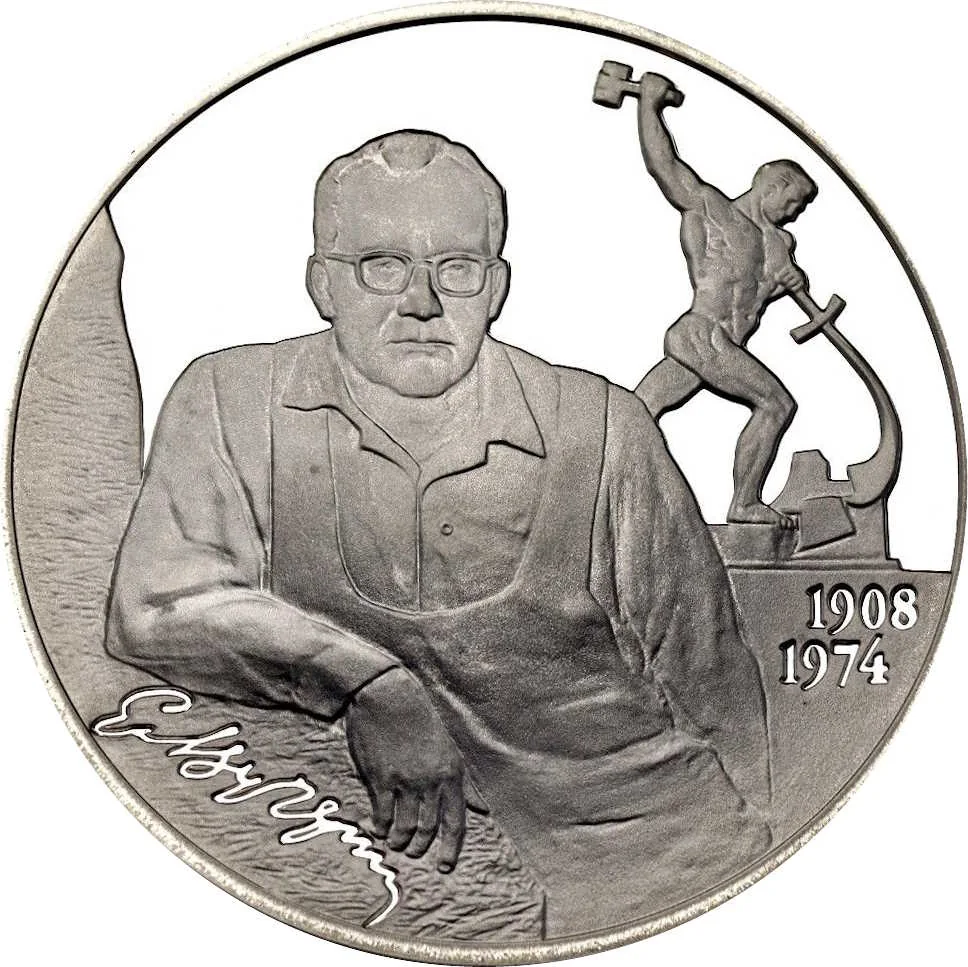
The drawing begins from the gap between a symbol and the political system that deploys it. A biblical prophecy of peace could be entirely sincere as an image and still function, in a Cold War setting, as soft power. That ambiguity is what interests the work: propaganda is most effective when it does not look like propaganda.
The artist reads the Soviet gift through the old warning associated with Laocoön: a gift can carry a second purpose inside it. In London in Red, Vuchetich’s hammer therefore no longer completes a ploughshare. It bears down toward a sword and the Houses of Parliament, turning a universal peace emblem into a deliberately troubling image of ideological pressure.
Myth can be political without being propaganda
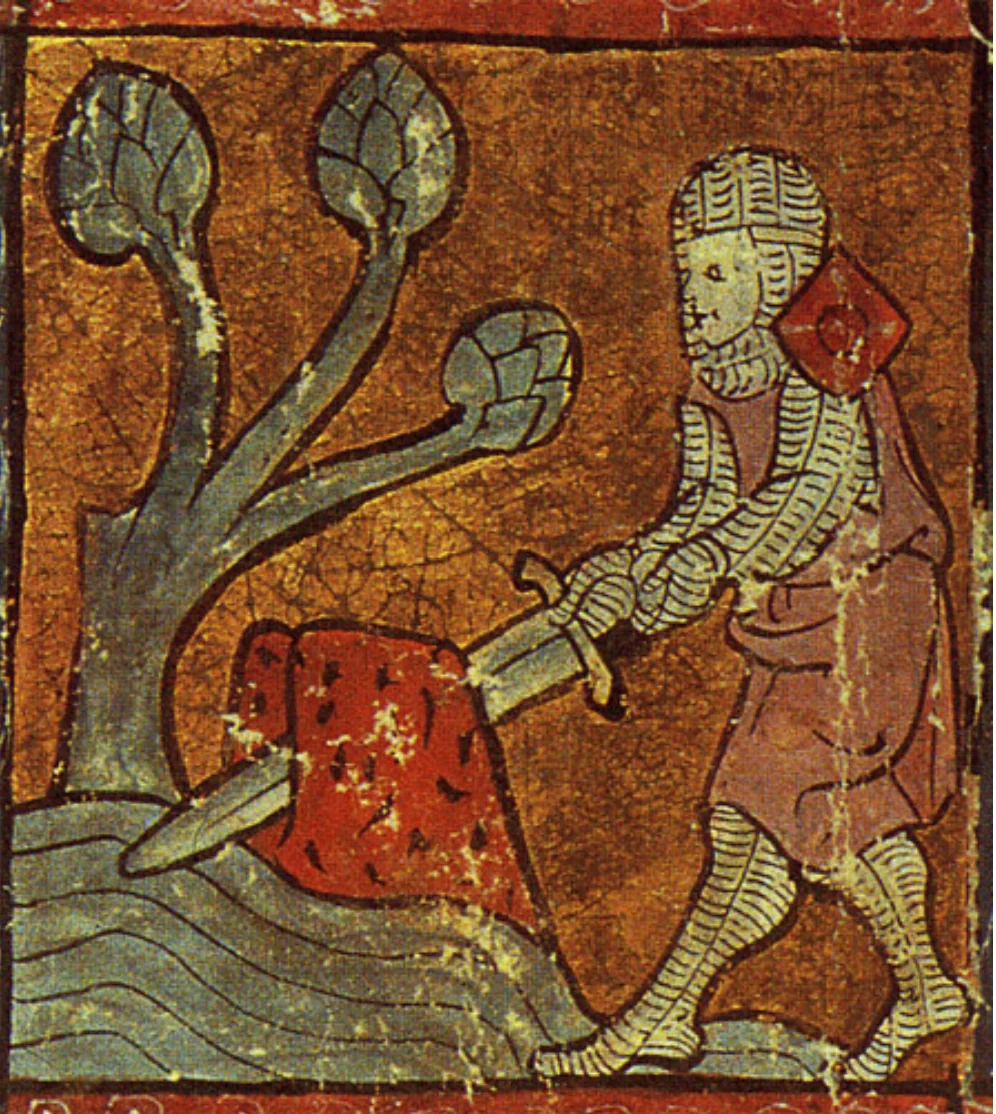
Arthur belongs to a different category of image. He is not historical proof of a lost golden age, and the drawing does not ask us to treat him as one. His force lies in cultural afterlife: stories of rightful rule, renewal, justice and belonging that were rewritten for centuries.
Read more
Myth can be political without being propaganda
Arthur belongs to a different category of image. He is not historical proof of a lost golden age, and the drawing does not ask us to treat him as one. His force lies in cultural afterlife: stories of rightful rule, renewal, justice and belonging that were rewritten for centuries.
That afterlife had material consequences. In 1233 Richard, Earl of Cornwall, exchanged three manors for the rocky headland of Tintagel. English Heritage argues that his new castle deliberately exploited the site’s Arthurian associations, allowing Richard to place himself inside a story already powerful enough to shape politics and landscape.
A vocabulary that outlives the Cold War
London in Red was conceived in the aftermath of the 7 October 2023 attacks and during the large London demonstrations surrounding the Gaza war. What struck the artist was not the possibility of assigning one motive to thousands of individuals, but the persistence of a familiar political grammar: empire and resistance, coloniser and colonised, fascism and anti-fascism, guilt and innocence.
Read more
A vocabulary that outlives the Cold War
London in Red was conceived in the aftermath of the 7 October 2023 attacks and during the large London demonstrations surrounding the Gaza war. What struck the artist was not the possibility of assigning one motive to thousands of individuals, but the persistence of a familiar political grammar: empire and resistance, coloniser and colonised, fascism and anti-fascism, guilt and innocence.
The work asks how much of that grammar still carries the imprint of twentieth-century ideological struggle. Anti-imperialist language travelled widely during the Cold War, moved through parties, unions, universities and protest movements, and could be attached to conflicts very far from its original context. In contemporary debate, those categories can still offer immediate moral clarity — sometimes at the cost of historical complexity.
This is why Parliament sits at the centre. The drawing is finally less about Moscow, medieval Cornwall or any single march than about the stories through which a democracy understands itself. What happens when inherited national myths are dismissed as naïve, while ideological myths are accepted as analysis?
The monument, Tintagel and the image
View sources & further reading
The monument, Tintagel and the image
- United Nations Gift Collection, “Let Us Beat Swords into Ploughshares” — official record of the sculpture, its iconography and its presentation by the USSR on 4 December 1959. Read online.
- United Nations Digital Library, press release HQC/177, 4 December 1959 — contemporary record of the Soviet gifts to the UN, including Vuchetich’s statue. Read online.
- English Heritage, “Richard of Cornwall, King Arthur and Tintagel Castle” — on Richard’s 1233 exchange of three manors for Tintagel and the political force of Arthurian legend. Read online.
- Virgil, Aeneid, Book II — the classical source for the warning against apparently benevolent gifts that conceal another purpose.
The comparative images identify the two principal visual genealogies without turning the work into an illustrated catalogue.