Full Circle
An exhibition people lived with
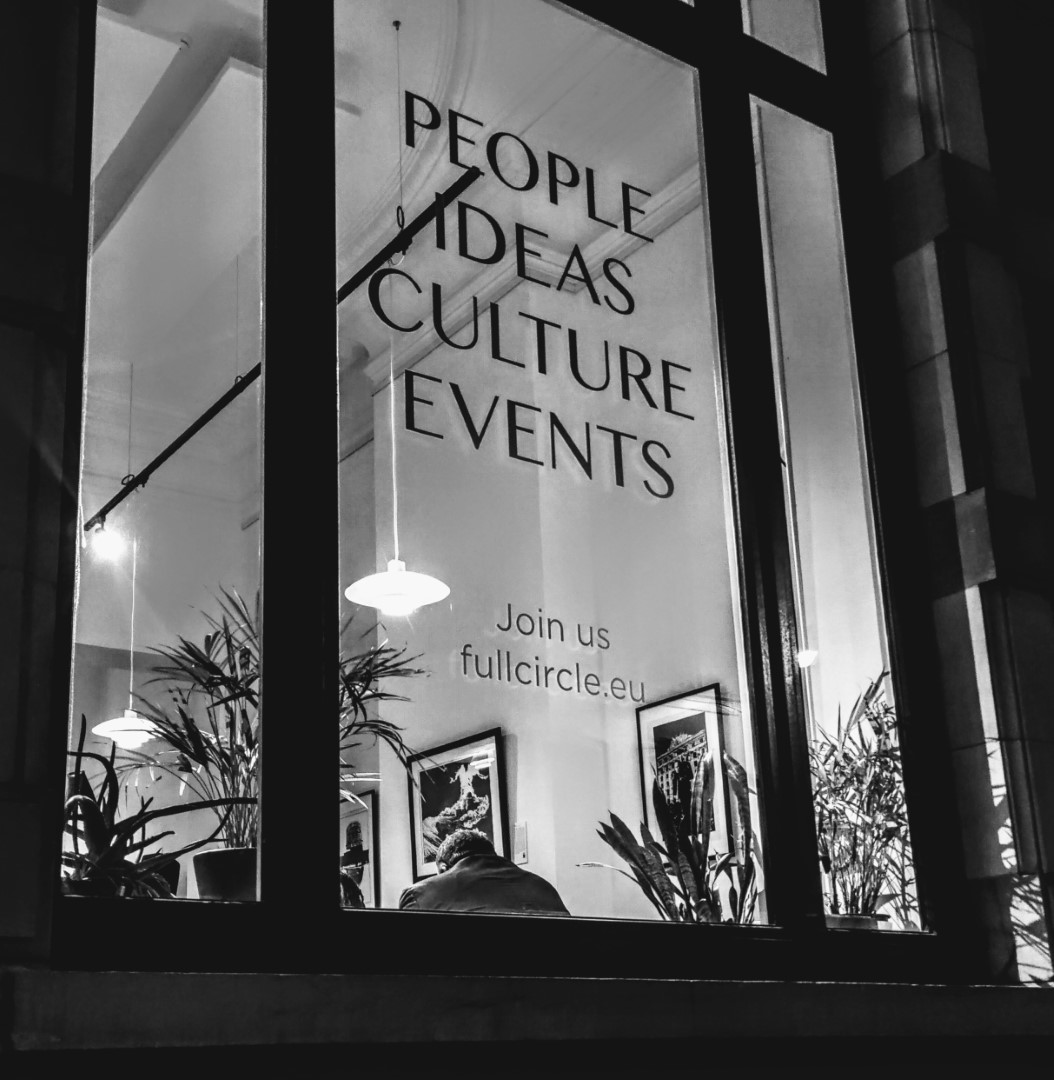
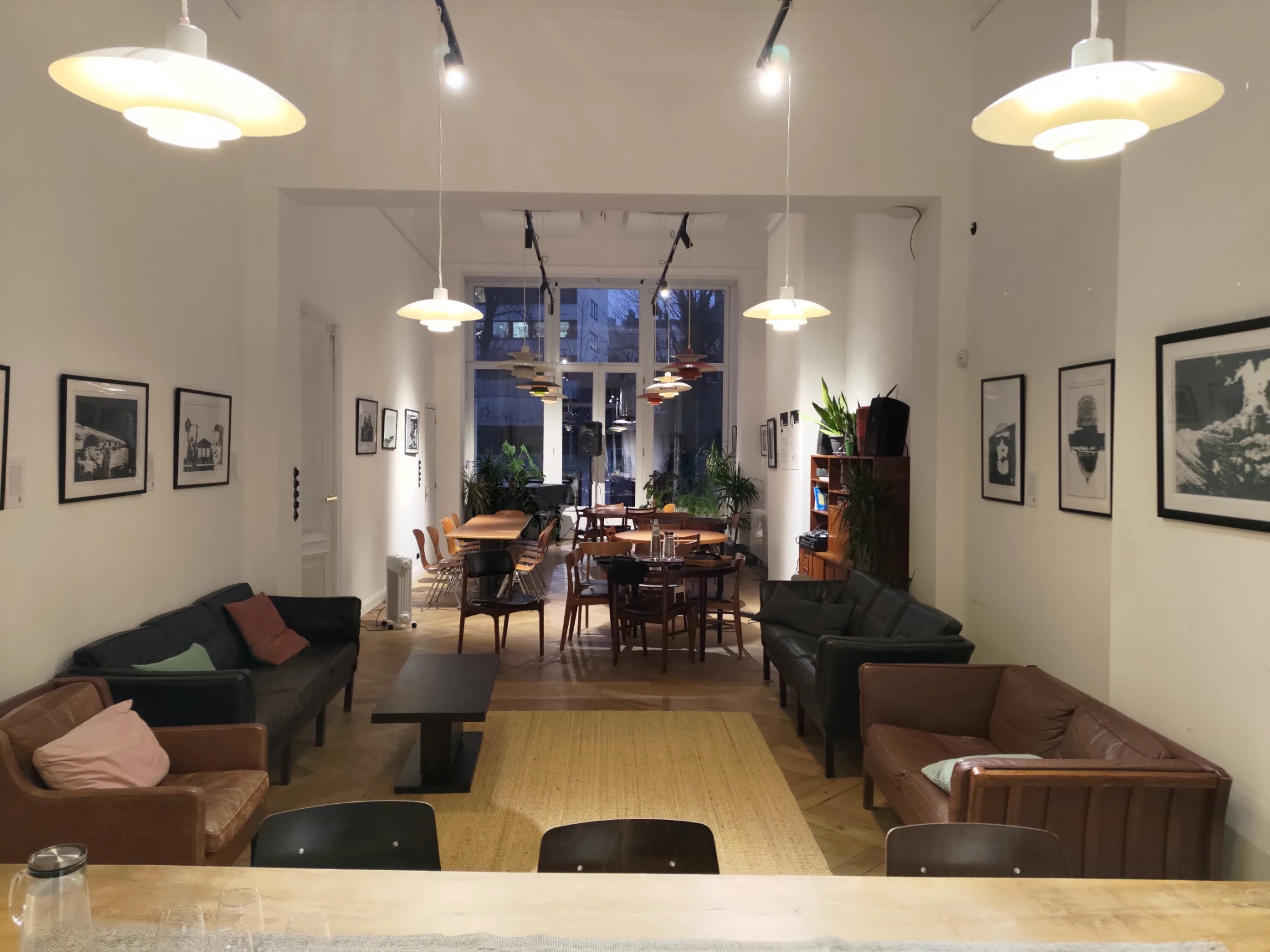
Full Circle was not a conventional gallery. The works entered a cultural space already built around people meeting, eating, debating and returning.
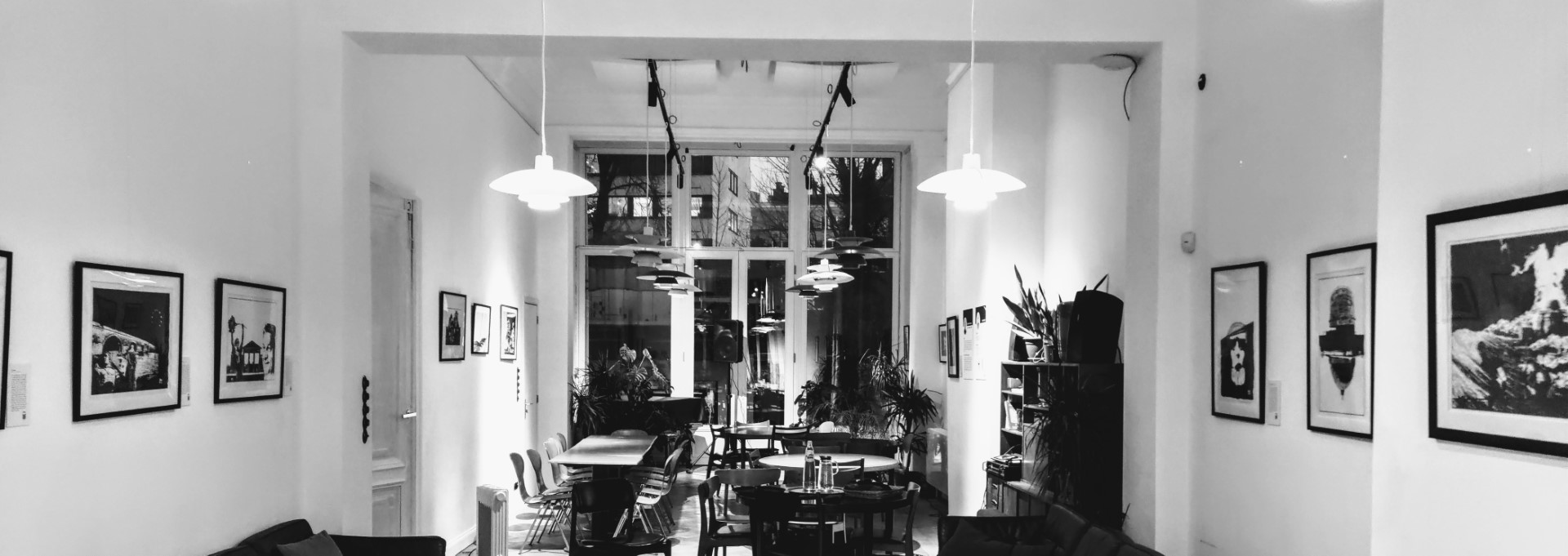
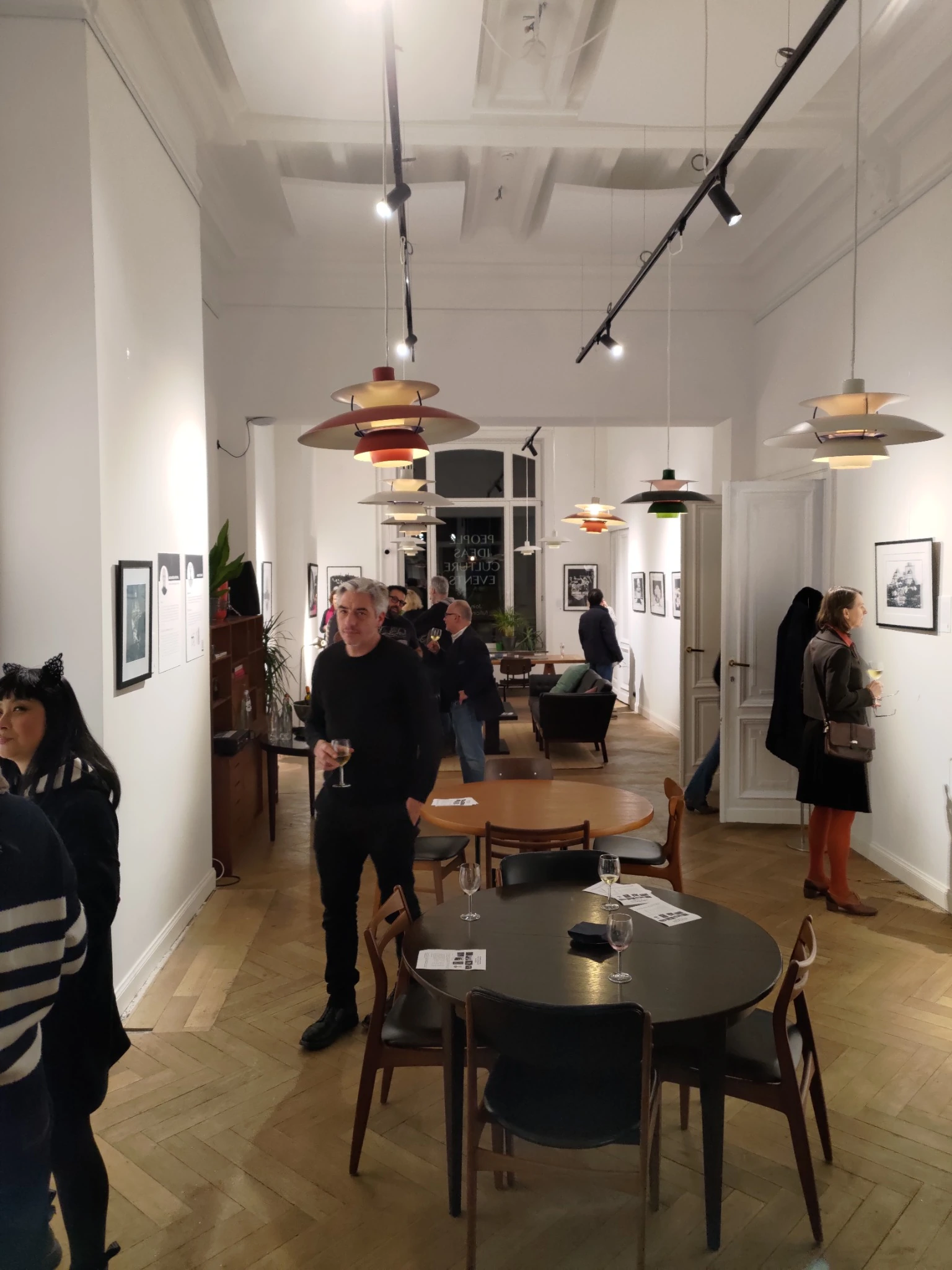
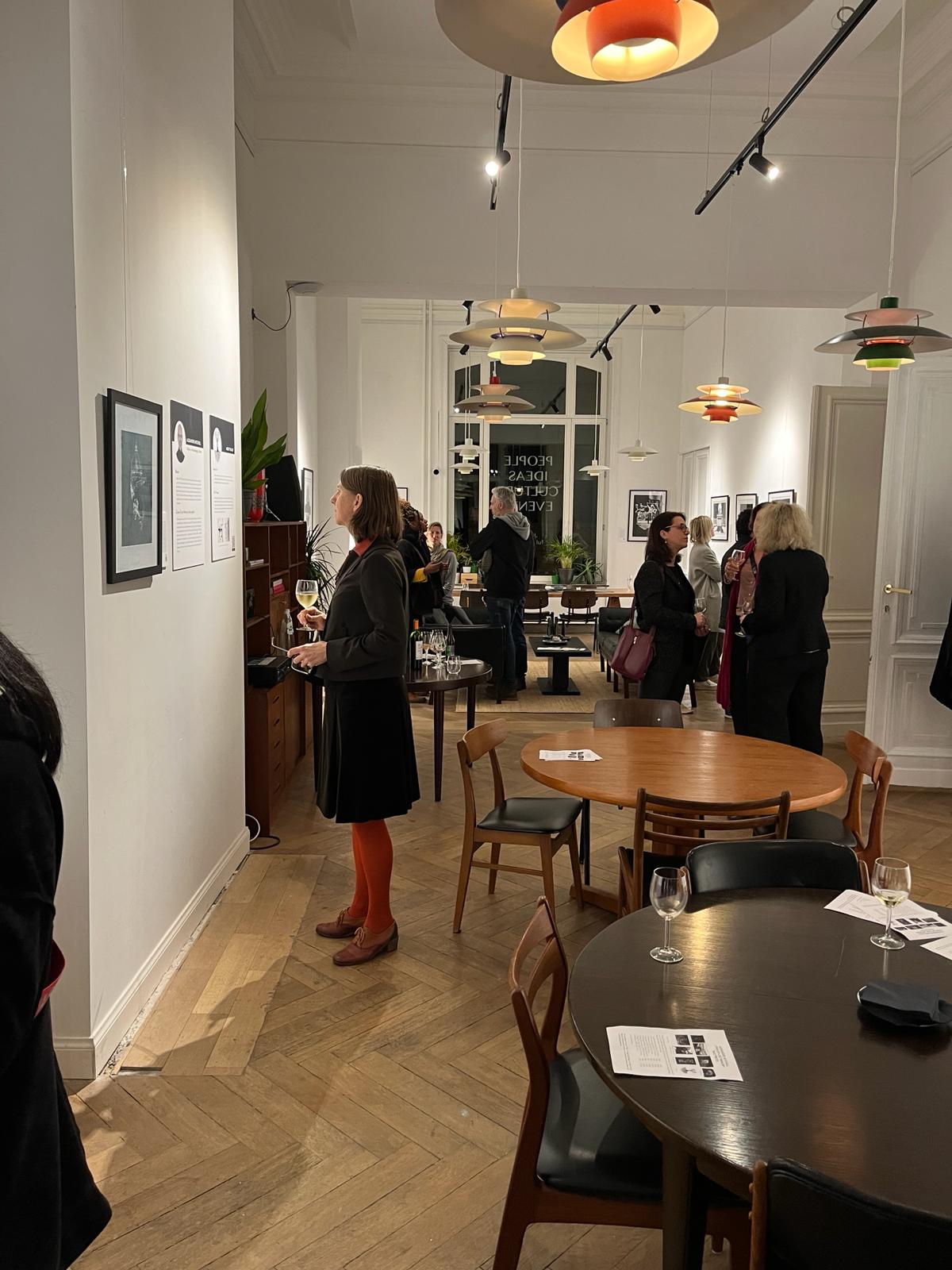
Twenty-one works remained on view for nearly three months. They ran around a long sequence of rooms with very high ceilings, pendant lights, sofas, tables and plants — an environment in which the boundary between exhibition and everyday use was deliberately porous.
Visitors encountered the drawings during openings and programmed events, but also over coffee, breakfast, dinner or conversation. The result was a slower kind of exhibition: one that could be revisited rather than consumed in a single pass.
A room with a life of its own
The architecture shaped the installation. Instead of a single gallery wall, the works occupied a chain of domestic-scale zones within a tall, elongated interior. Seating and tables remained part of the room, so looking at the drawings was never separated completely from the social life around them.
Making the walls work
The hanging had to respond to furniture, doors, very high ceilings and several connected spaces. The installation developed around the rhythm of the rooms rather than forcing the venue into a neutral gallery format.
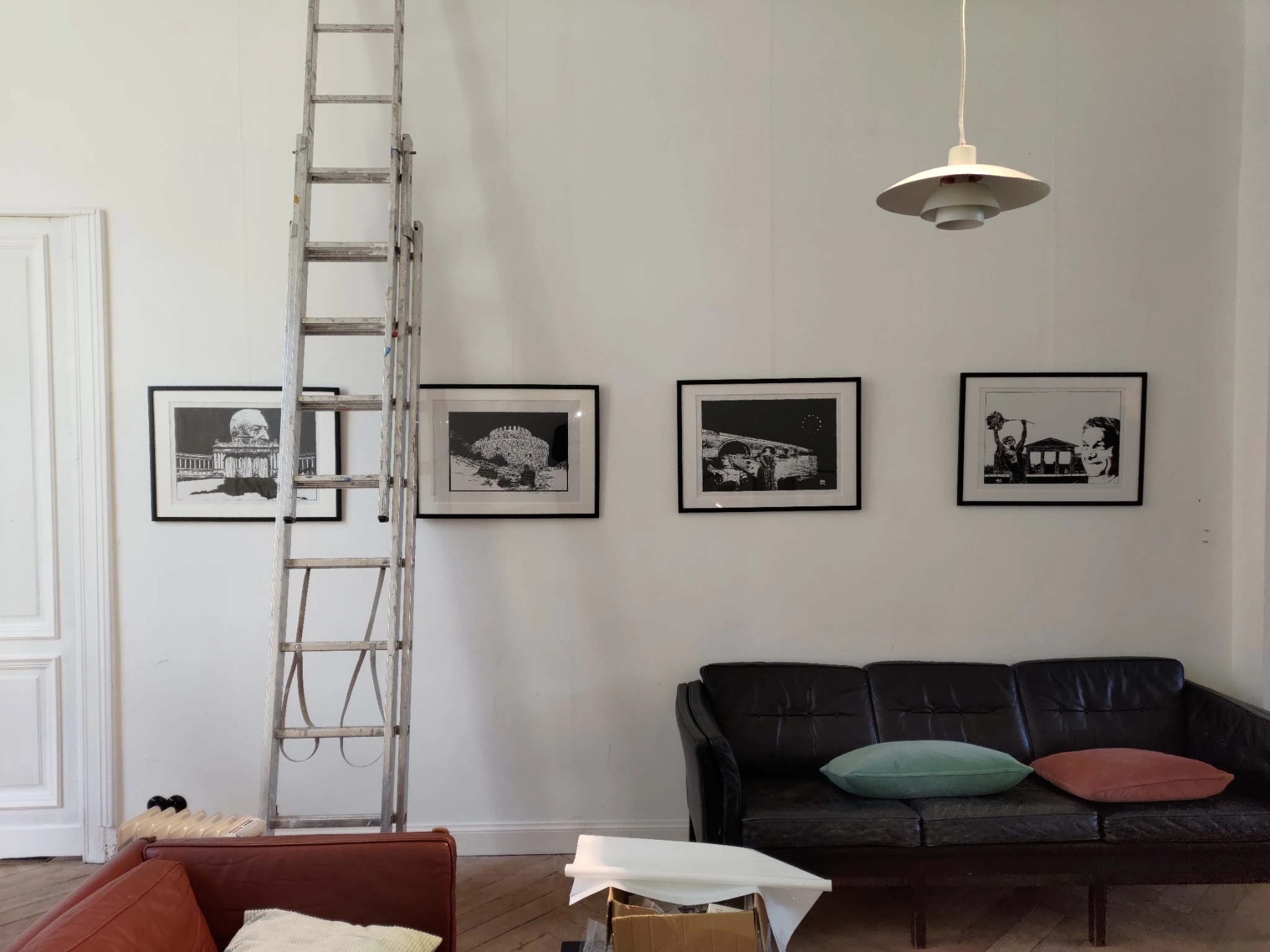
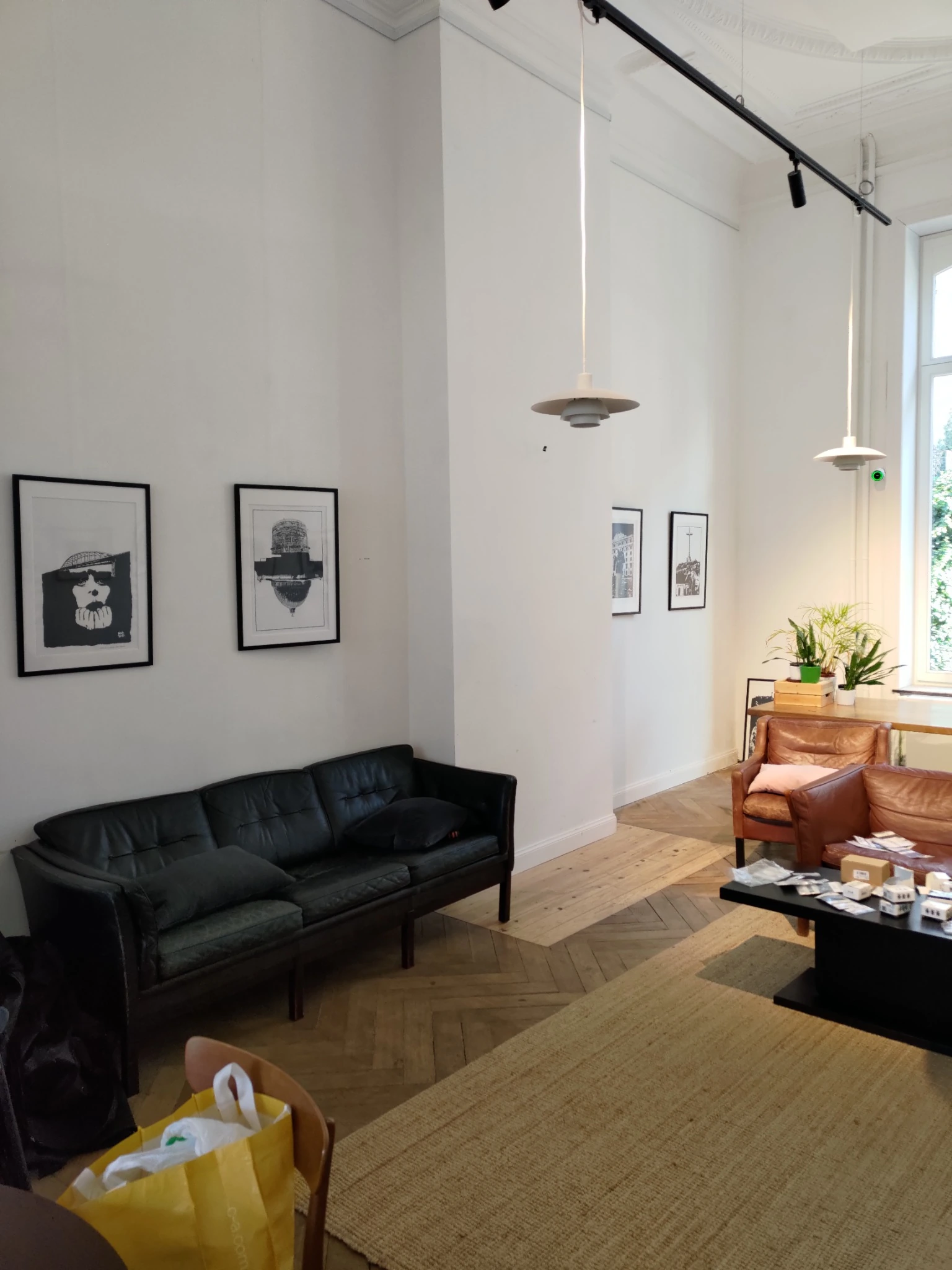
The exhibition worked because the drawings were allowed to inhabit Full Circle as it already existed — not because the venue was stripped of its identity.
Works, texts and process
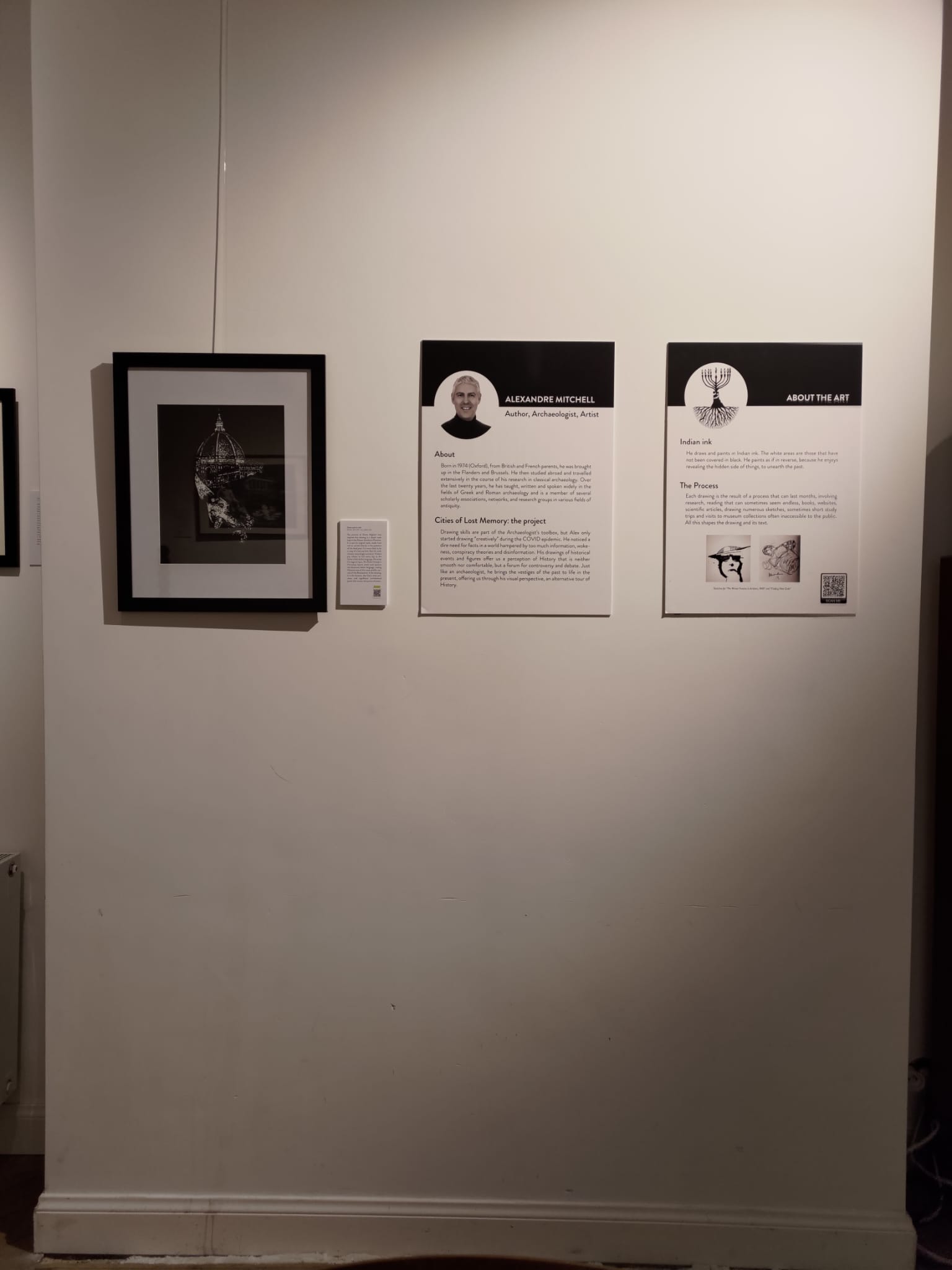
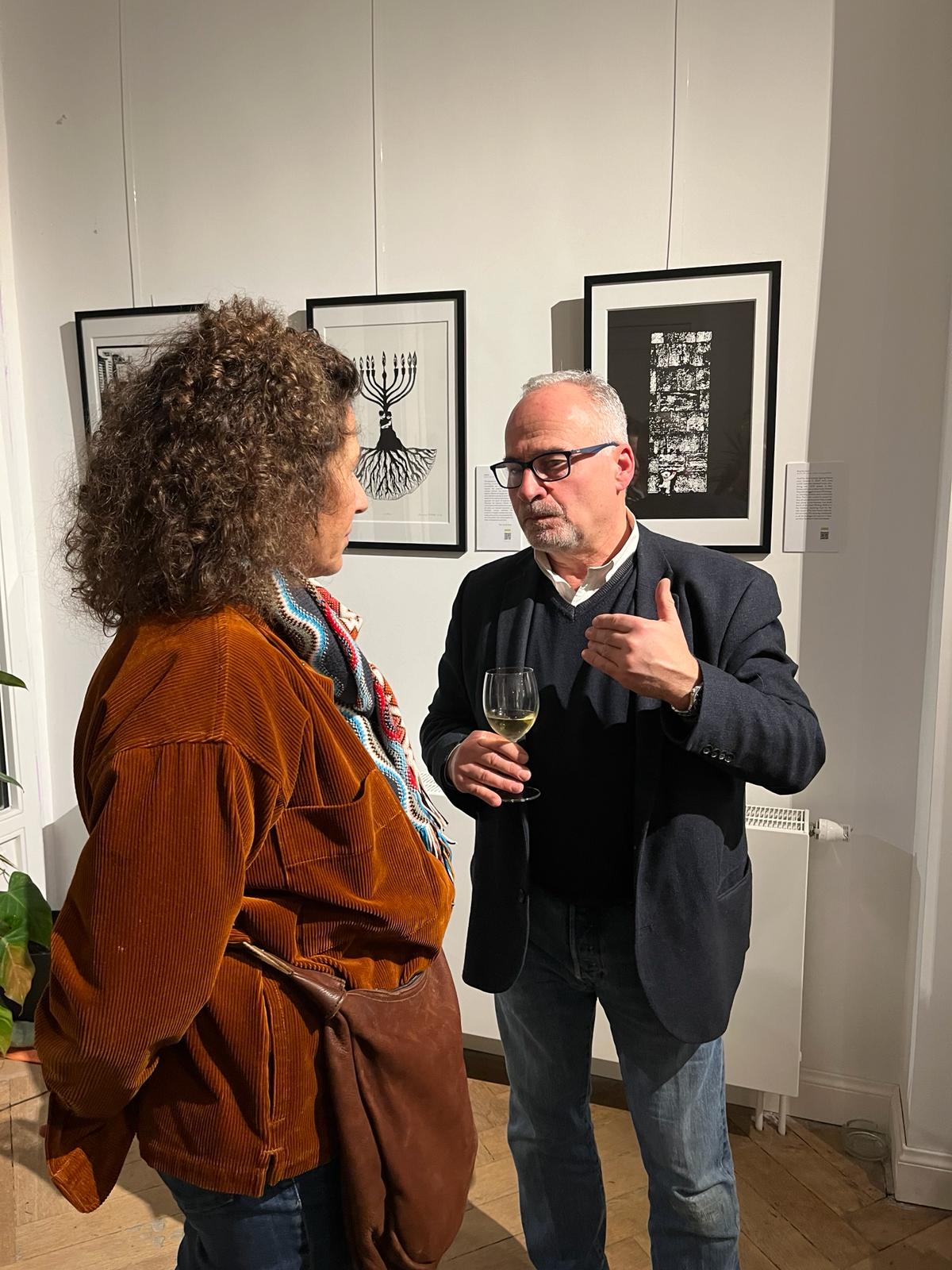
The installation combined framed drawings with short contextual labels and introductory panels on the artist, the project and the drawing process.
The texts were deliberately close to the works. They were there for visitors who wanted to go further, without requiring every encounter with an image to begin with a long explanation.
Visits, gatherings and conversation
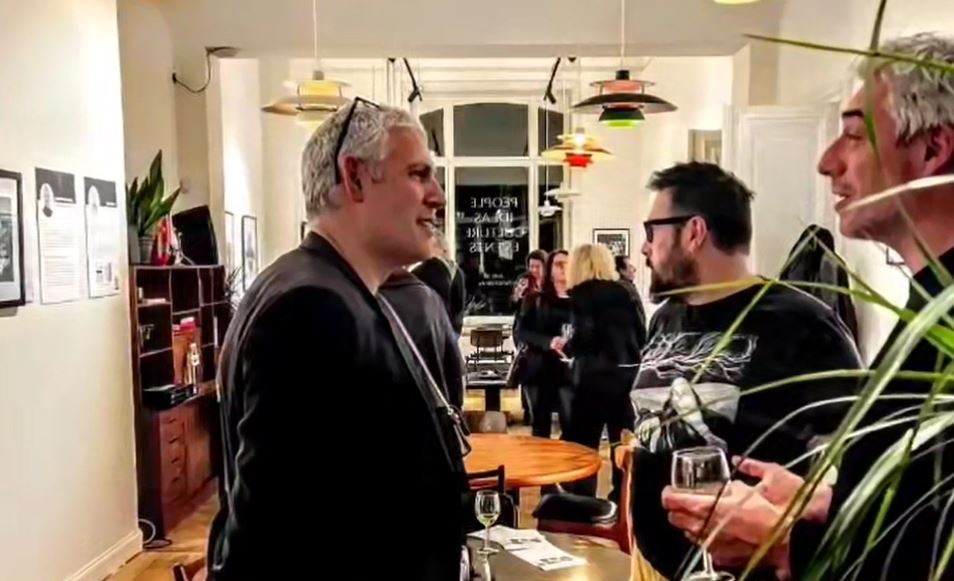
Across the three months, the exhibition became the background to many different kinds of encounter: guided visits, talks, breakfasts, informal gatherings and conversations that continued around the room after an event had formally ended.
The exhibition as a setting for public programming
On 27 February 2024, Full Circle hosted a CreativeMornings event while Cities of Lost Memory was on view.
The event is another example of how the exhibition functioned inside an active cultural venue: the works remained present while talks, gatherings and other programmes brought different audiences into the same rooms.
The exhibition around the table
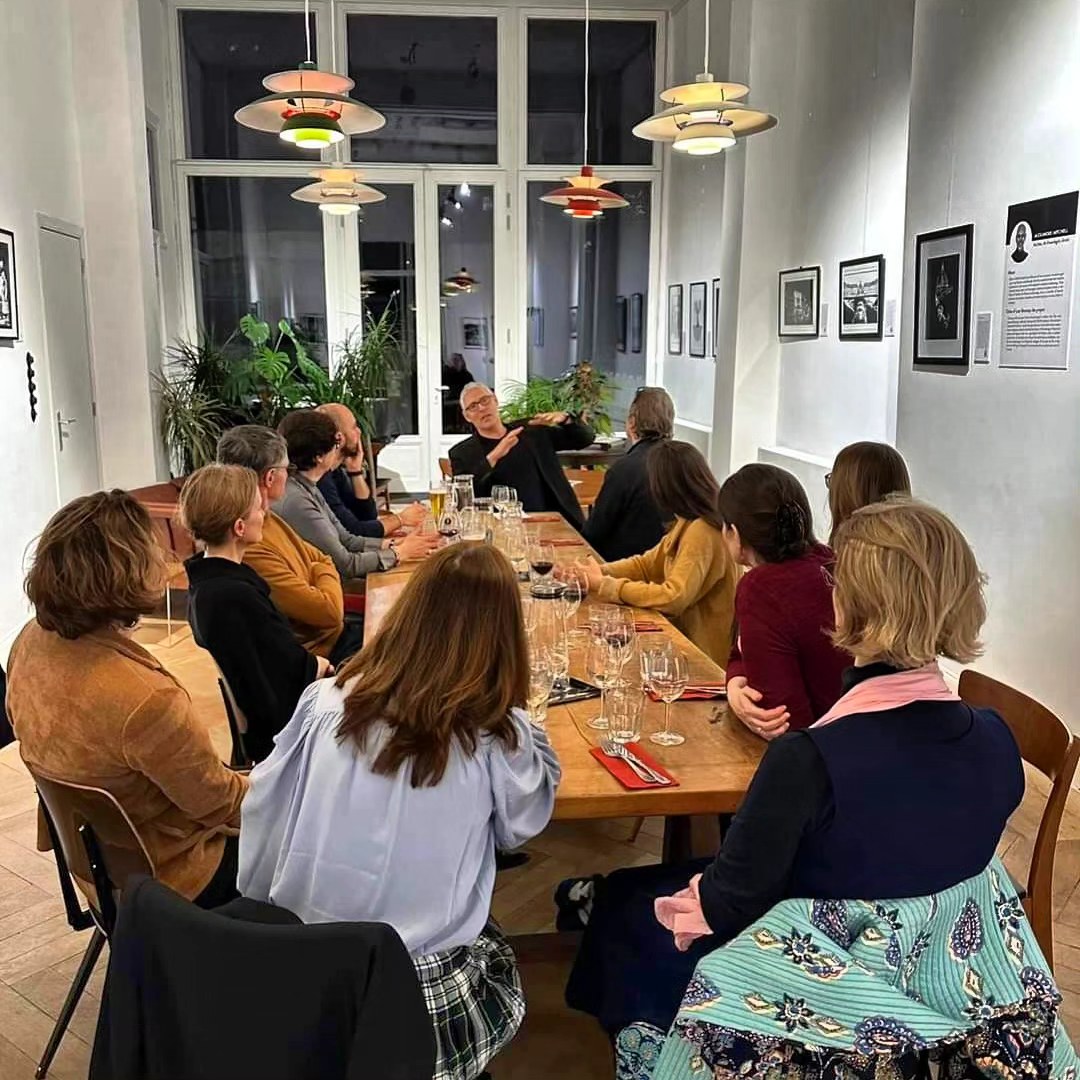
Full Circle’s long-table dinners gave the exhibition a format that would have been impossible in a conventional museum presentation. Guests ate among the drawings, with the evening repeatedly shifting between the table and the works on the walls.
The dinners encouraged slower, frank discussion. Images that might have been passed in a gallery became subjects returned to during the course of an evening.
At Full Circle, conversation was not an activity added to the exhibition. It was part of the way the exhibition existed.
A different kind of duration
Teloglion would later give the project museum scale. The European Parliament would compress it into a single institutional evening. Full Circle offered something else: duration, familiarity and repeated contact.
The works stayed in a space people used. That made the exhibition less monumental, but also unusually permeable — part gallery, part meeting place, part dining room, part forum.